
Air Conditioning Repairs for London Homes and Businesses
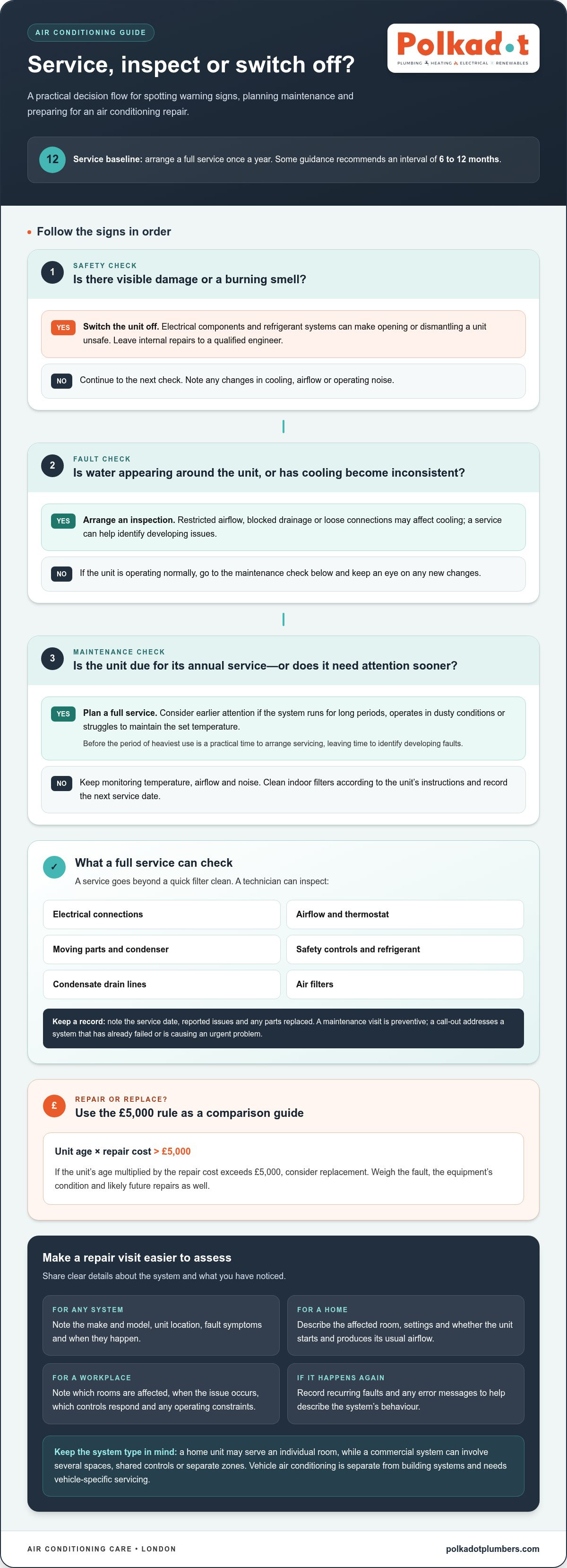
At least one air conditioning service a year is a sensible baseline, with some guidance recommending an interval of 6 to 12 months. If you need air conditioning repair in London, knowing the usual warning signs can help you respond before a fault disrupts comfort at home or work. A service can also uncover issues before they develop into a breakdown.
It’s frustrating when an air conditioning unit stops cooling properly, makes an unusual noise or starts leaking. This guide explains how often to arrange servicing, which faults to watch for and what to expect from a repair, so you can plan your next step.
You’ll also find out what can affect repair decisions and where repair and emergency call-out support is available in London. Whether you’re responsible for a home or business, the aim is to help you understand the next step and keep the situation manageable.
Table of Contents
How often should you service air conditioning units?
Arrange a full service once a year as a practical maintenance baseline for air conditioning units. Systems that run for long periods, operate in dusty conditions or struggle to maintain the set temperature may need attention sooner. In London homes and workplaces, plan servicing before the period of heaviest use, leaving time to identify developing faults.
A service involves more than a quick filter clean. A technician can inspect electrical connections, airflow, the thermostat, moving parts, condenser, safety controls, refrigerant, condensate drain lines and air filters. These checks can reveal restricted airflow, blocked drainage or loose connections before they affect cooling. Keep a record of the service date, reported issues and any parts replaced.
Note changes in temperature, airflow or operating noise between services.
Keep indoor filters clean according to the unit’s instructions.
Arrange an inspection if water appears around the unit or cooling becomes inconsistent.
When arranging maintenance in London, consider the property’s layout and system type. A wall-mounted unit in a flat needs different access from a larger system serving several rooms or a workplace. When booking, share the unit type, its location and the fault symptoms so the visit can be planned around the equipment.
Domestic and commercial systems have different usage patterns. A home unit may run mainly during warm periods, while an office system can face regular demand from staff, equipment and rooms with different temperatures. An engineer can assess the relevant controls and airflow zones. For a business, schedule maintenance around operating hours to reduce disruption, and identify rooms that are consistently uncomfortable.
An annual maintenance plan gives you a repeatable schedule instead of relying on memory. Record the unit model, service date and any recurring issue, then set a reminder for the next annual check. A maintenance visit is preventive; a call-out addresses a system that has already failed or is causing an urgent problem. Don’t treat a plan as a substitute for reporting a new fault.
Vehicle air conditioning is separate from building air conditioning. If a car’s cabin stays warm, note whether the airflow is weak or the temperature changes inconsistently, then arrange vehicle-specific servicing. Advice on domestic air conditioning does not cover a vehicle’s components, and a building maintenance visit is not a vehicle repair.
Is it cheaper to repair or replace an air conditioning unit? The £5000 repair-or-replace rule suggests considering replacement when the unit’s age multiplied by the repair cost exceeds £5000. Treat this as a comparison guide, weighing the fault, equipment condition and likely future repairs.
What safety risks come with faulty air conditioning or DIY repairs? Electrical components and refrigerant systems can make opening or dismantling a unit unsafe. Switch it off if you notice damage or a burning smell, and leave internal repairs to a qualified engineer.
Domestic and commercial air conditioning
A domestic air conditioning system usually serves individual rooms, while commercial systems may need to manage several spaces with different occupancy and temperature demands. A bedroom unit that cools unevenly calls for a different assessment from an office system where one area stays warm. When reporting a fault, describe the affected rooms, controls and operating pattern.
For residential air conditioning repair, note whether the unit starts, responds to its settings and produces its usual airflow. In a small flat, furniture or closed doors can affect how cool air reaches the space. Don’t assume a unit fault explains every temperature difference: the layout, settings and air path can all affect comfort.
Commercial air conditioning repairs may involve a more complex system, with multiple indoor units, shared controls or ventilation equipment. If a meeting room becomes stuffy while another room cools normally, note the locations and times. This can help distinguish a local control or airflow problem from an issue affecting the wider system. Keep a record of recurring faults and any error messages.
Commercial HVAC covers heating, ventilation and air conditioning, so a reported cooling fault can involve more than the cooling unit itself. For example, poor airflow may relate to a fan, duct, filter or ventilation component. A clear repair assessment should identify the affected equipment and explain the work proposed. If installation work is being considered, customers are advised to ask whether the installer is F-Gas certified and what the quote includes.
Domestic and commercial systems both use electrical components, but their scale and controls differ. A home unit may have a single remote control, while a workplace system can use central controls and separate zones. Note which controls respond and whether the fault affects one room or several. Leave internal electrical work to a qualified professional rather than opening the casing yourself.
Vehicle air conditioning is separate from building air conditioning. A commercial van with weak cabin cooling needs vehicle-specific diagnosis, not an assessment of a fixed property system. Tell the garage whether the air remains warm, the airflow is weak or cooling changes during a journey. These symptoms describe the issue without assuming its cause.
To prepare for a domestic or workplace repair visit, gather the unit’s make and model, the affected area and a concise fault history. For commercial premises, include operating constraints, such as rooms that must remain accessible. These details help engineers understand the system and plan a suitable assessment. For fixed-property cooling needs, explore air conditioning support.
Air conditioning repairs and emergency call-outs in London
A failed air conditioning unit can affect comfort, staff and equipment, especially during warm weather. Use the steps below to assess urgency, understand the charging terms and prepare for an engineer.
Emergency Response and Engineer Availability
An emergency call-out is intended for faults needing prompt attention, such as a complete cooling failure in a critical room. Availability depends on the engineer’s location, workload and the system involved. Explain the fault, property address and access arrangements when you call. Ask about the expected response window and whether the service operates outside standard working hours.
For a server room or customer-facing business, describe the impact clearly. A unit that still runs but cannot maintain temperature may need a different response from one that has stopped completely. Don’t assume “emergency” means 24-hour availability; confirm the stated response arrangements when booking.
Call-Out Fees
Do London air conditioning repair companies charge call-out fees? Charges vary by provider and how the work is priced. Before booking with Polkadot Plumbers, review the published rates and pricing terms: the first hour is charged on all jobs, then time is billed in half-hour increments. Rates are exclusive of VAT, and payment is due upon completion.
A clear description of the unit and its symptoms can help the company explain the visit. Share the make, model, fault display and whether the air conditioning unit is still running. Avoid comparing a call-out fee alone: the scope of the assessment and what follows also matter.
Choosing a Reputable Repair Engineer
How do I find a reputable air conditioning repair engineer in London? Look for a clear explanation of the fault-finding process, written repair scope and transparent charging terms. Ask about experience with your system type and brands, particularly if the unit uses specialist controls. For installation work, customers are advised to ask whether the installer is F-Gas certified and what the quote includes.
A useful repair report identifies the cause, recommended work and any parts required. If replacement is proposed, ask how the unit’s condition and expected use inform that recommendation. This makes it easier to weigh repair options without relying on energy-efficiency claims alone.
Troubleshooting Before Calling an Engineer
What steps can I take to troubleshoot an air conditioner before calling an engineer? Check the selected mode and temperature, then confirm the remote has working batteries. Make sure the unit has power and inspect accessible filters for visible dust. Note any error code, unusual sound or water near the unit. Don’t remove covers or handle electrical components.
If the system still fails, switch it off if you notice a burning smell, damaged wiring or water near electrical parts. Tell the engineer what you’ve tried and whether it changed the airflow or temperature. These details can help focus the diagnosis and avoid unnecessary delays.
Air conditioning noises that may indicate a fault
A change in sound can help you describe an air conditioning fault. A brief click at start-up differs from repeated banging, grinding or buzzing during cooling. Note when the noise begins, whether it continues and whether airflow or comfort changes at the same time.
Clicks, rattles and banging
A single click as the system starts or stops can come from switching components. Repeated clicking is worth describing, especially if the unit fails to start. A loose front panel or grille can rattle as the fan runs. Switch the unit off before checking that accessible panels are seated properly, and keep your fingers clear of moving parts.
Loud banging or knocking deserves prompt attention if it begins suddenly or grows louder. A fan component could be loose or obstructed, but the sound alone cannot identify the cause. Stop the unit if it vibrates heavily, then tell the engineer whether the noise comes from the indoor unit, outdoor condenser or both.
Buzzing, humming and grinding
A steady hum can be part of normal operation, but a new, louder buzz needs attention. Buzzing alongside a failure to start, for example, could point to an electrical or motor issue. Don’t remove the casing to investigate. If you notice a burning smell, switch the unit off and arrange professional service and repair.
Grinding or scraping sounds can suggest contact between moving parts. Turn the air conditioning off rather than letting the noise continue through a full cooling cycle. Note whether the sound changes with the fan setting, but don’t repeatedly restart a unit that grinds or shakes.
Dripping, hissing and other changes
A dripping sound or visible water beneath an indoor unit can indicate a drainage problem. Check for water around the appliance without opening it, and protect nearby belongings. A faint hiss can occur as refrigerant moves through a system, but a new or persistent hiss with poor cooling needs assessment. Don’t handle refrigerant lines.
Before arranging air conditioning services, record the noise from a safe distance if it is clear. Note the time, selected temperature, operating mode and whether cooling has weakened. These details help an engineer compare the sound with the system’s behaviour instead of relying on “it’s noisy” alone.
Noise patterns can help distinguish routine operating sounds from developing faults. A loose grille may rattle only when the fan runs, while a scrape that continues across settings suggests a different issue. Don’t assume an air conditioning unit is safe to keep running simply because it still cools.
Keep the area around the outdoor unit clear of stored items, and check that nothing visibly touches its casing. Avoid moving or dismantling the unit. If the noise returns after an accessible panel has been secured, or cooling drops alongside the sound, arrange a professional inspection rather than waiting for a complete failure.
Air conditioning repairs across Greater London and the Home Counties
Finding repair support across Greater London and the Home Counties starts with describing the property and equipment clearly. A flat in central London may have limited access to an outdoor condenser, whilst a detached home in Surrey may have units across several rooms. These differences affect access, fault diagnosis and the time needed for an assessment.
For a useful booking, give the London borough, property type and air conditioning unit location. Explain whether the fault affects one room or the whole building, and whether the system still runs. In a workplace, identify rooms that need cooling for staff, customers or equipment. Clear details help establish what the visit involves.
Greater London includes varied building types, from converted houses in Hackney to offices in Westminster. Home Counties properties can also differ: a ground-floor unit in Kent presents different access considerations from equipment mounted above a shopfront in Hertfordshire. Note parking restrictions, entry arrangements and any building access instructions before the engineer’s visit.
Use this short checklist when arranging air conditioning repair:
Share the postcode, property type and access details.
Describe the affected rooms and changes in temperature.
Record the make, model and any displayed fault code.
Explain whether the unit is running, leaking or making unusual noises.
These details can help distinguish a local fault from a system-wide problem. If one room in a multi-room property stays warm, report whether other units cool normally. If the whole property has lost cooling, say so at the outset. For commercial premises, include operating hours and any areas where temperature control matters to daily work.
Refrigerant requires particular care. A home air conditioner should not need regassing unless it has a refrigerant leak. If cooling performance drops repeatedly after refrigerant work, describe the pattern rather than requesting a top-up alone. A proper diagnosis needs to identify the cause of refrigerant loss before any repair is considered.
Air conditioning installation and repair are different jobs. For a new system, room layout, equipment position and intended use shape the design. For an existing unit, its fault history and current condition guide repair decisions. Heating needs may also influence how a property uses its system throughout the year.
Before booking, confirm the repair company’s service area and explain the property’s access needs. This avoids assumptions about coverage between London boroughs and nearby counties. For help with a fixed air conditioning system, arrange air conditioning support.
Polkadot: Air Conditioning
Polkadot Plumbers installs, maintains and repairs air conditioning systems for homes and businesses in London. Turn to the team when you’re planning a system or addressing a cooling problem. If refurbishment could affect how your property should be cooled, Polkadot also offers refurbishment, heating and electrical installation services.
Before getting in touch, note the unit’s location, the rooms affected and the symptoms you’ve observed. Explain whether cooling has stopped, airflow has changed or the system makes an unusual noise. These details provide a useful starting point for discussing your requirements and next steps.
For help with air conditioning at your property, contact Polkadot to discuss your requirements.
Make your next cooling decision with confidence
A fault can prompt you to look beyond the immediate repair. Consider how the room is used, whether the current system still suits the property and whether planned building work could change its requirements. That wider view can help you decide what to address now and what to include in future improvements.
For air conditioning repair in London, Polkadot Plumbers can help with your cooling needs. Its refurbishment and heating services may also be relevant when you’re planning broader property work. Describe what the system is doing and how you need the space to function, so the conversation starts with the practical issue at hand.
Contact Polkadot about an air conditioning repair and take the next step towards a more comfortable property.
Frequently Asked Questions
Need Air Conditioning Repair?
Yes, Polkadot Plumbers provides air conditioning repairs in London. If your system has stopped cooling, won’t respond to its controls or shows an error message, describe those details when you get in touch. Include the unit’s make and model if you can find them without removing a cover. A clear account of what changed helps explain the problem and the property’s requirements.
Air Conditioning Emergency?
If the unit smells of burning, has damaged wiring or leaks water near electrical parts, switch it off and keep clear. Polkadot does not offer a 24/7 emergency service, so don’t assume immediate or overnight attendance is available. For a less urgent fault, note what happened and whether the system still operates, then arrange repair support through the usual contact route.
Air con not keeping temperature?
Check that the thermostat isn’t beside a sunny window, radiator or other heat source, as this can affect its reading. Confirm the selected setting and mode, then see whether the problem affects one room or several. Direct sun, closed doors or blocked supply vents can also change comfort. Record when the temperature problem occurs.
Are you F-Gas certified?
Polkadot provides air conditioning installation, maintenance and repair in London. F-Gas certification is relevant to work involving refrigerant, so refrigerant handling should be carried out by appropriately certified personnel. Don’t open refrigerant lines or attempt to recharge a system yourself. For a unit that appears to have lost cooling performance, describe the symptoms and any previous refrigerant work when arranging professional attention.
Do you offer 24-hour callout in London?
No, Polkadot does not offer a 24-hour or 24/7 callout service in London. If your system stops outside normal working hours, switch it off if you notice a burning smell, damaged wiring or water close to electrical components. For other faults, make a note of the displayed settings and symptoms so you can explain the issue when arranging repair support.
Do you offer ongoing maintenance and emergency repairs?
Polkadot offers air conditioning maintenance and repairs, but not 24-hour emergency callouts. Customers receive real-time updates on service progress and automatic reminders for service and renewal dates. Free, no-obligation estimates apply to plumbing and electrical work, not air conditioning. The 12-month labour guarantee applies to plumbing and electrical services, not air conditioning. Describe your system and its maintenance needs when making an enquiry.
Does air conditioning heat as well as cool?
Modern air conditioning units can provide heating as well as cooling by reversing refrigerant flow. The system draws heat from outdoor air and releases it indoors, so one installation can serve both purposes. If you’re considering this function, check whether your controls include a heating mode and learn how to select it. Polkadot Plumbers also provides heating services in London.
What are common air conditioning faults and their symptoms?
Common warning signs include weak airflow, inconsistent cooling, water beneath an indoor unit, repeated starting and stopping, or a control panel that won’t respond. A circuit breaker that trips when the unit starts is another reason to stop using it and seek assessment. Note which rooms are affected and whether the symptom began after a power interruption or change in settings.


Comments