

London Central Heating Checks & Powerflushing Guide
Your boiler might be working at full capacity, but if your radiators are stone-cold at the bottom, you're essentially paying for heat that never reaches you. It's incredibly frustrating to watch your energy bills rise while your living room remains chilly and your boiler makes those unsettling clunking sounds. You want a home that feels like a sanctuary, not a source of constant maintenance anxiety. Professional central heating checks and powerflushing provide the technical deep clean your system needs to function exactly as intended.
A reliable heating system is the backbone of a comfortable London home, yet internal corrosion can quietly compromise your comfort and your wallet. In this guide, we'll show you how to identify the warning signs of internal blockages and explain why adhering to BS 7593:2019 standards is vital for your boiler's warranty. You'll discover how a professional flush can lower your monthly energy expenditure and provide the long-term peace of mind that comes from a healthy, quiet, and efficient system.
Table of Contents
Understanding Central Heating Checks: More Than Just a Boiler Service
Many homeowners assume an annual boiler service covers their entire heating network. This is a common misconception that can lead to unexpected breakdowns. While a boiler service is essential for safety, it often ignores the radiators, pipework, and pumps that distribute warmth. A comprehensive central heating check is a full-system diagnostic. It assesses the health of the entire infrastructure, ensuring that heat generated by the boiler actually reaches its destination efficiently. It's the difference between checking the engine of a car and inspecting the entire vehicle for roadworthiness.
Why is this distinction so important? A standard service focuses on the combustion process and safety devices within the boiler casing. In contrast, a performance-focused system check looks at the "water side" of the installation. In London, where many properties feature original Victorian or Edwardian pipework, these inspections are critical. Narrower pipes are more susceptible to the build-up of debris. Understanding What is Central Heating? as a complete circuit helps explain why a blockage in one room can strain the entire system. Combining central heating checks and powerflushing ensures that your system doesn't just run safely, but runs at peak efficiency.
The Anatomy of a Professional Heating Inspection
A thorough inspection goes beyond the boiler. Our engineers conduct a visual survey of all exposed pipework to catch minor leaks or corrosion before they become floods. We test radiator temperatures across the entire surface area. This helps us identify cold spots that suggest air locks or magnetite build-up. We also perform a flue gas analysis to ensure your boiler is burning fuel as efficiently as possible, which directly impacts your carbon footprint and monthly bills. Every component, from the circulating pump to the expansion vessel, is tested to ensure it can handle the demands of a cold London winter.
Why Preventive Maintenance is a Financial Necessity
Investing in a professional check is a strategic financial move. Whilst there's an upfront cost, it's significantly lower than the price of a catastrophic boiler failure. Most modern boiler manufacturers make annual professional maintenance a condition of their warranty. If you neglect these checks, you could find yourself footing the bill for expensive parts that should have been covered. System pressure is another vital factor. If your expansion vessel isn't functioning correctly, the constant pressure fluctuations put immense strain on your circulating pump. By identifying these issues early, we extend the lifespan of your components and ensure you aren't paying for wasted energy.
What is Powerflushing and Why Does Your System Need It?
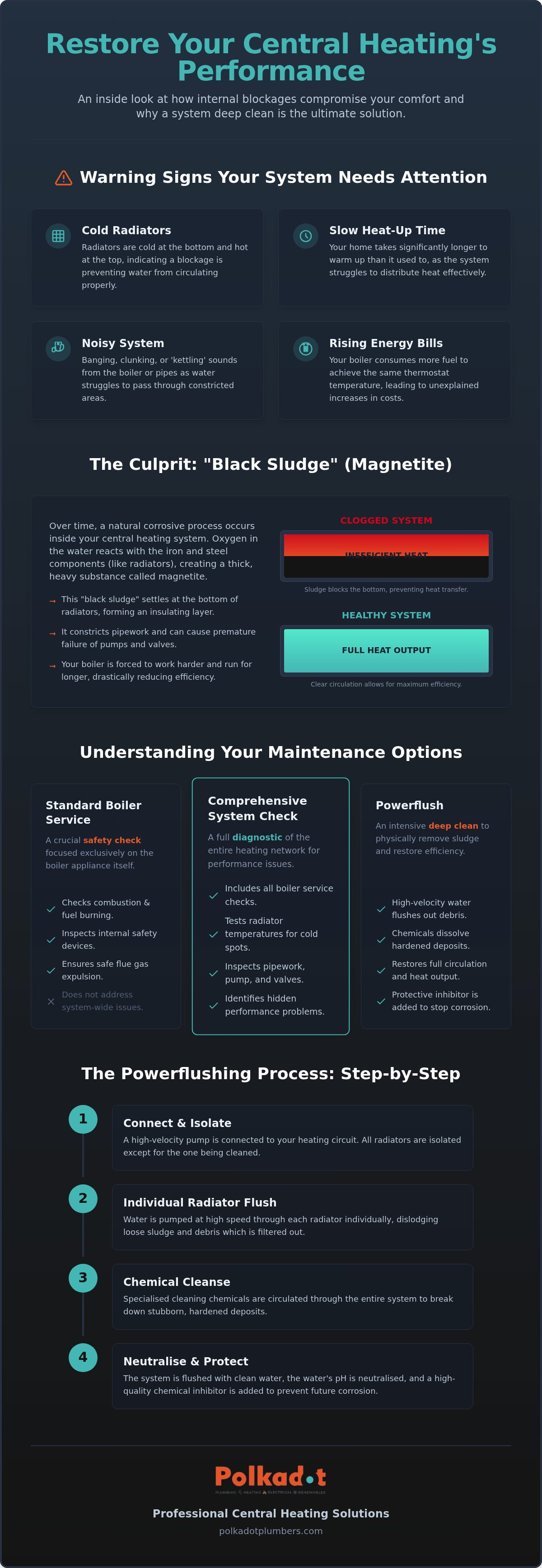
Powerflushing is a specialised maintenance procedure designed to clear the internal "arteries" of your home's heating network. Unlike a standard service, it uses a high-velocity, low-pressure pumping station to circulate water and cleaning chemicals through the entire circuit. If you've been researching central heating checks and powerflushing, you likely know that radiators don't just lose heat for no reason. Over time, oxygen reacts with the iron components inside your radiators to create magnetite. This is the dense, black substance commonly known as "black sludge."
This sludge is heavy and settles at the bottom of radiators, acting as an unwanted layer of insulation. It prevents hot water from warming the radiator surface effectively. Consequently, your boiler has to work much harder to reach the desired temperature, which spikes your energy bills and puts unnecessary strain on the pump. Some homeowners attempt a simple "drain and refill," but this is largely ineffective. It typically removes only about 10% of the debris, leaving the heavy, compacted sludge behind. For a more detailed look at the process, you can consult this Which? guide to powerflushing.
The Chemistry of a Clean System
The process isn't just about water pressure. We use advanced chemical cleaners to break down hardened deposits that have spent years attaching to your pipework. Once the system is clear, we use neutralising agents to ensure the pH balance is restored, preventing immediate re-corrosion. Finally, we add a high-quality inhibitor. This chemical barrier coats the internal surfaces, slowing down future oxidation and keeping the water clear for years to come. This methodical approach ensures the system remains clean long after our engineers have left.
London Hard Water and Your Heating System
London properties face a unique challenge due to the capital's mineral-rich hard water. Limescale doesn't just affect your kettle; it builds up inside your boiler's heat exchanger. When limescale mixes with magnetite, it creates a stubborn, rocky deposit that is particularly difficult to remove. This combination is a primary cause of boiler "kettling", that loud banging noise you might hear when the heating kicks in. To maintain efficiency, most London homeowners should consider a professional flush every 5-6 years. If you're noticing these symptoms, a professional heating survey can determine if a flush is the right next step for your property.
Signs Your Central Heating Requires Urgent Professional Attention
How do you know if your heating system is struggling before it stops working entirely? Recognising the early warning signs of internal degradation can save you thousands in emergency repair costs. The most common indicator is the presence of cold spots at the bottom of your radiators. If the top of the panel is warm but the base remains stone-cold, it's a clear sign that heavy magnetite has settled. This sludge prevents the hot water from circulating through the entire radiator, leaving you with a room that never quite reaches a comfortable temperature.
You should also pay close attention to the sounds your system makes. If your boiler produces a loud banging or whistling noise, often referred to as "kettling," it suggests that debris is trapped within the heat exchanger. Similarly, a vibrating or noisy circulating pump often indicates it's struggling to push water through restricted pipework. Identifying these issues early allows you to schedule central heating checks and powerflushing before the system fails during a cold snap. If you notice cloudy or dark water when you bleed your radiators, or if they require bleeding more than once a year, your system is likely suffering from internal corrosion.
Diagnosing Inefficiency Before It Becomes a Breakdown
You can perform a basic diagnostic by conducting a "touch test" across all radiators in your home. Carefully feel the surface area of each panel; they should be uniformly hot from top to bottom and side to side. If they take significantly longer to heat up than they did last winter, the system's flow rate is likely compromised. Understanding the step-by-step powerflushing process helps you recognise why these symptoms require a professional solution. A noisy pump is often a symptom of high resistance in the pipes, not necessarily a mechanical failure of the pump itself.
The Hidden Cost of Ignoring These Signs
Ignoring these symptoms leads to a gradual but significant increase in your gas consumption. As sludge acts as an insulator, your boiler must run for longer periods to achieve the same room temperature, which directly inflates your monthly energy expenditure. Beyond the bills, there's a risk of physical damage to sensitive components. Sludge can migrate into the boiler and jam the diverter valve, which controls the flow between your heating and hot water. In some cases, internal corrosion can lead to pinhole leaks in radiators. If these leaks go unnoticed behind furniture, they can cause structural damp issues that are far more expensive to remediate than a standard maintenance visit.
The Powerflushing Process: What to Expect During the Visit
Understanding the mechanics of central heating checks and powerflushing helps demystify what happens inside your home. It isn't just a simple rinse; it is a methodical, engineered restoration of your heating circuit. Our engineers begin by connecting a specialised powerflushing pumping station to your system. This is usually done at the circulating pump or a radiator. We use high-velocity, low-pressure water to ensure the debris is dislodged without damaging older pipework common in London properties.
A key part of the process involves isolating each radiator one by one. By focusing the full force of the pump on a single panel, we achieve the maximum velocity needed to move heavy, compacted sludge. We monitor the water clarity throughout the visit, using powerful magnetic filters to trap the iron oxide particles as they are flushed out. This provides visual proof of the debris removed from your system. Once the water is clear, we perform a final system balance to ensure heat is distributed evenly across all rooms.
A Step-by-Step Walkthrough for Homeowners
Before any equipment is turned on, we take care to protect your carpets and furniture from any potential splashes. We then circulate a high-strength chemical cleaner whilst the system is hot to break down hardened deposits. Once the sludge is loosened, we perform the actual flush. This involves replacing the contaminated water with fresh, mains-fed water until the discharge runs perfectly clear. Finally, we add a protective inhibitor to prevent future corrosion from taking hold.
How Long Does it Take and Is it Messy?
For a typical three-bedroom London terrace, the process usually takes between 6 and 8 hours to complete properly. Whilst the word "flush" might sound messy, our professional equipment creates a closed loop. This means the dirty water is contained within the machine and hoses, ensuring a clean experience for your home. After the flush, we conduct post-flush testing to verify improved flow rates and temperature differentials across every radiator. If your home isn't heating up as it should, you can book a professional heating survey to see if a powerflush is the right solution for your property.
Restoring System Health with Polkadot Plumbers
Polkadot Plumbers prioritises the long-term health of your home's infrastructure over temporary "quick fix" repairs. When we conduct central heating checks and powerflushing, we treat your system as a single, integrated network. Our engineers don't simply look for the easiest solution; they perform a comprehensive diagnostic to identify why a component failed in the first place. This commitment to technical integrity ensures that once we've restored your system's warmth, it stays that way. We believe in providing solutions that address the root cause, not just the symptoms.
London's property stock is famously diverse. From the intricate pipework of a Kensington Victorian terrace to the modern communal heating interfaces in Hackney, our team understands the unique challenges of the capital's architecture. We also provide detailed plumbing surveys for new homeowners. Buying a property is a significant investment, and knowing the state of the heating system before you move in provides invaluable peace of mind. A clean, efficient system is also a prerequisite for future environmental upgrades. If you are considering transitioning to air source heat pumps, your pipework must be free of debris to handle the specific flow requirements of renewable technology.
Why London Homeowners Trust Polkadot
Transparency is at the heart of everything we do. We provide clear reporting and honest technical advice, ensuring you understand the condition of your property without the stress of hidden costs. Our expertise isn't limited to heating; we integrate our diagnostics with wider refurbishment and property maintenance services. For those looking to replace aging systems entirely, our Boiler Installation London: A Comprehensive Guide offers detailed insights into modern, energy-efficient options available for your home.
Booking Your System Health Check
Organising a professional inspection is a straightforward process. When you contact us, it's helpful to have a few details ready for our heating engineers. We'll typically ask for the make and model of your boiler, the approximate age of your system, and the number of radiators in your property. This allows us to allocate the correct time and equipment for your specific requirements. Don't wait for a total breakdown to address your heating concerns. Contact Polkadot today for a dependable central heating check and ensure your home remains warm and efficient throughout the year.
Securing Long-Term Efficiency for Your London Home
Maintaining a comfortable home shouldn't be a source of constant stress. By understanding that a healthy heating system requires more than just a basic boiler service, you're already ahead of the curve. Proactive central heating checks and powerflushing don't just clear away years of accumulated magnetite; they restore the quiet, even warmth your family deserves. These steps ensure your radiators work at full capacity whilst protecting sensitive boiler components from premature wear and high energy costs.
As London-based heating experts, we specialise in comprehensive system surveys and efficiency diagnostics to keep your property running smoothly. Whether you're dealing with stubborn cold spots or simply preparing your pipework for a future renewable transition, our team provides the technical authority you need. Don't wait for a minor inefficiency to turn into an expensive winter breakdown. Book a Professional Central Heating Check with Polkadot today to regain control over your energy expenditure and system performance. We're here to ensure your home remains a warm, efficient sanctuary for years to come.
Frequently Asked Questions
How often should I have a central heating powerflush?
Most London homes require a professional powerflush every 5 to 6 years to maintain peak efficiency. This frequency helps prevent the accumulation of magnetite and ensures your system complies with modern water quality standards. If you've recently installed a new boiler, a flush is often mandatory to validate the manufacturer's warranty. Regular central heating checks and powerflushing maintain the water quality required for optimal heat transfer and prevent premature pump failure.
Will a powerflush fix my noisy boiler?
Yes, a powerflush often resolves noises like "kettling" or loud banging. These sounds occur when debris and limescale build up in the boiler's heat exchanger, causing water to overheat and turn to steam. By removing these deposits, we restore smooth water flow and quiet operation. If the noise persists after a deep clean, it may indicate a mechanical fault that our engineers can diagnose during a follow-up system inspection.
Is powerflushing safe for older heating systems and pipes?
Powerflushing is generally safe because it uses high velocity rather than high pressure. Our equipment operates at a low pressure that is usually lower than your mains water pressure, which protects older London pipework. However, if your system is severely corroded, the removal of sludge might reveal existing pinhole leaks that were previously "plugged" by debris. We always perform a pre-flush survey to assess the structural integrity of your system before starting.
What is the difference between a system flush and a powerflush?
A system flush is a gravity-fed rinse that only removes loose debris, whereas a powerflush uses a specialised pumping station for a deep clean. A standard flush often leaves behind up to 90% of the heavy, compacted sludge at the bottom of radiators. Powerflushing uses high-velocity water and chemical cleaners to agitate and remove these stubborn deposits. It is the only effective way to restore a system to near-original efficiency levels.
Can I perform a central heating check myself?
You can perform basic visual checks, such as feeling for cold spots on radiators or checking the boiler pressure gauge. However, a professional diagnostic requires specialised tools and technical expertise. Our engineers test flue gas combustion, check internal pump resistance, and analyse water chemistry. These technical tasks are essential for maintaining safety and ensuring your boiler's warranty remains valid under current British Building Regulations and manufacturer requirements.
How much can I save on my energy bills after a powerflush?
While exact savings vary based on your property's insulation and usage, a clean system can noticeably reduce gas consumption. Debris-free radiators heat up faster and allow the boiler to reach its target temperature more efficiently. This means your heating runs for shorter periods. Some industry professionals report that a heavily sludged system can be up to 15% less efficient, so a professional flush often leads to significant reductions in your monthly energy expenditure.
Do I need to be at home whilst the powerflushing is carried out?
Yes, it's necessary for someone to be present during the visit. Our engineers need access to every room to isolate individual radiators and monitor the cleaning process. We also need to demonstrate the final results, such as the improved heat distribution across your home. Since the process takes between 6 and 9 hours for most London properties, we recommend scheduling the visit on a day when you're available to facilitate access.
Will powerflushing find or cause leaks in my system?
A powerflush does not cause leaks, but it can occasionally reveal them. If internal corrosion has already created a "pinhole" in a radiator or pipe, the sludge might be acting as a temporary seal. When the high-velocity water removes this debris, the underlying leak becomes visible. This is actually beneficial; it allows us to identify and repair a potential flood risk in a controlled environment before it causes expensive structural damage to your home.


Comments