
Cost to Install Air Conditioning in a UK Home by System Type
The lowest-cost air conditioning system isn’t always the right fit for your home. The cost to install air conditioning in a house in the UK depends on the system type, the number of rooms, the cooling capacity required and the complexity of the installation. There is no single price that suits every property.
It’s understandable to want a clear budget before deciding. Your choice affects more than the initial installation: portable, split and ducted systems differ in how they cool a home, the work involved and the rooms they can serve.
This guide explains what affects installation costs and compares the main system types. It also covers when planning permission may be needed, factors that can affect installation time and what to consider when choosing a setup for your home.
Table of Contents
How much does air conditioning cost to install?
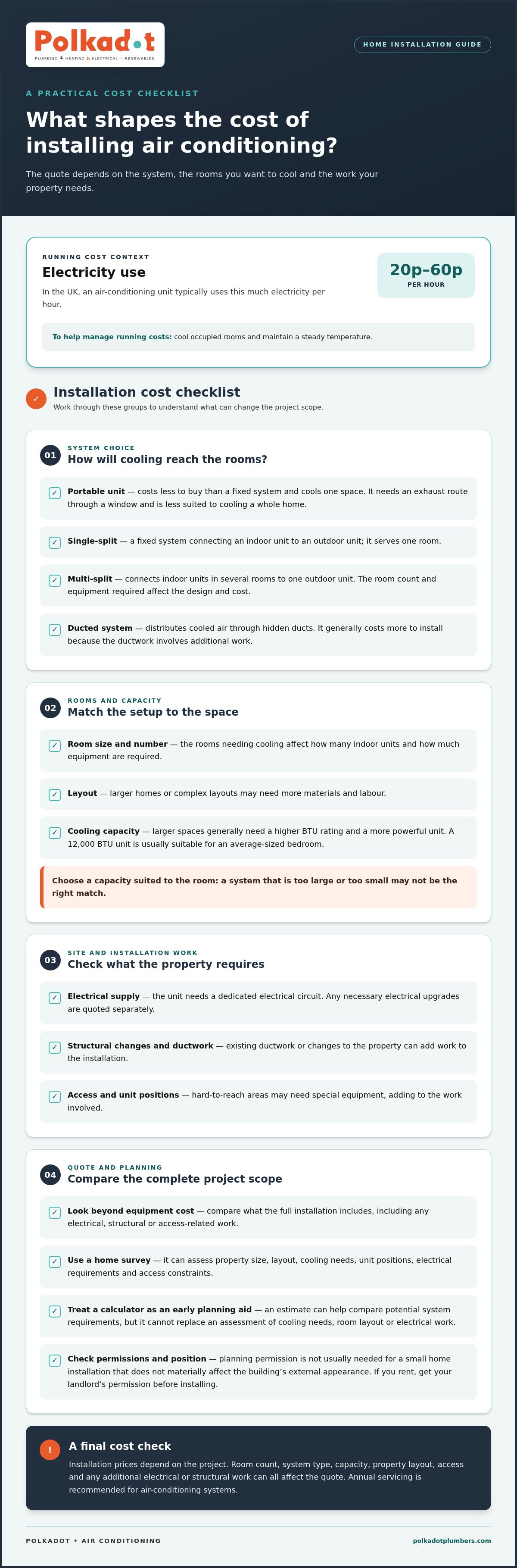
Installation costs depend on system type, room coverage and the work needed at your property. In the UK, a unit typically uses 20p to 60p of electricity per hour; cooling only occupied rooms and maintaining a steady temperature can help manage running costs.
System costs by type
System costs vary according to the number of rooms to cool and how air is distributed. A portable unit costs less to buy than a fixed system, but is less suited to cooling a whole home. A single-split system serves one room, while a multi-split system connects several indoor units to one outdoor unit.
Ducted systems distribute cooled air through hidden ductwork and generally cost more to install because that network takes additional work. A 12,000 BTU unit is usually suitable for an average-sized bedroom. Matching capacity to the room helps avoid choosing a system that is too large or too small.
Additional installation and maintenance costs
The main installation may not cover every requirement. An air conditioning unit needs a dedicated electrical circuit, and any necessary electrical upgrades are quoted separately. Structural changes, existing ductwork and difficult access can also add work. Compare the full project scope, not just the equipment cost.
Annual servicing is recommended for air conditioning systems. An air-to-air heat pump can provide both heating and cooling, so a heat pump calculator may help you explore whether this type of system suits your home’s wider comfort needs.
Factors affecting installation costs
Room size, layout and the number of indoor units all affect the installation plan. Larger homes or complex layouts may require more materials and labour. Larger spaces generally need a higher BTU rating and a more powerful unit. Hard-to-reach areas may also require special equipment, adding to the work involved.
Use a heat pump calculator as an early planning aid: enter the property details it requests, then use the estimate to compare potential system requirements. It cannot replace an assessment of cooling needs, room layout or electrical work. The installation price depends on the project and is provided after a quote request. System type, capacity, room count, access and any electrical or structural work all affect the price.
Do you need planning permission to install air con?
Planning permission isn’t usually required for a small home installation if it won’t materially affect the building’s external appearance. Consider the outdoor unit’s position and visibility: a discreet location may have less visual impact than equipment fixed prominently to a front wall. If you rent your home, get your landlord’s permission before installing air conditioning.
There are practical considerations, too. Outdoor units can create noise, and indoor airflow may feel uncomfortable if directed at seating or beds. Choose a system and position suited to the rooms you use, and consider the effect on neighbours and your household. Air conditioning can improve comfort in warm weather, but it also involves equipment, installation work and ongoing running costs.
A home survey helps build an accurate quote by assessing the property’s size, layout, cooling needs, unit positions and electrical requirements. For example, an open-plan ground floor with several separate bedrooms may need a different design from a compact flat where only one room needs cooling. A survey can also identify access constraints and any electrical or structural work that could affect the project.
The price depends on the system, room coverage, property layout, access and any additional electrical or structural work. Use the quote for your case to understand what the installation includes. Finance options can include personal loans, credit cards or home equity borrowing; compare repayment terms and interest, since borrowing can increase the overall amount paid. Some credit cards offer a limited 0% period, but interest may apply after it ends.
Air conditioning may be a useful comfort feature, but don’t assume it will increase a home’s value. Buyers may view cooling differently depending on the property and their needs. For a clearer installation plan, explore air conditioning installation options alongside your home’s layout and preferred temperature.
Differences between portable, split and ducted systems
Portable units, split systems and ducted air conditioning differ in installation, room coverage and how they deliver cooling. The right choice depends on whether you want to cool one room or several.
A portable unit can cool one space without fixed indoor units, but it needs an exhaust route through a window. Portable models are generally less efficient than fixed systems and aren’t designed to cool a whole home. A split system connects an indoor unit to an outdoor unit, while a ducted system distributes air through hidden ducts. Ducted installation tends to cost more because it involves additional ductwork.
Single-room, multi-split and ducted system prices
System prices vary with the number of rooms and the equipment required, so compare options based on the coverage you need. A single-split system serves one room; a multi-split system connects indoor units in several rooms to one outdoor unit. A setup for two to four rooms differs from one serving five or more, and the larger configuration costs more.
Ducted systems distribute air around the home through hidden ducts and typically involve more installation work. They therefore represent a different cost choice from a single-room split system, especially where new ductwork is needed. Consider how many rooms need cooling before comparing designs.
Wall-mounted single-room systems
A wall-mounted split system is a fixed option for cooling an individual room. A 12,000 BTU unit is usually suitable for an average-sized bedroom, although room size helps determine the capacity required. Higher BTU ratings correspond to larger rooms and more expensive units.
Choose the installation position with the room layout in mind. A wall-mounted unit cools the space it serves, so it may not provide even comfort in separate rooms behind closed doors. Air-to-air heat pumps can also provide heating and cooling by reversing the direction in which they transfer heat.
For example, a portable unit may suit occasional cooling in one room, while a fixed split system may be better for regular use there. Multi-split systems serve several rooms, and ducted systems distribute air throughout the home. Comparing these options helps you weigh equipment and installation costs against the coverage and heating or cooling your home needs.
Installation duration
Installing a single air conditioning unit in a UK home can take roughly one day. A whole-home multi-split system usually takes two to three days, while ducted work can take longer depending on its scale.
The difference comes down to the equipment and work involved. Installing one indoor unit to serve one room is a smaller project than connecting several units to an outdoor unit. A ducted system also needs hidden ductwork to distribute air, so the property layout and project scope affect the time required.
Pipework routes are one practical consideration. The indoor and outdoor equipment need to be connected, and the route may be more involved if the units are far apart or access is restricted. The outdoor unit’s position and the room layout can affect how straightforward the work is.
Electrical requirements can also affect the schedule. Air conditioning units need a dedicated electrical circuit, and any necessary electrical upgrades are separate work. Structural modifications or difficult-to-reach installation areas may add tasks. For example, installing several indoor units in a larger home with a complex pipework route involves more work than a single-room installation.
Before work begins, consider which rooms need access and where the equipment will go. Clear access to the indoor unit locations, outdoor unit position and pipework route can help the installation proceed as planned. If the work involves ducting, the system’s scale and the property layout are especially relevant to the duration.
Installation time describes the on-site work, not the earlier planning needed to select system capacity and positions. A one-day single-unit installation and a two-to-three-day whole-home multi-split installation provide useful benchmarks; ducted systems take longer according to scope. For help planning your project, arrange an air conditioning installation suited to your home’s layout.
Polkadot: Air Conditioning
Polkadot provides air conditioning installation to help you plan a system around your home’s rooms, layout and cooling needs. Turn to Polkadot when you’re ready to move from comparing portable, split and ducted options to discussing a fixed installation for your property.
Electrical requirements are part of the planning, since air conditioning needs a dedicated circuit. Polkadot provides electrical installations for related work. If you’re refurbishing your home, coordinating the cooling system with the refurbishment can help align equipment positions and installation plans.
Share which rooms you want to cool and how you use them, so the discussion can focus on a suitable setup and the work involved. Contact Polkadot to discuss air conditioning for your home.
Plan a cooling setup that fits your home
Before choosing equipment, consider how you want each room to feel and how the system might fit your future plans. A considered approach to the cost to install air conditioning in a UK house starts by matching the installation to your priorities, not choosing a system on price alone.
If you’re planning wider changes, consider how cooling could work alongside refurbishment or heating. Polkadot offers air conditioning, refurbishment and heating, so you can discuss these related home projects together. Share which spaces matter most and what you want the system to do, so the conversation can focus on a suitable direction for your property.
Ready to take the next step? Contact Polkadot about home air conditioning and start planning a setup that works for your home.
Frequently Asked Questions
Does air conditioning add value to my home?
Air conditioning doesn’t guarantee a higher sale price. Its appeal depends on the property and what prospective buyers value. A fixed system could be a useful comfort feature in a home where cooling is needed regularly, but buyers may also consider running costs, appearance and maintenance. Treat it as an improvement to your comfort first, rather than relying on it to increase your home’s value.
What’s included in the installation price?
A typical installation price includes labour, materials, inspections and necessary permits. Electrical upgrades are separate if required, so they can affect the final project cost. In London, Polkadot Plumbers offers free, no-obligation estimates for plumbing and electrical work, with a 12-month labour guarantee on those services. Customers also receive real-time service-progress updates and automatic reminders for service and renewal dates.
How much does it cost to install air conditioning in a UK house in 2026?
The cost to install air conditioning in a UK house in 2026 depends on the system, the rooms served and the work the property needs. A single-room installation differs from a whole-home design, and electrical or structural work can affect the total. The exact figure for your case is given after a quote request, based on the project scope.
What is the average cost of a single-room split air conditioning system installed in the UK?
There is no single price for every single-room installation. The total depends on the equipment, the room’s cooling requirements, where the indoor and outdoor units can go, and the route for connecting pipework. A clear installation route can involve different work from a room where access or positioning is more complicated. Your quote reflects the project details.
How much does multi-split or whole-house air conditioning installation cost in the UK?
The total depends on the number of indoor units, the rooms being served and the system design. Multi-split equipment connects several indoor units to one outdoor unit, while ducted systems distribute air through concealed ductwork. Whole-home installations can therefore involve different equipment and building work. In London homes, property layout and access also shape the project scope and individual quote.
What factors affect domestic air conditioning installation costs, including room size and system type?
Room dimensions help determine the cooling capacity required, while system type affects how the equipment is installed and how air reaches the space. A portable unit, wall-mounted split system and ducted air conditioning each involve different equipment and installation work. Costs can also vary with the number of rooms, electrical upgrades, structural modifications and access to installation locations. These details define the project scope.

Comments