
Cost to Move a Radiator UK: 2026 Price Guide and Considerations
What if the most expensive part of moving your radiator isn't the unit itself, but the invisible network of pipes hidden beneath your floorboards? It's a question many London homeowners face when redesigning a living space or modernising an older property. You likely want a more efficient layout but feel held back by concerns about disturbing original floorboards or uncovering legacy issues within old plumbing. It's completely natural to feel hesitant when you don't have a clear picture of the cost to move a radiator UK or how it impacts your renovation budget.
We believe that home maintenance should be a source of comfort, not a cause for anxiety. This guide offers a dependable breakdown of what to expect, from the technical requirements of Gas Safe engineers to the specific factors that dictate the complexity of the work. You'll gain a clear understanding of the project timeline and the professional standards required to protect your flooring and decor. By the end of this article, you will have the confidence to hire a professional and the knowledge to ensure your heating system remains a reliable, stabilising force in your home.
Table of Contents
Understanding the Average Cost to Move a Radiator in the UK
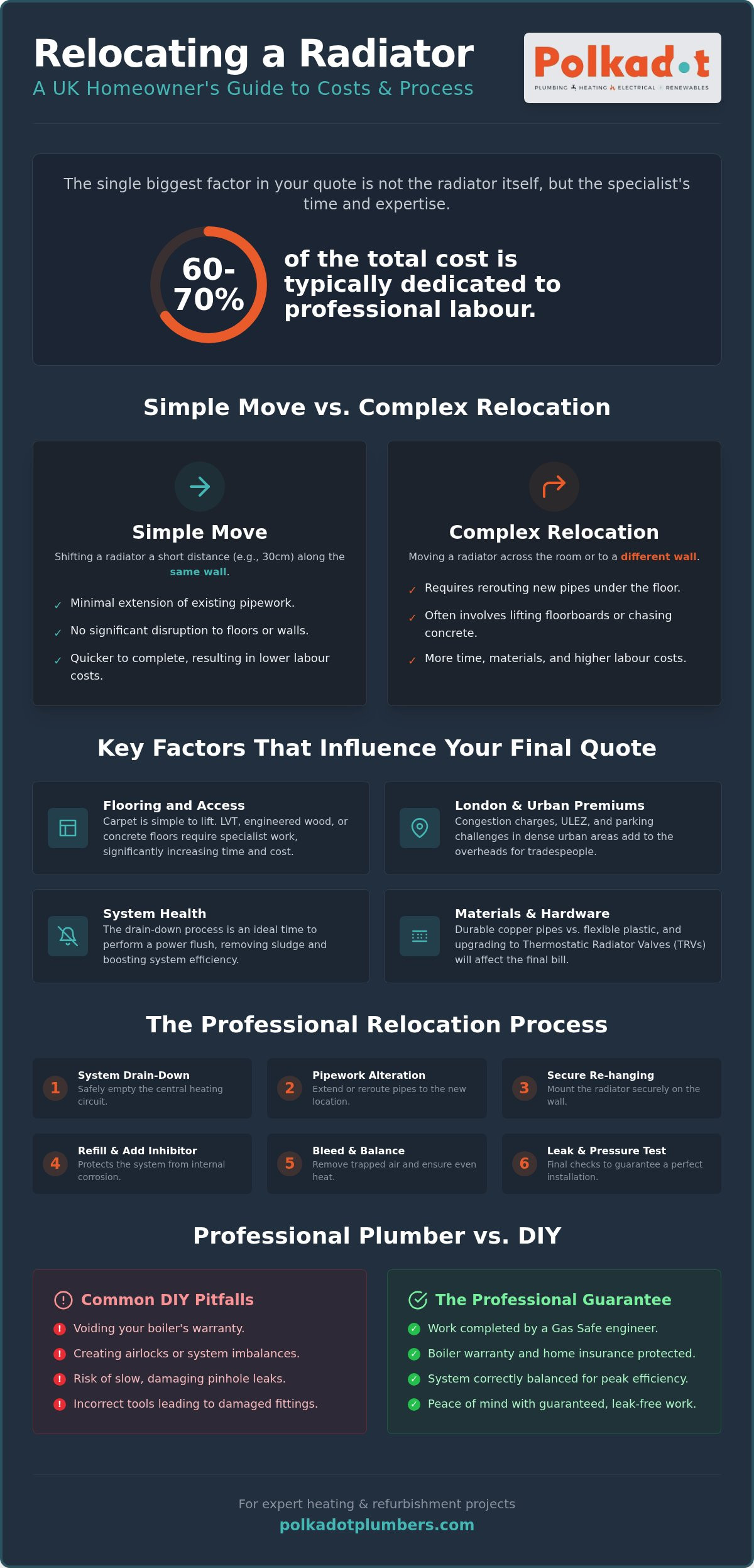
Estimating the cost to move a radiator UK requires a clear look at both the visible hardware and the hidden labour involved. In 2026, the market reflects a shift towards more complex installations as homeowners prioritise energy efficiency and open-plan layouts. While every project is unique, the majority of the investment is found in professional expertise. Labour costs typically constitute 60-70% of a total quote, as the task involves far more than just unscrewing a bracket and shifting a metal panel. It's a precision task that impacts the pressure and balance of your entire heating circuit.
For residents in the capital, London-based services often carry a premium compared to the rest of the country. This isn't just about the higher cost of living; it's a reflection of the logistical hurdles engineers face daily. Congestion charges, ULEZ requirements, and the persistent challenge of finding parking near Victorian terraces or modern apartment blocks all add to the professional's overheads. When you hire a specialist in these areas, you're paying for their ability to navigate these hurdles whilst maintaining a strict schedule and high safety standards.
What is Included in a Standard Quote?
A professional quote should be transparent and all-encompassing to prevent any surprise additions to your final bill. It begins with a full drain down of the central heating system to ensure no water remains in the circuit being altered. Understanding how radiators work within your specific system is vital, as the engineer must determine if you have a sealed or open-vented setup before starting. A standard quote typically covers the safe isolation of the boiler, the necessary pipework alterations using high-quality copper or modern barrier plastic, and the secure re-hanging of the unit. Finally, it includes refilling the system, adding chemical inhibitor to prevent internal corrosion, and conducting rigorous leak tests.
The "Simple Move" vs. "Complex Relocation"
The distance of the move is the primary driver of the final price. A simple move usually involves shifting the radiator along the same wall, perhaps by 30cm to accommodate new furniture or a door swing. In these cases, the existing pipework can often be extended with minimal disruption to the floor. It's a quick, efficient fix that keeps costs low.
In contrast, a complex relocation involves moving the unit across the room or to an entirely different wall. This requires rerouting pipes through floor joists or under floorboards. Extending pipes is straightforward; rerouting them is a significant engineering challenge that takes more time and materials. This is also the ideal time to upgrade to modern thermostatic radiator valves (TRVs). These valves provide better temperature control in the new location, ensuring your room stays comfortable whilst keeping your energy bills manageable and your system balanced.
Key Factors That Influence Your Final Quote
While the labour rate is a significant portion of your budget, the specific materials and property constraints will ultimately define the cost to move a radiator UK. Choosing between traditional copper and modern barrier plastic is often the first decision. Copper remains the gold standard for durability and aesthetic appeal in exposed areas, yet plastic pipework allows for faster installation in hidden voids, potentially reducing the total time on site.
Your system's current health also plays a vital role in the final quote. Since the circuit must be drained, it's a sensible time to assess whether a power flush is necessary. Removing internal sludge ensures your new setup operates at peak efficiency. If you're looking to improve your home's overall thermal performance, the Energy Saving Trust provides excellent resources on how modernised heating systems contribute to long-term savings.
The Impact of Flooring and Access
London’s architectural diversity presents unique challenges that standard price guides often overlook. In Victorian terraces, we often navigate narrow joist spans and fragile lath-and-plaster ceilings that require a delicate touch. Modern flooring also adds complexity. Whilst carpet is easily pulled back, lifting Luxury Vinyl Tile (LVT) or engineered wood requires surgical precision to avoid visible damage. If your radiator is moving to a room with a concrete floor, the process involves 'chasing' out channels to bury the pipes, a labour-intensive task that requires specialised tools and careful dust management.
Additional Materials and Hardware
Hardware choices shouldn't be overlooked as they can shift the final balance. Understanding the cost to move a radiator UK is about more than just the pipework; it's about the environment it sits in. A heavy cast iron or designer model requires reinforced wall brackets and, occasionally, floor supports to ensure safety. It's often more cost-effective to replace an aging, inefficient unit with a modern alternative rather than paying to relocate a failing one. Upgrading to decorative valves or pipe covers can add a polished finish to your space. Our team can help organise your property refurbishment alongside your heating upgrades to ensure a seamless finish.
The Radiator Relocation Process: What to Expect
Relocating a radiator is a methodical procedure that begins long before the first pipe is cut. The process starts with a comprehensive assessment of your existing heating circuit. We identify the flow and return pipes to ensure the new layout won't compromise the system's efficiency. Once the plan is set, the boiler is safely isolated and shut down. This diagnostic approach ensures that we understand the specific pressures of your system, whether you're in a modern apartment or a multi-storey Victorian terrace.
Draining the circuit is the next critical step. This isn't a task to be rushed; every drop of water must be removed from the local pipework to prevent damage to your property. In London's high-rise flats or older properties with complex plumbing, this requires careful management of system pressure. Once the pipes are dry, the physical installation begins. This typically involves lifting floorboards to access the joists or navigating the voids behind partition walls. Whether using traditional soldering for copper or precision crimping for modern barrier pipes, every joint is engineered for long-term reliability. Recognising this level of precision helps homeowners understand why the cost to move a radiator UK is an investment in the structural integrity of their heating system.
Preparation and Protection
We believe that a professional service should be as clean as it is effective. To protect your home, engineers use heavy-duty floor protectors and specialised dust sheets to safeguard your favourite carpets and furniture. It is helpful to clear a two-metre radius around the work area before the engineer arrives. This simple preparation allows for a safer, more efficient workspace and ensures that your belongings are kept well away from heavy tools or the heat required for pipework alterations.
Testing and Balancing the System
A common misconception is that the job ends once the radiator is on the wall. In reality, the final testing phase is what ensures your home stays warm. After re-pressurising the system and adding a chemical inhibitor, we begin the balancing process. Moving one radiator can shift the hydraulic balance of the entire house, potentially causing cold spots in other rooms. We meticulously adjust the valves across your property to ensure even heat distribution. Final safety checks on the boiler pressure and flue provide the peace of mind that your system is functioning at its absolute best.
Moving a Radiator: Professional Plumber vs. DIY
When you're calculating the total cost to move a radiator UK, the temptation to handle the work yourself can be strong. It's often viewed as a simple plumbing task, yet the reality involves complex hydraulic calculations and high-stakes structural alterations. A minor error in pipe sizing or a poorly executed joint can lead to pinhole leaks that remain hidden behind walls for months. These small failures often result in significant structural damp, turning a budget-saving DIY project into an expensive restoration job. Professional intervention ensures that your system remains balanced and your home stays dry.
Beyond the immediate physical risks, there are critical administrative protections to consider. Most modern boiler warranties are conditional; they require all modifications to the central heating circuit to be performed by qualified professionals. If a DIY installation causes a system imbalance or a pressure drop that damages the boiler, you may find your warranty voided. Similarly, many home insurance providers require professional certification for plumbing works to maintain coverage. Working with a Gas Safe registered engineer provides the necessary documentation to satisfy these requirements and ensures that every safety protocol is followed to the letter.
When DIY is (Rarely) Appropriate
Simple maintenance tasks like bleeding a radiator or adjusting a thermostatic valve are perfectly suitable for a confident homeowner. However, relocating the unit is a different category of work entirely. It requires specialised tools, such as hydraulic press guns or high-grade soldering equipment, which are rarely found in a standard domestic toolbox. Attempting to make do with improper tools is a false economy. The time spent troubleshooting a botched installation or repairing a leaked ceiling far outweighs the initial saving on labour costs. We find that the most successful projects are those where the homeowner prepares the space, whilst the technical engineering is left to the experts.
The Benefits of Professional Peace of Mind
Hiring a specialist brings a level of expertise that extends beyond simply joining two pipes. Professionals provide advanced leak detection capabilities and ensure that your system is chemically treated with the correct inhibitors during the refill process. This prevents internal corrosion and extends the life of your radiators and boiler alike. A professional service also includes the proper disposal of old materials and full public liability insurance coverage. This methodical approach transforms a stressful renovation into a smooth, dependable experience. If you want to ensure your heating system is handled with professional integrity, book a consultation with our expert team today.
Choosing Polkadot for Your Heating and Refurbishment Projects
Selecting the right partner for your heating upgrades is about more than finding a technician; it's about finding a guardian for your property. At Polkadot, we understand that the cost to move a radiator UK often includes the subsequent need for high-quality property refurbishment. Whether you are modernising a Victorian terrace in Chelsea or a contemporary apartment in Canary Wharf, our approach is methodical and transparent. We don't just shift pipes; we ensure the new placement integrates perfectly with your home's layout and thermal requirements.
Our expertise allows us to bridge the gap between traditional trade services and modern energy solutions. We frequently integrate radiator relocations with a wider boiler installation or transitions to renewable technologies. This holistic view ensures that your heating system is not only relocated but also optimised for the future of London’s energy landscape. We prioritise clear communication and a commitment to high professional standards, ensuring that every client feels understood and supported throughout the process.
More Than Just a Quick Fix
Many plumbing services leave you with a hole in the wall and a mess to clear. We take a different path. Our team handles the essential after-works that follow a radiator move, including precision plastering and skirting board repairs. We also provide expert heat loss calculations to ensure your relocated unit is correctly sized for the room’s new configuration. This ensures you avoid cold spots and maintain a stabilising warmth throughout the year. Should you require immediate assistance for other issues, our team is equipped to provide emergency plumbing support to keep your home running smoothly.
Start Your Home Transformation
Every London property has its own personality and technical quirks. We offer bespoke quotes tailored to your specific building structure and aesthetic goals. Our focus remains on creating sustainable, efficient heating solutions that reflect modern professional standards. By choosing a partner who values transparency and professional integrity, you can move forward with your renovation with total peace of mind. Contact Polkadot today to secure a dependable, professional radiator relocation and take the first step toward a more comfortable, well-designed home.
Taking the Next Step Toward a More Efficient Home
Relocating a radiator is a strategic investment in your home's comfort and layout. As we've explored, the cost to move a radiator UK is dictated by the complexity of your pipework and the specific access requirements of your property. Whether you're navigating the delicate joists of a Victorian terrace or modernising a high-rise flat, professional expertise is the only way to ensure a leak-free, balanced system that protects your boiler warranty.
Our team of Gas Safe Registered Engineers provides more than just technical skill; we are full property refurbishment specialists who manage everything from the initial drain-down to the final plastering. With London-wide emergency support available, you can trust that your home is protected at every stage. Don't leave your property's integrity to chance with a DIY approach that could lead to hidden damp or system failure.
Book a dependable radiator relocation with Polkadot Plumbers to ensure your project is completed with precision and care. We look forward to helping you transform your living space into a warmer, more efficient environment.
Frequently Asked Questions
Is it expensive to move a radiator to a different wall?
Moving a radiator to a different wall is more complex than a simple shift because it requires rerouting pipework through floor joists or under floorboards. This increased labour and material requirement naturally impacts the total cost to move a radiator UK. In London properties, this often involves navigating narrow Victorian joist spans or chasing into concrete. It's a precision task that requires careful planning to ensure the new layout remains efficient and aesthetically pleasing.
How long does it take a plumber to move a radiator?
A standard radiator relocation typically takes between two and four hours to complete. This timeline includes the essential steps of draining the heating circuit, altering the pipework, and securely re-mounting the unit. More complex jobs involving significant pipe rerouting or lifting engineered flooring can take a full working day. We always include time for re-pressurising the boiler and balancing the entire system to ensure every room in your London home reaches the desired temperature.
Can I move a radiator myself if I am handy with tools?
While basic maintenance is manageable for many, moving a radiator involves technical plumbing and structural alterations that are best left to professionals. DIY attempts carry high risks of pinhole leaks, system imbalances, and potentially voiding your boiler warranty. Most home insurance policies in the UK also require professional certification for plumbing works. Hiring a Gas Safe registered engineer provides the security of guaranteed work and protects the structural integrity of your property’s heating circuit.
Do I need to drain the whole heating system to move one radiator?
Yes, a full or partial drain-down of the central heating system is usually required to prevent water damage during pipework alterations. This process allows the engineer to cut and join pipes without the risk of leaks onto your flooring. Once the move is finished, we refill the system and add a high-quality chemical inhibitor. This treatment is vital for preventing internal corrosion and maintaining the long-term efficiency of your boiler and radiators throughout the year.
Will moving a radiator damage my wooden floors?
Professional engineers use specialised floor protectors and heavy-duty dust sheets to safeguard your wooden floors throughout the process. Whilst lifting original Victorian floorboards is a standard procedure, modern engineered wood or LVT requires a more delicate, surgical approach to avoid visible damage. We prioritise property integrity and ensure that any boards removed for pipe access are replaced securely. This methodical care is a hallmark of a dependable London refurbishment specialist who understands older property structures.
Should I replace my radiator whilst I am moving its position?
Replacing an older radiator during a move is often the most cost-effective choice for long-term comfort. Modern units are significantly more energy-efficient and can be sized precisely for your room's new layout using accurate heat loss calculations. It's also the ideal time to install designer valves or smart TRVs. Upgrading your hardware whilst the system is already drained avoids the future labour costs of a second drain-down and refill, providing better value for your investment.
Does moving a radiator affect my boiler pressure?
The process of moving a radiator will temporarily affect your boiler pressure as the system is drained and then refilled. Once the relocation is complete, the engineer must manually re-pressurise the boiler to its optimal operating level, usually between 1.0 and 1.5 bar. We also perform a vital balancing phase. This ensures that the change in the pipework’s path doesn't cause pressure drops or cold spots in other areas of your home, maintaining a stabilising force in your heating.
Is there a specific time of year that is best for moving radiators?
Spring and summer are generally the best times to organise radiator works because your heating system is already turned off. This timing avoids the discomfort of a cold house during the drain-down process and ensures you aren't competing with winter emergency call-outs. Planning your move during the warmer months also allows for a more relaxed schedule for any subsequent decorating or refurbishment works. It ensures your system is perfectly balanced before the first autumn frost arrives.
Comments