
Damp and Leak Detection: How to Find the Source and Protect Your Property
What if the damp patch on your wall is only a clue to moisture coming from somewhere else? Damp and leak detection starts with investigating the source. Treating visible damage without understanding its cause can lead to the wrong remedy and avoidable disruption.
It can be difficult to tell whether moisture is caused by condensation, a plumbing leak or another issue. Stains, peeling paint and musty smells offer useful clues, but they don’t confirm what is happening behind a wall or beneath a floor. That uncertainty can be worrying when you’re concerned about damage to your property or belongings.
This guide covers common signs and possible causes of damp, what professional detection can establish, and safe first steps to take. You’ll also learn what to prepare before seeking expert help. Polkadot provides damp and leak detection for domestic and commercial properties across London, helping investigate moisture concerns before you decide what to do next.
Table of Contents
Damp and leak detection: what the signs can tell you
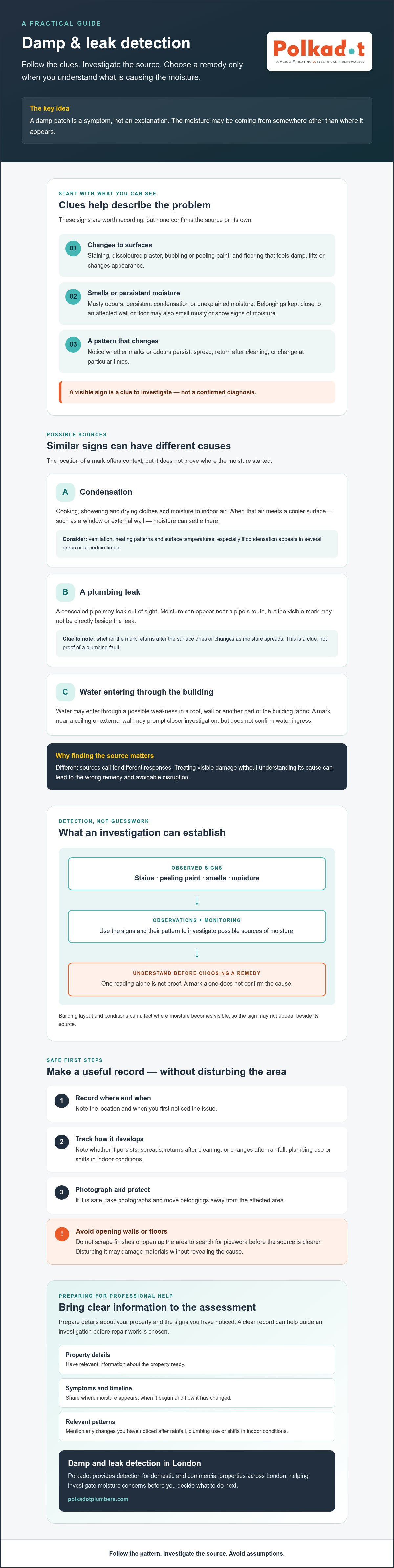
A damp patch is a symptom, not an explanation. Finding where moisture is coming from helps guide the next step and reduces the risk of choosing a remedy that misses the cause. Damp and leak detection involves investigating moisture and considering possible sources, rather than assuming one mark tells the whole story.
A visible moisture symptom is a clue to investigate, not a confirmed diagnosis of its cause. Staining, peeling paint, musty odours, persistent condensation and unexplained moisture can all signal a problem. None, on its own, confirms whether the source is a plumbing leak, condensation or water entering from outside.
What are the common signs of damp or a hidden leak?
Look for changes in the affected area and nearby materials. Paint may bubble or peel, plaster may become discoloured, and flooring may feel damp, lift or change appearance. Belongings stored close to a wall or floor might also develop a musty smell or show signs of moisture. These clues help describe the problem, but they don’t establish its source.
Note whether marks or odours persist, spread or return after cleaning. Record the location, when you first noticed the change and how it develops. If it’s safe, take photographs and move belongings away from the affected area. Avoid scraping finishes or opening walls to investigate. Disturbing the area may damage materials without revealing the cause.
Can damp have more than one possible cause?
Yes. Moisture may come from condensation in indoor air, a plumbing leak or water entering through the building fabric. These causes can have overlapping visible effects. Information about structural dampness describes how condensation and rain penetration, among other sources, can contribute to damp in buildings.
The location of a mark offers context, but it isn’t proof. Building layout and conditions can affect where moisture becomes visible, so a sign may not appear beside its source. Record where the issue shows, whether it changes and any relevant timing. A careful investigation can use those clues to consider what may be happening before a repair is chosen.
How damp develops: condensation, plumbing leaks and water ingress
Moisture can reach a wall, floor or ceiling in different ways, and more than one factor may contribute. Indoor air can leave moisture on cool surfaces, a pipe may leak out of sight, or water may enter through the outside of the building. Similar-looking marks can have different causes, so appearance alone isn’t enough to identify the right remedy.
The overview of damp in buildings explains why correct diagnosis matters: different sources call for different responses. The right remedy depends on where the moisture comes from, not just where it becomes visible.
How can condensation contribute to damp?
Cooking, showering and drying clothes add moisture to indoor air. When that air meets a cooler surface, such as a window or external wall, moisture can settle there. Consider ventilation, heating patterns and surface temperatures, particularly if condensation appears in several areas or at certain times.
Improving ventilation or changing heating habits may help when condensation is part of the problem, but these steps won’t address every source of damp. If moisture persists despite changes or appears in one localised area, consider other possibilities rather than assuming indoor humidity explains it.
How might plumbing leaks or external water ingress appear?
A leak from concealed pipework may cause damp near a pipe’s route, but the visible mark might not be directly beside the leak. It may return after the surface dries or change as moisture spreads through nearby materials. These are clues to investigate, not proof of a plumbing fault. Avoid opening walls or floors to search for pipework before the source is clearer.
Water can also enter from outside through possible weaknesses in a roof, wall or another part of the building fabric. A mark near a ceiling or external wall may prompt a closer look at those areas, but it doesn’t confirm water ingress. If roof condition is a concern, Polkadot’s London roofing services guide offers related property-maintenance information.
Keep a simple record of where and when symptoms appear, and whether they change after rainfall, plumbing use or shifts in indoor conditions. These details can help a professional investigate possible sources before repair work is chosen. For London properties, learn more about damp and leak detection in London from Polkadot.
Damp clues versus diagnosis: what detection methods can establish
A mark on a wall shows where a symptom is visible, not necessarily where moisture began. Your observations help build a useful picture: note where changes appear, when they started and whether they come and go. A visual inspection can then consider surrounding surfaces and accessible parts of the property. These are useful starting points, but neither proves there is a hidden leak or identifies a particular type of damp.
Professional damp and leak detection can add monitoring and further assessment to those initial clues. The aim is to investigate possible sources before deciding what work may be appropriate. Checks should be guided by the property and its signs, rather than applying the same approach in every situation.
What can moisture readings and monitoring tell you?
Readings and monitoring can help identify areas that may need closer attention or show how moisture conditions vary across a property. Their value depends on where, when and how information is gathered, and how it compares with visible symptoms and the building’s context. A reading is evidence to interpret, not a verdict: its location, conditions and relationship to other signs all matter.
Polkadot uses advanced monitoring devices to investigate moisture concerns. If you arrange an assessment, ask which checks are available, what they can establish and what their limitations are. A clear explanation can help you understand whether a finding points to a possible source or simply identifies an area for further investigation.
When is a visual check not enough?
Some moisture sources may be concealed. Pipework can run behind walls or beneath floors, and an intermittent issue might not be active during a brief visit. A surface may look dry even when the underlying concern needs further investigation. Conversely, a damp-looking finish doesn’t automatically mean a pipe is leaking.
A broader assessment can consider visible symptoms alongside relevant observations and monitoring, where appropriate. The suitable approach depends on the property, the pattern of signs and what is accessible. Not every case requires intrusive work or multiple tests. The aim is to choose checks that help distinguish between plausible explanations before settling on a remedy.
Before agreeing to disruptive investigation, ask what the proposed check is intended to find and how its results will guide the next step. Understanding what is known, what remains uncertain and why further assessment may be needed can help you make an informed decision without treating an instrument reading as a diagnosis on its own.
What to do when you suspect damp or a hidden leak
Moisture concerns don’t always require immediate disruptive work. Start by gathering clear information and checking only what’s safely accessible. If the problem is recurring, spreading or unexplained, an assessment can help identify the likely source before you decide what to do next.
What can you safely check before arranging an assessment?
Follow a calm sequence. Don’t dismantle plumbing, disturb electrical fittings or open walls and floors to search for a cause.
Observe: Note where marks, dampness or changes to finishes appear. Check whether they spread, return or change over time.
Document: Record dates and take photographs from the same position as symptoms develop. Note any recent leaks, repairs or ventilation changes that could help explain the timeline.
Check accessible areas: Look for obvious signs around visible pipework, fittings and nearby surfaces. Don’t take equipment apart or touch anything that may be unsafe.
Decide on next steps: If moisture persists, grows or has no clear explanation, arrange a professional assessment rather than starting repairs based on appearance alone.
Keep belongings away from affected areas if you can do so safely. Avoid painting over marks or removing damaged finishes before the source is understood. Doing so may hide useful clues without resolving the moisture.
When should you contact a professional?
Seek professional help if damp keeps returning, spreads to other areas or may involve concealed pipework. A suspected active leak affecting the property warrants prompt attention. If water is close to electrical fittings, keep clear and seek appropriate urgent assistance. Only isolate the water supply yourself if you can do so safely and know how.
Share your notes and photographs, along with details of recent plumbing or heating issues. If the concern relates specifically to a boiler or heating equipment, Polkadot’s boiler installation guide may offer relevant background. Don’t assume the boiler is the source without an assessment.
Polkadot provides damp and leak detection for domestic and commercial properties across London, using advanced monitoring devices to investigate moisture concerns before repair decisions are made. If you’re ready to discuss a persistent or unexplained problem, ask about damp and leak detection.
Professional damp and leak detection in London: the next steps
A few clear details can make an initial conversation more useful. You don’t need to know the cause before asking for help. A concise record of what you’ve seen gives a professional a starting point for discussing a suitable assessment.
What information helps a damp or leak assessment?
Prepare a short summary of the concern, including:
Location: Which room, wall, ceiling or floor is affected? Note any other signs nearby.
Timeline: When did you first notice the issue? Has it changed, returned or spread?
Relevant history: Mention known plumbing problems, previous leaks, recent property work or other changes that may help explain when symptoms began.
Available access: Note whether the area is easy to reach or behind stored belongings. Don’t move heavy items or dismantle anything to prepare.
Photographs can show how a mark has changed, particularly if taken from the same position. Keep your description factual. For example, say that a patch appeared below a ceiling or that a musty smell returns, rather than assuming what caused it.
Access and assessment requirements depend on the property and symptoms. A visible mark may call for different checks from moisture that appears intermittently or seems connected to concealed pipework. Ask what information or access is useful before arranging a visit, and what the proposed assessment is intended to establish.
How can London property owners arrange professional help?
Polkadot offers damp and leak detection for domestic and commercial properties across London, using advanced monitoring devices. The appropriate approach depends on the concern and the property. An initial discussion can help clarify what you’ve noticed and whether the service is relevant before any work begins.
Detection is an investigative step, not a promise of a particular diagnosis or repair outcome. Ask what the assessment can establish, what remains uncertain and what would happen next. Understanding the scope in advance can help you decide whether to proceed before agreeing to disruptive work.
To discuss the signs you’ve recorded, contact Polkadot about damp and leak detection.
Take the next step towards finding the source
Investigate moisture before choosing a remedy. Visible marks and recurring odours can help identify where to look, but they don’t confirm the cause. A careful assessment considers those clues alongside relevant property history and monitoring, without treating a single reading as a complete diagnosis.
Keep a record of what you’ve noticed and how it changes. If the signs persist or remain unexplained, professional damp and leak detection can help you understand what may be happening before deciding on further work.
Polkadot provides damp and leak detection for domestic and commercial properties across London, using advanced monitoring devices. To discuss your concerns and ask what assessment may be suitable, contact Polkadot about damp and leak detection.
With a clearer understanding of the source, you can make a more informed decision about how to protect your property.
Frequently Asked Questions
How can I tell whether damp is caused by a leak or condensation?
You usually can’t confirm the cause from appearance alone, because condensation and leaks can produce overlapping signs. Condensation may appear on cooler surfaces, while a plumbing leak can cause a localised or recurring damp area. These patterns are clues, not proof. Record where moisture appears and how it changes, including any connection to room use or plumbing. A professional assessment can consider these observations alongside further checks.
Can leak detection find a leak hidden behind a wall?
Professional leak detection can investigate whether moisture may be linked to concealed pipework, but no method should be assumed to locate every leak in every property. The appropriate checks depend on the symptoms, layout and accessible areas. Polkadot provides damp and leak detection in London using advanced monitoring devices. Ask which methods are available and what they can establish before an assessment. Avoid opening a wall yourself, as the visible damp may not be directly beside the source.
Is a damp patch always caused by a plumbing leak?
No. A damp patch may be associated with condensation, a plumbing leak or water entering through the building fabric, among other possible explanations. Its position can guide an investigation, but doesn’t confirm the source. For example, a mark on a ceiling may warrant attention to the area above, yet it doesn’t prove a pipe or roof is leaking. Note whether the patch returns or changes, and seek an assessment if the cause remains unclear.
What happens during a professional damp and leak assessment?
An assessment generally starts with a discussion of the signs, their location and when they appeared. The professional may consider relevant property history and inspect accessible areas before deciding whether monitoring or other checks are appropriate. The process should reflect the symptoms and the building, rather than assume one cause. Ask what the proposed assessment can establish, which methods will be used and what limitations apply. Confirm the scope before agreeing to any investigation or disruptive work.
Can moisture detection methods identify the exact source of damp?
Not automatically. Monitoring and readings can help identify areas for closer investigation, but results need to be interpreted alongside their location, timing, visible signs and property conditions. One measurement alone doesn’t necessarily identify the source or show the full extent of a problem. Ask how findings will be interpreted and whether further checks may be needed. For Polkadot’s service, ask which devices and methods are available.
What should I do if a damp patch keeps returning?
Record when the patch returns, where it appears and whether it changes in size or appearance. Take photographs from the same position and note any recent leaks, repairs or changes in room conditions. Don’t simply cover the mark or remove finishes before the source is understood, as that may obscure useful clues. If moisture persists, spreads or remains unexplained, arrange a professional assessment. If you suspect an active leak affecting the property, seek help promptly.
When should I arrange damp and leak detection in London?
Consider arranging an assessment if moisture keeps returning, spreads, has no clear explanation or may involve concealed pipework. You don’t need to identify the cause first. Prepare a short record of affected locations, when symptoms began and any relevant plumbing issues or recent property work. Polkadot offers damp and leak detection for domestic and commercial properties across London, using advanced monitoring devices. Confirm the appropriate service and assessment details before work begins.


Comments