
Domestic air conditioning systems: choose the right type for your home
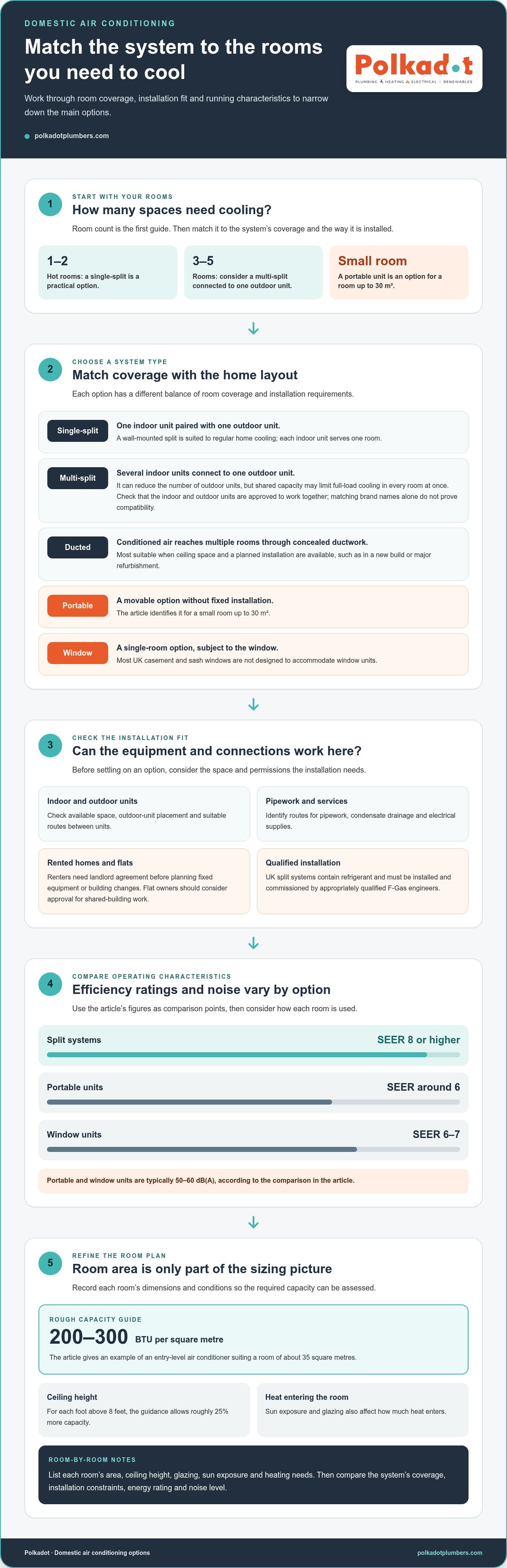
The best domestic air conditioning system in the UK depends on how many rooms need cooling. A single-split system is often suitable for one or two hot rooms, while a multi-split can serve three to five rooms from one outdoor unit. For a small room up to 30 m², a portable unit is another option, and an air-to-air heat pump can provide both cooling and heating.
It’s understandable to want a system that suits your home without making installation or everyday use complicated. The right choice depends on your room layout, available space for equipment and whether you own or rent your property.
This guide compares the main domestic options for houses, flats and rented homes, including their practical trade-offs. You’ll also learn how air conditioning can work as an air-to-air heat pump, helping you decide whether a system that heats as well as cools suits your needs.
Table of Contents
Which air conditioning system is right for your home?
Choosing the best domestic air conditioning system in the UK starts with the rooms you need to cool. Wall-mounted split systems suit regular home cooling, with a single-split pairing one indoor unit with one outdoor unit. That makes it a practical option for one or two hot rooms.
A split system moves heat outdoors using refrigerant. The indoor unit distributes cooled air, while the outdoor unit releases heat. A multi-split connects several indoor units to one outdoor unit, but the components must be compatible. Check that each indoor unit is approved for the selected outdoor unit, as matching brand names alone do not prove compatibility.
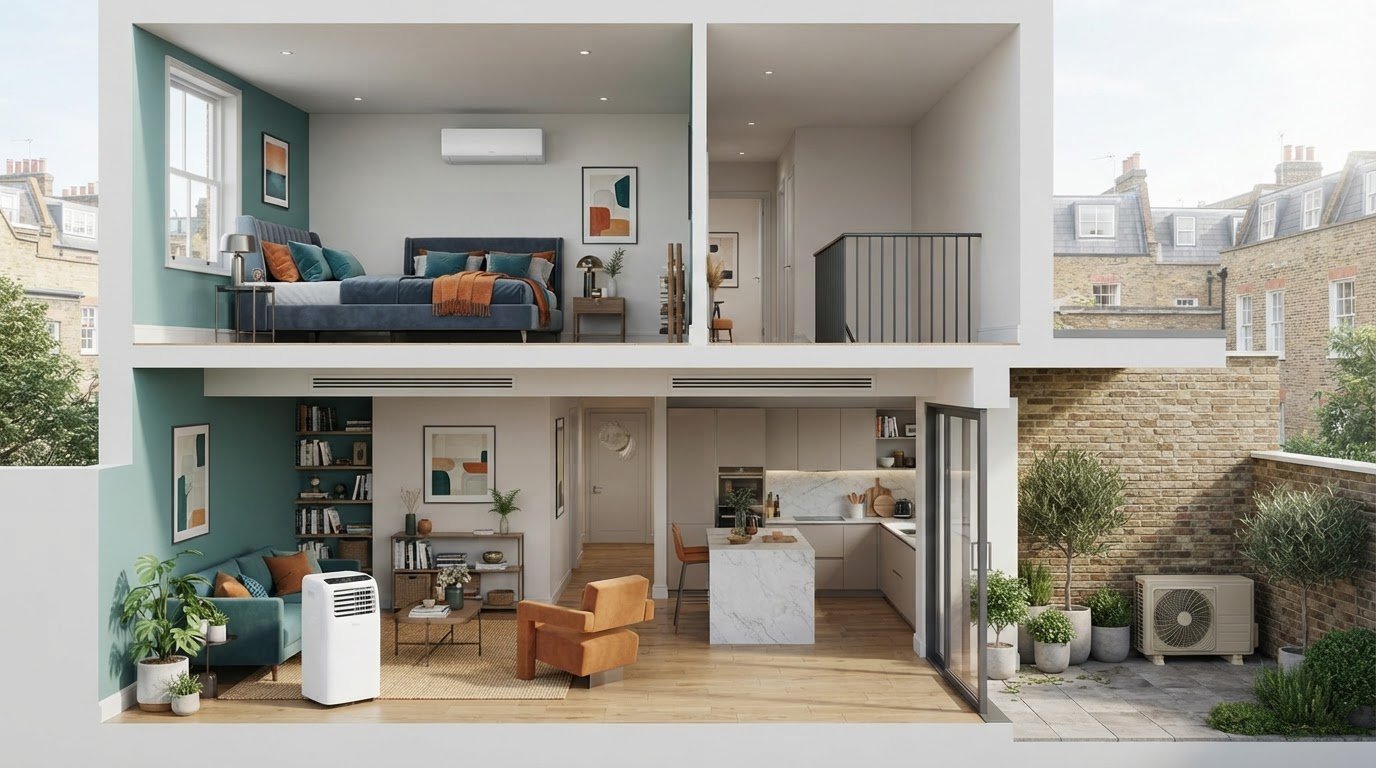
For three to five rooms, a multi-split can reduce the number of outdoor units. However, its capacity may limit full-load cooling across every room at once. Ducted air conditioning conceals distribution ductwork behind ceilings, making it most suitable for a new build or major refurbishment. Portable units avoid fixed installation and can cool a small room up to 30 m². Window units are another option, although most UK casement and sash windows aren’t designed to accommodate them.
Which UK systems are most energy efficient? Split systems can reach SEER ratings of eight or higher; portable units typically rate around six, while window units often rate six to seven. Split units typically use 500 to 1,500 watts per hour.
First match the system to the rooms and installation constraints. Then compare energy ratings, noise levels and how you’ll use each space.
Hybrid systems that provide heating and cooling
A reversible air-conditioning system can cool rooms in summer and provide heating when they need warmth. The key distinction is between room-based air-to-air systems and equipment designed to heat the whole home.
Ducted air conditioning distributes conditioned air through concealed ductwork, making it suitable for whole-home cooling where the layout can accommodate it. Ducted and central air-conditioning systems can last 15-20 years with proper care. A whole-home heat-pump design focuses on heating multiple rooms, while an air-to-air heat pump conditions indoor spaces directly. The right arrangement depends on how heat and cool air will reach each room.
Air-to-air heat pumps
An air-to-air heat pump uses an outdoor unit and indoor unit or units to provide heating and cooling. Refrigerant transfers heat between the indoor space and outside air, reversing direction according to the chosen operation. The described heat pumps can draw heat from outside air at temperatures as low as -20°C. Some achieve SCOP values above 4.5, and some deliver over 4.5 kWh of heat per 1 kWh of electricity consumed. Unlike ducted systems, indoor units can condition specific rooms without distributing air through ducts.
Cooling capacity and room dimensions
Room area helps indicate the cooling capacity required, but it isn’t the only factor. A rough guide is 200-300 BTU per square metre; an entry-level air conditioner in the example could suit a room of about 35 square metres. Tall ceilings increase the volume of air to condition, so the guidance allows roughly 25% more capacity for each foot above eight feet. Sun exposure and glazing also affect how much heat enters a room.
For a practical layout, list each room’s area, ceiling height and heating needs. Plan your home’s heating and cooling around how you use each space.
Choosing a system for homes, apartments and rented properties
Start with the property’s layout, ownership and outdoor space. A London terrace, a flat and a rented bedroom can each bring different installation constraints.
Household needs and brands
Compare brands by checking the system’s intended use, available indoor-unit models and compatibility between indoor and outdoor units. If you want to cool separate bedrooms, make sure the proposed configuration can cover the rooms and meet their capacity needs. A multi-split may serve several bedrooms, but its capacity can limit how effectively it cools every room at full load simultaneously.
In a London flat, outdoor-unit placement can narrow your options. Water-cooled condensers need suitable water and drain connections, as well as any necessary landlord or building approval. Ground-source heat pumps require ground works or boreholes, so they are rarely practical for most London flats and terraces.
Installer qualifications and choice
UK split air-conditioning systems contain refrigerant and must be installed and commissioned by appropriately qualified F-Gas engineers. Ask the installer to explain the proposed equipment, its capacity and how the indoor units will connect to the outdoor unit. Compare the installation and commissioning plans, not just the brand names.
If you rent, get your landlord’s agreement before planning fixed equipment or changes to the building. Flat owners should also consider approval for shared-building work, particularly when outdoor equipment or water connections affect communal areas.
For a London home, work through these decisions:
List which rooms need cooling, such as a south-facing bedroom or a living room.
Record room dimensions, ceiling height, glazing and sun exposure to inform capacity.
Identify suitable routes for pipework, condensate drainage and electrical supplies.
Decide whether one outdoor unit or separate equipment best fits the building.
A Victorian terrace with three rooms to cool may suit a multi-split if pipe routes and outdoor-unit placement are practical. A conservation-area flat may call for a different approach, such as a water-cooled system, if the connections and approvals are suitable. Start with the property’s constraints, then compare compatible models and the proposed system design.
Air conditioning as an air-to-air heat pump
An air-to-air heat pump is an air-conditioning system that can cool rooms in summer and provide heating. It transfers heat rather than producing warmth through combustion. Reversible operation changes the direction of heat transfer, allowing the same indoor unit to cool or warm a room. It may suit you if you want one system for both seasonal needs.
In cooling mode, refrigerant absorbs heat from indoor air and carries it to the outdoor unit, which releases it outside. In heating mode, the cycle reverses: the system takes heat from outdoor air and transfers it indoors. The described heat pumps can extract heat when outdoor temperatures reach -20°C. Unlike a boiler-based whole-home heating system, air-to-air units deliver warmth through indoor units rather than radiators or underfloor pipework.
Efficiency depends on the operating mode and the measure used. Air-to-air heat pumps commonly achieve SEER ratings of eight or above, measuring seasonal cooling performance. Some described systems have SCOP values above 4.5, a seasonal heating measure. The vapour compression cycle is described as offering over 300% efficiency for air-to-air systems. These ratings help compare seasonal performance, but they don’t describe the same operating mode.
For summer comfort, the suggested room temperature is around 23-25°C. Inverter-driven heat-pump systems are advised to operate around 22°C and work alongside good shading. This matters because sunlight through windows adds heat, particularly in south-facing rooms. Closing blinds during strong sun can reduce heat entering the space, helping the system maintain its set temperature.
Before choosing, decide whether you need cooling only or heating too, then compare seasonal ratings for both modes. Consider which rooms need indoor units and how shading affects their heat gain. If an air-to-air system suits your plans, arrange air-conditioning installation for your home.
Polkadot: Air Conditioning
Polkadot provides air conditioning for homes, with room layout, cooling needs and installation requirements all considered. If you’re weighing a single-room system against a multi-room design, discuss how you use each space and what you want the system to do.
You can also consider air conditioning alongside heating or a planned refurbishment, taking the property as a whole into account. Decisions about indoor-unit locations, outdoor equipment and room-by-room comfort help clarify the right approach. Polkadot also provides electrical installations as part of property work.
Contact Polkadot to discuss air conditioning for your home.
Plan your next step towards year-round comfort
Choosing the best domestic air conditioning system in the UK is about finding equipment that works for your home, not simply picking a model. Consider which rooms matter most, how you use them throughout the year and whether a future refurbishment could change the layout. These priorities give you a practical starting point for discussing a suitable design.
Polkadot provides air conditioning, heating and refurbishment services, so you can discuss cooling alongside related home improvements. Before getting in touch, note which rooms you want to condition, any limits on equipment placement and whether you also want heating. That will help focus the discussion on your property and plans.
Take the next step at a pace that suits you. Contact Polkadot about your options and start planning a more comfortable home.
Frequently Asked Questions
Do air con systems need a lot of maintenance?
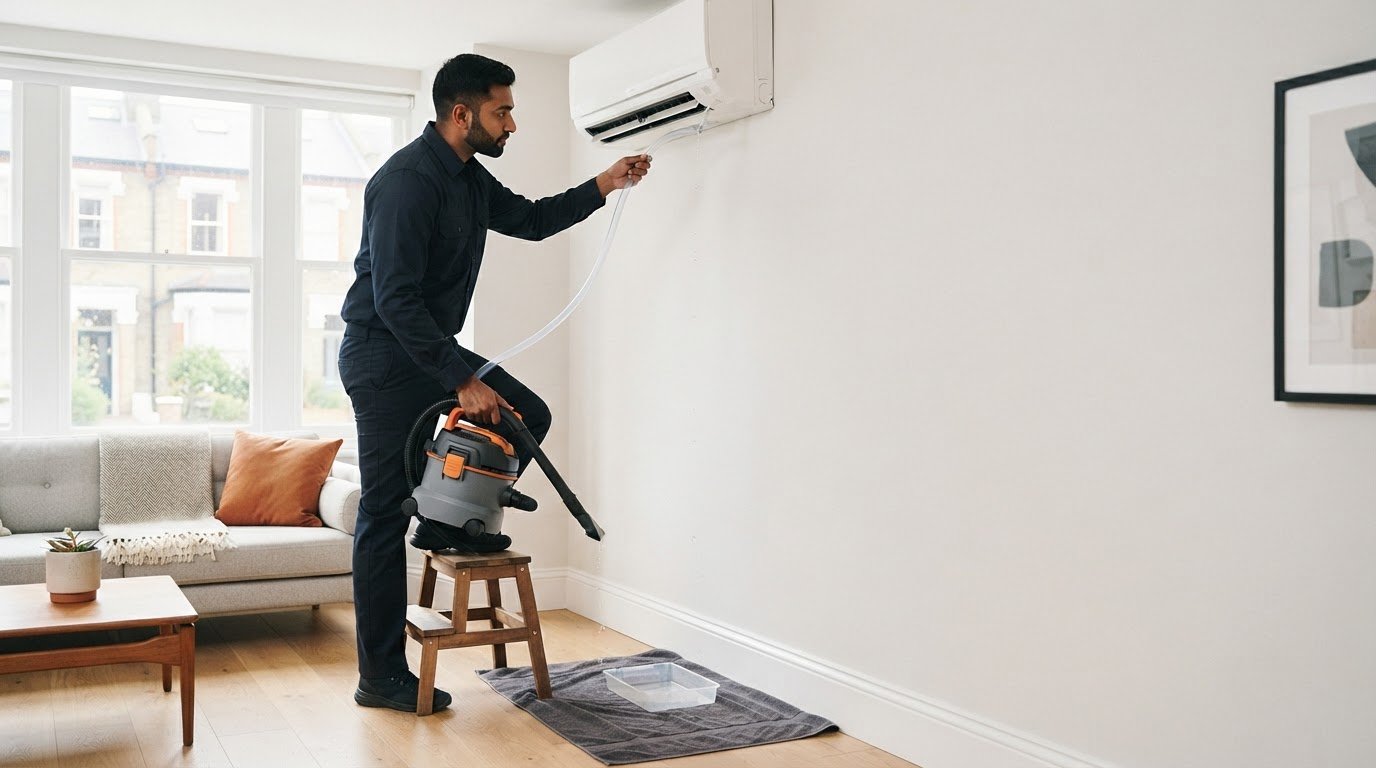
Routine care is straightforward, and regular upkeep helps maintain performance. Clean the filters during periods of use, following the system’s instructions, and arrange a professional service annually. After frequent summer use, for example, check the indoor unit’s filter for dust. Keep the outdoor unit clear of leaves and other obstructions. If you notice unusual noise or reduced cooling, arrange professional attention rather than attempting refrigerant repairs yourself.
What BTU rating air conditioner do I need?
The right BTU rating depends on a room’s heat load, not just its floor area. Consider ceiling height, window size, sun exposure, insulation and how many people use the room. A top-floor bedroom with large, sunny windows, for example, may need more cooling capacity than a shaded room of similar size. Choose a rating suited to the room’s conditions to avoid a poorly sized unit.
What are the main air-conditioning options?
The main options include fixed split and multi-split systems, ducted systems, portable units and window units. Fixed systems suit planned, regular cooling; portable units can move between rooms, while ducted designs distribute air through concealed routes. In London, weigh installation space, appearance and the property’s layout against your cooling needs. The system type determines where equipment sits and how cooled air reaches each room.
Where will I need to put the outdoor unit?
Position the outdoor unit where it has room for airflow, stable support and a practical route for pipework and drainage. Avoid obstructing ventilation or placing it where operating noise could disturb bedrooms or neighbours. In London flats, shared walls, balconies and communal areas can limit placement. Planning permission is not usually required for a carefully positioned domestic unit in the UK, although exceptions may apply.
Which brand should you choose?
Compare brands by seasonal efficiency, sound levels, controls and suitability for your rooms. For a multi-split system, check that the manufacturer lists the proposed indoor and outdoor models as compatible. Compare equivalent ratings: a cooling-efficiency rating does not describe heating performance. Consider whether the unit’s features meet your priorities, such as quiet operation in a bedroom or heating in cooler months.
What types of domestic air conditioning systems are available in the UK?
UK homes can use single-split and multi-split systems, ducted air conditioning, portable units and window units. Some properties may also suit water-cooled systems with indoor condensers, provided suitable water and drainage connections are available. Evaporative coolers are another option, but refrigerant-based air conditioning is generally better suited to the UK climate. The right type depends on the building, the rooms to condition and whether fixed installation is practical.
Comments