

Emergency Plumbing Advice: Your Essential Damage Limitation Checklist (2026)
- James Nathan
- 1 day ago
- 12 min read

The "Golden 15 Minutes" of a plumbing emergency determines whether you face a minor mop-up or a full-scale renovation of your London property. When water starts pooling where it shouldn't, it's vital to have access to reliable emergency plumbing advice to prevent the situation from spiralling. You might be frantically searching for your stopcock or worrying about the safety of your electrical system while the water continues to rise.
We understand that these moments are incredibly stressful, but having a clear plan can make all the difference. Our guide focuses on immediate damage limitation, giving you the tools to stabilise the situation before a professional arrives. You'll learn exactly how to shut down your water supply, isolate electrical hazards, and protect your belongings from further harm.
In this guide, we provide a practical checklist for 2026 to help you manage the crisis effectively. We'll cover the vital steps to minimise long-term damp issues and explain how to verify that you're hiring a Gas Safe registered expert who meets the highest professional standards in the capital. This methodical approach ensures you move quickly from a state of uncertainty to a clear, safe path to resolution.
Table of Contents
How to Identify a Genuine Plumbing Emergency
Deciding whether to call for help at 2 am or wait until Monday morning is a common dilemma for London homeowners. A genuine plumbing emergency is any situation that presents an immediate risk to your property's structure, the health of its occupants, or the availability of essential services. If you're unsure, ask yourself if the issue will cause irreversible damage within the next few hours. If the answer is yes, you need professional emergency plumbing advice to stabilise the situation immediately.
Structural threats often manifest as high-volume leaks or signs of hidden failure. You should look out for:
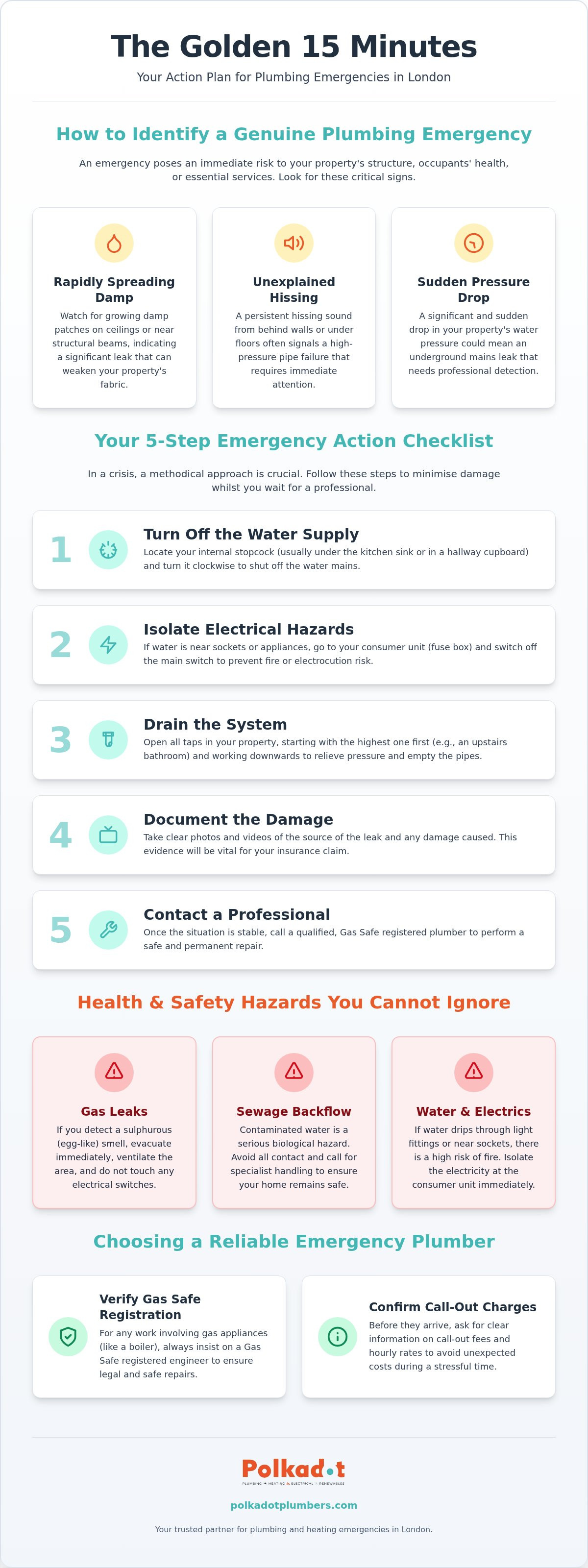
Rapidly spreading damp patches: Especially on ceilings or near structural beams where water can weaken the building's fabric.
Unexplained hissing sounds: This often indicates a high-pressure pipe has failed behind a wall or under floorboards.
Sudden drops in water pressure: Combined with damp ground outside, this suggests an underground mains leak that requires specialist detection.
Urgent vs. Emergency: Saving Your Budget
Understanding the difference between an urgent repair and an emergency can protect your bank balance. A dripping tap or a radiator that won't get hot are urgent issues, but they don't typically require an immediate call-out. You can usually manage these by placing a container under the leak and booking a standard appointment. However, a total boiler failure during a London cold snap is a different matter. Without heating, pipes are at risk of freezing and bursting, which could turn a minor fault into a major refurbishment project.
Health Hazards You Cannot Ignore
Your safety is always the priority. Some plumbing and heating failures pose direct risks to your well-being. If you detect the faint, sulphurous smell of gas, you must evacuate the property immediately and ventilate the area. Don't touch any electrical switches, as even a small spark could be dangerous. Similarly, sewage backflow is a serious biological hazard. Contaminated water contains harmful bacteria and requires specialist handling to ensure your home remains safe and habitable.
In many London property conversions, bathrooms are positioned directly above kitchens or living spaces. If you notice water dripping through light fittings or tracking down walls near sockets, the risk of fire or electrocution is high. In these cases, isolating the electricity at the main consumer unit is your first priority before seeking professional assistance to locate the source of the water ingress.
Your 5-Step Emergency Plumbing Advice Checklist
When a pipe bursts or a leak accelerates, your response in the first few minutes can save thousands of pounds in restoration costs. This structured sequence of emergency plumbing advice is designed to protect your property before a professional arrives. Speed is essential, but acting methodically ensures you don't overlook critical safety steps.
Step 1: Locate and turn off your internal stopcock by turning it clockwise.
Step 2: Shut off the electricity at the consumer unit if water is near any sockets or appliances.
Step 3: Open all taps to drain the remaining water and relieve pressure from the system.
Step 4: Take clear photos and videos of the leak and any resulting damage for insurance records.
Step 5: Contact a Gas Safe registered professional to carry out a permanent repair.
Mastering the Stopcock and Isolation Valves
In older London terraces, your stopcock is likely tucked under the kitchen sink or hidden behind a small hatch in the hallway. If you live in a modern flat, it might be located in a communal riser cupboard or a utility cupboard. Turn the handle clockwise to close it. If it's seized, don't use excessive force as you could snap the spindle. Instead, look for individual isolation valves. These are small, silver components on the pipes leading to taps or toilets. Use a flat-head screwdriver to turn the slot so it's perpendicular to the pipe, which stops the flow to that specific fixture.
Safe Drainage and Electrical Isolation
Once the water is off, you must empty the system to stop the dripping. Follow the "Top-Down" rule. Open the highest tap in the house first, then work your way down to the lowest. This prevents airlocks and ensures the system drains quickly into your sinks rather than through your ceilings. If water has reached your electrical system, head straight to your consumer unit. Switch off the "Main Switch" or the specific circuit for that room. If you suspect water has entered the main service head or the leak is affecting external street supplies, you may need to contact UK Power Networks for advice on electrical safety.
After you've stabilised the leak and documented the damage with clear notes, your final step is to contact a professional. For those requiring London emergency plumbing, always verify that your engineer is Gas Safe registered to ensure the highest safety standards are maintained throughout the repair process.
Managing Common London Plumbing Disasters
London's diverse housing stock presents unique challenges when things go wrong. From high-pressure systems in modern apartments to the intricate pipework of Victorian conversions, understanding the specific nature of your disaster is key. This emergency plumbing advice focuses on the most frequent issues faced by London residents, where a single leak can quickly affect multiple neighbouring properties.
If you're dealing with a burst pipe, a bucket and towel are only the beginning. High-pressure systems can discharge hundreds of litres of water in a very short time. Once you've isolated the supply, wrap the pipe tightly with heavy towels to contain any residual spray and direct the flow into a basin. In converted flats, remember that your water supply may be shared. If you shut off the internal stopcock and it doesn't stop the flow, the leak might be on a communal rising main, requiring you to locate the external boundary valve or contact the building manager immediately.
The Frozen Pipe Protocol
During a London cold snap, uninsulated pipes in lofts or against external walls are at high risk. You can often identify a frozen section using a simple "touch test" by running your hand along the pipework; the blockage is usually located at the coldest point. To thaw it safely, start from the tap end and work backwards towards the supply. This allows meltwater to escape as the ice thins. Use a hairdryer on a low setting or wrap the pipe in towels soaked in warm water. You must never use a blowtorch or open flame, as the intense heat can cause the pipe to split or even start a fire within the wall cavity.
Dealing with Boiler and Heating Failures
Boiler issues often stem from a drop in system pressure or a seasonal blockage. If your heating fails in winter, check the plastic condensate pipe that leads outside. If this pipe freezes, the boiler will shut down as a safety precaution. You can often restore service by pouring warm (not boiling) water over the frozen external section. Always take note of any error codes displayed on the boiler's control panel. Providing these codes to your Gas Safe registered engineer helps them arrive with the correct parts, speeding up the resolution. Whilst waiting for a repair, use portable electric heaters safely, ensuring they are kept away from any damp areas or trailing water.
The Emergency Preparation Kit: Preventing the Next Crisis
Preparation is the most effective form of emergency plumbing advice we can offer. While knowing how to react to a burst pipe is vital, having a pre-assembled kit and a proactive plan can stop a minor leak from becoming a structural disaster. Most homeowners wait for a crisis to strike before looking for a wrench or a plumber's number. By taking a few simple steps now, you ensure that your response is measured rather than panicked.
Your physical toolkit should include more than just a basic plunger. Keep a dedicated plumbing bag containing an adjustable wrench for tightening loose nuts and a roll of PTFE (thread seal) tape to temporarily stem weeping joints. It's also helpful to have a "Stopcock Tag" attached to your main water valve. This is a simple, brightly coloured label that makes the valve easy for every family member to identify in the dark or under a crowded kitchen sink. If everyone in the household knows where it is, the water can be isolated in seconds rather than minutes.
Smart Home Leak Prevention
Modern technology has transformed how we manage domestic water risks. Wi-Fi enabled water sensors are now an affordable way to monitor high-risk areas like under the boiler, behind the washing machine, or beneath the kitchen sink. These microscopic sensors detect moisture the moment it appears and send an immediate alert to your smartphone. For the ultimate level of property protection, consider installing an automatic shut-off valve. These devices integrate with your smart home hub and can automatically close the main water supply if they detect an unusual flow pattern or a sudden drop in pressure, protecting your home even when you're away.
The Homeowner’s Emergency Folder
In the heat of a crisis, you don't want to be scrolling through search results. Maintain a digital or physical "Emergency Folder" that is accessible to everyone in the house. This should include the contact details for your Gas Safe registered engineer, the location of your external water meter (usually found under a small cover on the pavement outside), and your home insurance policy number. Having these details ready allows you to file a claim rapidly and ensures that the professional you call is already vetted and trusted.
The most reliable way to avoid a middle-of-the-night disaster is to identify weaknesses before they fail. Booking a professional plumbing survey allows an expert to check your pipework, seals, and heating systems for signs of fatigue. This preventative approach is the best way to maintain the integrity of your London property and ensure your plumbing remains efficient and safe for years to come.
Choosing a Reliable London Emergency Plumber
Once you've followed the initial emergency plumbing advice to isolate the water and protect your belongings, the focus shifts to finding a professional who can provide a permanent solution. In a city as large as London, it's easy to feel overwhelmed by the sheer number of service providers. However, selecting an engineer based on their technical credentials and local experience is essential to ensure the job is done safely and correctly the first time. A rushed choice often leads to temporary patches rather than long-term fixes.
Verification starts with the Gas Safe Register. It's a legal requirement for anyone working on gas appliances, which often includes boiler-related plumbing issues. Beyond legal compliance, look for transparency. A reputable firm will provide a clear explanation of how they calculate their call-out charges and any subsequent hourly rates. This honesty prevents the added stress of unexpected costs once the repair is complete. Local expertise is also a significant factor. London's plumbing infrastructure is unique; Victorian conversions often have complex, shared pipework, while modern high-rises utilise sophisticated high-pressure systems. An engineer who understands these nuances can quickly diagnose issues that might baffle a less experienced technician.
Questions to Ask Over the Phone
When you're on the phone, don't be afraid to ask direct questions. A professional service provider will welcome your diligence. Use these three queries to vet your options:
"Are you Gas Safe registered for the specific work required?" This ensures they're qualified to handle boiler or gas-related failures safely.
"Do you provide a written report for my insurance company?" Documentation is vital if you need to claim for structural water damage later.
The Polkadot Promise of Reliability
We organise our London emergency plumbing response to prioritise the safety of your property and the comfort of your family. Our engineers are seasoned professionals who carry the air of authoritative experts whilst remaining approachable and helpful. We don't just patch a leak; we provide a stabilising force during a technical failure. Because we also specialise in full-service refurbishment, we can help you transition from an emergency repair to a complete restoration if your property has suffered significant water damage. This comprehensive approach ensures that your home isn't just dry, but fully restored to its original standard with professional integrity and transparency.
Securing Your Property Against Future Plumbing Risks
Managing a plumbing crisis requires a balance of immediate action and professional expertise. By mastering the location of your stopcock and understanding when a leak poses a structural threat, you've already taken the most important steps to protect your London property. This emergency plumbing advice ensures that you're never caught off guard, whether you're dealing with a burst Victorian pipe or a modern boiler failure.
Our approach at Polkadot is built on reliability and technical excellence. Our Gas Safe registered engineers utilise specialised leak detection technology to identify issues quickly, minimising the need for invasive repairs. We're committed to providing comprehensive London property maintenance that transitions seamlessly from emergency support to long-term care and refurbishment.
If you're currently facing a crisis or simply want to book a preventative survey to avoid future disasters, we're here to help. Contact Polkadot for dependable London emergency plumbing support and regain your peace of mind today. You now have the tools and the knowledge to handle any situation with confidence.
Frequently Asked Questions
What is considered a plumbing emergency in the UK?
A plumbing emergency is any situation that poses an immediate risk to your property's structure, the health of residents, or the loss of essential services. This includes uncontrollable leaks, burst pipes, and sewage backups that could cause significant damage if left for more than a few hours. If the problem threatens safety or makes the home uninhabitable, it requires professional emergency plumbing advice to stabilise the situation immediately.
How do I find my internal stopcock in a London flat?
In London flats, the internal stopcock is most commonly located under the kitchen sink or in a utility cupboard where the main water pipe enters the property. In some Victorian conversions, you might find it behind a small access panel in the hallway or even under the floorboards near the front door. If you cannot find it, check with your building manager to see if there's a communal isolation valve.
Can I fix a burst pipe myself temporarily?
You can attempt a temporary fix to limit damage, but you should never consider it a permanent solution. Once the water is off, wrapping the pipe tightly with heavy towels or using specialist repair putty can stem the flow. However, because London's high-pressure systems can easily dislodge temporary patches, you must still call a Gas Safe registered professional to replace the failed section of pipework properly.
Is a boiler breakdown considered an emergency for landlords?
Yes, a boiler breakdown is typically classified as an emergency, particularly during the winter months. Under the Landlord and Tenant Act 1985, landlords are legally responsible for keeping the supply of water, gas, electricity, and space heating in good repair. If a tenant is left without heating or hot water in cold weather, it's considered a priority repair that should be addressed by the landlord within 24 hours.
What should I do if I smell gas in my home?
If you smell gas, your priority is to evacuate the building immediately and call the National Gas Emergency Service. Open all windows and doors to ventilate the property as you leave. Don't turn any electrical switches on or off, and don't use naked flames or smoke. Once you're safely outside, wait for a qualified professional to declare the area safe before you attempt to re-enter the property.
Will my home insurance cover the cost of an emergency plumber?
Coverage depends on your specific policy and whether you have "Home Emergency Cover" included. Most standard policies cover the cost of repairing the damage caused by a leak, such as ruined flooring or ceilings, but they don't always cover the plumber's call-out fee or the repair of the pipe itself. Always check your policy wording carefully and document the incident with clear photos to support your claim.
How can I prevent my pipes from freezing during a London cold snap?
Preventing frozen pipes involves proper insulation and maintaining a steady internal temperature. Ensure all pipes in unheated areas, like lofts or basements, are fitted with foam lagging. During extreme cold snaps, keep your heating on a low, constant setting, even when you're out. You can also open cabinet doors under sinks to allow warmer air to circulate around the pipework and prevent ice from forming inside.
What information should I have ready when calling an emergency plumber?
When seeking emergency plumbing advice, have your full address, the specific location of the leak, and any visible boiler error codes ready. Inform the engineer if you've already isolated the water or electricity and mention if the property is a flat or a house. Clear communication about access issues, such as parking restrictions or security codes, helps the professional arrive and begin the repair as quickly as possible.


Comments