
EV charger installation cost in London: home prices and grants
A home charger’s price depends on more than the unit. The cable route, electrical work and parking setup can all affect the EV charger installation cost in London. The final figure reflects what your property needs, so two installations can cost different amounts even with similar chargers.
It’s sensible to want a clear idea of the likely costs before arranging work, especially when grants and permission may also affect your plans. From 1 April 2026, eligible renters, flat owners and residential landlords can apply for a chargepoint grant of up to £500 per charge point.
This guide explains what can influence the installation bill, what grant support may apply, and how off-street parking, renting or living in a flat can affect permission. You’ll have a clearer picture of what to consider before choosing a home charging setup.
Table of Contents
How much does it cost to install an EV charger at home?
A London installation quote reflects the charger, electrical supply and work needed between the consumer unit and mounting point. Because the EV charger installation cost in London depends on the property, a survey can establish the scope before you compare quotations.
Typical home charger installation prices
A supply-and-install price covers the home charger and the work to fit it; the final cost depends on the property. For this installation service, the price depends on the case and is provided after a quote request, with the charger, cable route and electrical work shaping the scope.
London and UK prices aren’t interchangeable: access, property layout and the existing electrical setup can affect the work. Ask for the quote to specify whether it includes the charger unit, mounting, cabling and any required electrical changes, so you can compare like with like. These details help explain differences in EV charger installation costs in London.
Home charger suitability
A home EV charger is suitable when the property’s electrical supply and proposed mounting position can support a safe installation. A survey can assess the consumer unit, cable route and the parking location for your electric vehicle.
For example, a charger mounted close to the consumer unit may need a different cable route from one fitted at the far end of a garage. The parking arrangement matters too: a clear route to the vehicle makes regular charging more practical and helps define the installation work.
Comparing 7 kW and 22 kW charger costs
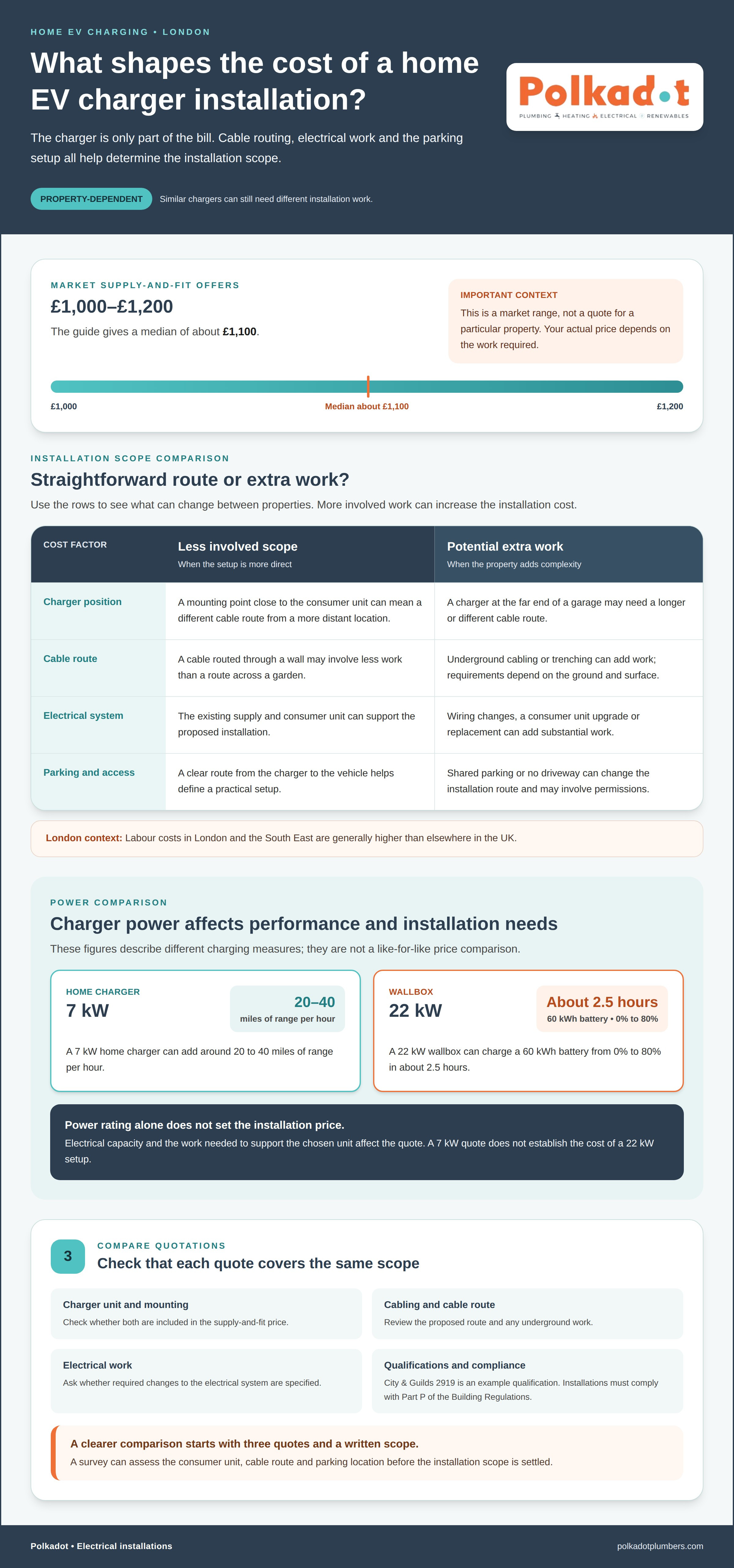
A 7 kW and a 22 kW charger differ in power, charging speed and the installation requirements they may involve. A 7 kW home charger can add around 20 to 40 miles of range per hour, while a 22 kW wallbox can charge a 60 kWh battery from 0% to 80% in about 2.5 hours.
There’s no like-for-like London price comparison without knowing the property’s supply and installation scope. A quote for 7 kW doesn’t establish the cost of a 22 kW setup; electrical capacity and the work needed to support the chosen unit affect the comparison.
Charger unit and labour costs
The charger unit and installation labour are separate parts of a supply-and-fit quote, so check that both are included. For a clear comparison, request three quotes and review the charger, mounting, cabling and electrical work specified in each.
Ask about qualifications too. City & Guilds 2919 is an example qualification for EV charger installation, and according to the Ministry of Housing, Communities and Local Government, installations must comply with Part P of the Building Regulations. A written scope makes it easier to compare what each quote covers.
Home EV charger grants: what help is available in 2026?
UK chargepoint grants can reduce eligible installation costs, but support depends on your home, parking and vehicle. The relevant scheme also affects the information you need to provide.
Available chargepoint grants
From 1 April 2026, eligible applicants can receive up to £500 per charge point, covering 75% of buying and fitting costs. The grant amount increased from £350 and runs until 31 March 2027, helping eligible households reduce the amount they pay themselves.
A separate government scheme supports residents without driveways, including installations using embedded pavement channels. This matters if a driveway isn’t available, although pavement access and the installation route remain central to whether home charging is practical.
Grant eligibility
The home chargepoint grant is available to eligible renters, people who own and live in a flat, and residential landlords. Eligibility also depends on having private off-street or allocated parking and owning, leasing or having ordered an eligible electric or plug-in hybrid vehicle.
That parking condition can distinguish a standard home grant from support aimed at households with on-street parking. Property type and parking arrangements therefore matter before treating an estimate as grant-supported. Businesses may also be eligible under expanded chargepoint grant arrangements, with the relevant grant type depending on the installation.
How the EV charger grant application process works
From 1 April 2026, applicants for a home charging grant must provide a dated quote. The estimate should relate to the proposed chargepoint installation, including the unit and fitting work, so the application reflects the planned project rather than a general typical cost.
Most home charging grant approvals are processed within 10 working days. Once approved, the grant can reduce eligible purchase and fitting costs, subject to the 75% limit and £500 cap per charge point. For residents without a driveway, pavement-channel wiring may involve a different route and permissions from a standard private parking installation.
Once grant eligibility is clear, home charging installation is the practical next part of planning a suitable setup.
Factors that increase installation costs
The main cost drivers are the charger, cable route and condition of the home’s electrical system. A straightforward installation needs less work than one involving a long cable run, consumer unit upgrade or excavation.
On the market, typical home charger supply-and-fit offers range from £1,000 to £1,200, with a median of about £1,100. This is a market range, not a quote for a particular property. The installed price can rise if the charger sits far from the consumer unit or the wiring needs changes.
Labour costs in London and the South East are generally higher than elsewhere in the UK. The amount of work matters too: routing a cable through a wall differs from underground cabling across a garden. A consumer unit replacement can add substantial work, while trenching requirements depend on the ground and surface.
Ongoing costs depend on how much you drive and your electricity tariff. In October 2026, the average unit rate under the Ofgem price cap was 26.32p per kWh for standard variable tariff customers paying by direct debit. The average UK public slow or fast charging price was 54p per kWh, last checked in June 2026. A cheaper home tariff can change the cost of charging an electric car.
What should you expect for warranties and maintenance? Home chargers typically come with a three-year warranty, and a high-quality unit should last between 10 and 15 years. Keep the charger and cable in good condition, and follow the manufacturer’s maintenance guidance.
The cheapest installation quote may not cover the same work as another. Compare the charger model, cable route, consumer unit work and testing included. A clear breakdown shows whether a price reflects a straightforward installation or leaves out necessary electrical work. Also check how any required DNO notification is handled and whether the proposed work meets installation standards.
Off-street parking and installation permission
Parking arrangements affect where a charger can be mounted, how wiring reaches the vehicle and whose permission is needed. A driveway or garage usually provides a clearer route than street parking.
Off-street parking and property permissions
A home charger generally needs private off-street parking, such as a driveway or garage. The parking space and cable route are therefore central to planning the installation.
Renters and flat owners need permission from the owner or freeholder before work begins. In a shared car park, the proposed charger may also affect communal areas or shared wiring, so resolve permission and installation scope upfront. Quotes can then reflect the actual location and work rather than assume a standard private driveway.
Planning permission and installation duration
Planning requirements depend on the property and installation location, so don’t assume the same answer applies to every London home. Where there’s no driveway or private off-street parking, local council rules are relevant to the proposed setup.
A straightforward home installation typically takes two to four hours. A longer cable route, shared access or additional electrical work can change the time involved. Establishing the mounting point and route in advance helps clarify the schedule and whether property permissions need to be arranged first.
Installing chargers in flats and shared car parks
In a London flat or shared car park, the owner or freeholder’s permission is needed before installing a home charger. The price depends on the installation requirements, including the charger position, wiring route and any work involving shared infrastructure.
Without a driveway, ask your local council about rules for a charger connection across the pavement. Kerbside options can include embedded pavement channels, which allow a cable to cross the pavement. A professional can assess the proposed route and installation requirements; street parking alone doesn’t establish permission to install a private charger.
Once parking access and permissions are clear, plan a home charger installation around the property’s layout and wiring route.
Polkadot: Electrical Installations
Polkadot provides electrical installations for home EV chargers in London. If your property has a suitable parking space and you’ve considered the cable route, charger position and any permissions, Polkadot can help with the electrical work your installation needs.
Turn to Polkadot when you’re ready to move from comparing costs and grant eligibility to planning the work at your property. The consumer unit’s location, proposed mounting point and access to the parking space help define the installation requirements. If you live in a flat or share a car park, permission remains an important part of planning.
For an electrical installation that fits your home and charging setup, contact Polkadot to discuss your project.
Plan your home charging setup with confidence
Choosing a charger is also a decision about how charging should fit into everyday life. Consider where your car usually parks, how you expect to use it, and whether the proposed position will remain practical as your household’s needs change. This gives you a clearer brief for discussing the EV charger installation cost in London and helps keep the focus on a setup that suits your home.
With your preferred location and requirements in mind, Polkadot’s electrical installation service can help move your project from planning towards the work. Discuss your home charging project and the electrical installation it involves, including decisions you’ve made about the charger’s position and use.
Contact Polkadot about your installation to discuss the next step. A well-planned setup can make home charging a more natural part of your routine.
Frequently Asked Questions
How Can You Estimate Your EV Charger Installation Costs in the UK?
Estimate the project from an itemised quote, not the charger’s advertised price alone. Ask for separate descriptions of the unit, installation labour, cable route, mounting and any electrical work. For example, a garage installation quote should make clear whether it includes the cable run from the consumer unit. Comparing the same scope helps identify what could change the final bill.
Can you get a free EV charger?
A free home charger isn’t automatic, but eligible grant support can reduce what you pay. The chargepoint grant covers 75% of eligible purchase and fitting costs, up to £500 per charge point. Whether that covers the full amount depends on the installation’s eligible cost. Renters and people who own and live in a flat may qualify, subject to the scheme’s other conditions.
How long does it take, and who can fit one?
A straightforward home installation typically takes two to four hours, while extra electrical work can extend the job. A certified professional should carry out the installation. The Ministry of Housing, Communities and Local Government says EV chargers must comply with Part P of the Building Regulations. Before work starts, agree where the unit will be fitted and how the cable will reach your vehicle.
How quickly does a home charger pay for itself?
There’s no single payback period: it depends on the installation cost after any grant and the charging savings over time. Compare your home electricity tariff with what you’d otherwise spend charging publicly, then factor in your annual mileage and vehicle efficiency. For example, regular home charging on a cheaper tariff can change the calculation compared with relying mainly on public chargers.
Should you get a smart charger?
A smart charger can be useful if you want charging to work with an electricity tariff that offers cheaper off-peak rates. Most new domestic chargepoints in the UK must meet smart charging requirements, including demand-side response and default off-peak charging features. Consider how you’ll charge day to day, and whether the charger’s functions suit your vehicle, household routine and energy tariff.
Comments