
How Do Air Heat Pumps Work? A Simple UK Homeowner’s Guide
What if the air outside could help warm your home, even on a cold winter’s day? It can sound unlikely, so it’s understandable to ask how do air heat pumps work, and whether they can keep a UK home comfortable when temperatures drop.
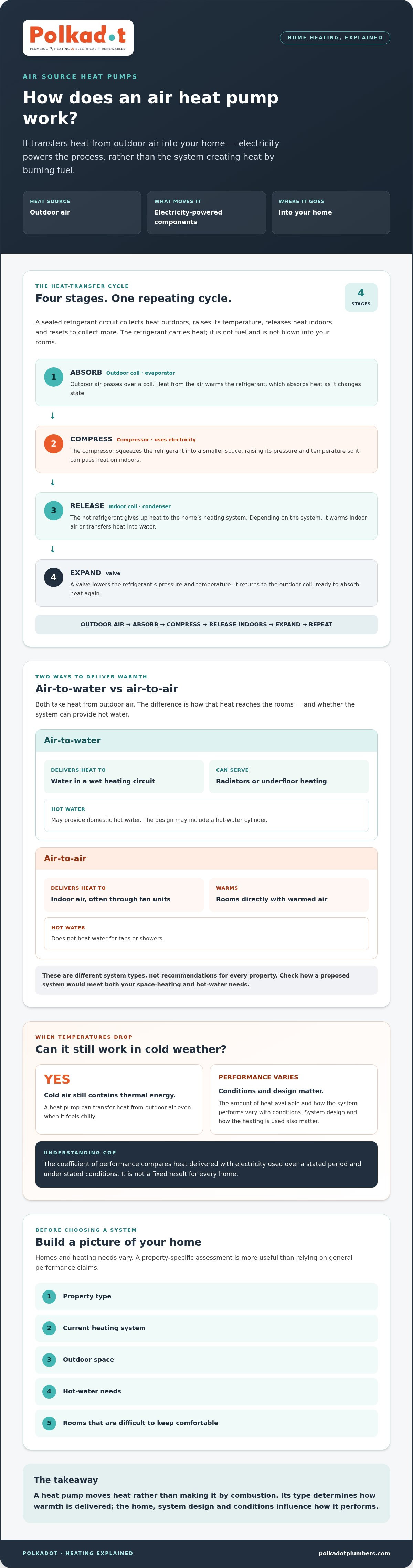
The basic idea is simpler than the technical terms suggest: a heat pump transfers heat from outdoor air into your home. The system determines how that warmth reaches you. Air-to-water models heat water for radiators or underfloor heating and may also provide hot water. Air-to-air models warm indoor air but don’t produce hot water.
This guide explains the heat-transfer cycle, what can change in colder weather and which parts of your existing heating system may need attention. It also covers what to check about your property, insulation and heat distribution before choosing a system. Because homes and heating needs vary, look for a property-specific assessment rather than relying on general performance claims.
Table of Contents
How air source heat pumps work: the basics
To understand how do air heat pumps work, start with the main difference from a gas or oil boiler: a heat pump transfers heat rather than creating it by burning fuel. Electricity powers the process of moving heat from outdoor air into the home. Even air that feels cold contains thermal energy, although the amount available and the system’s performance vary with conditions.
In brief: an air source heat pump takes heat from outdoor air and transfers it indoors; a ground source heat pump takes heat from the ground instead. The technical overview of how air source heat pumps work explains the refrigeration cycle and the main system types in more detail.
A useful comparison is a fridge working in reverse. A fridge removes heat from inside and releases it into the room; a heat pump collects heat outside and moves it into the home. The comparison has limits: a heat pump isn’t simply a backwards fridge, and it doesn’t produce warmth through combustion. Electricity powers components such as the compressor, which help move heat through the system.
What does an air source heat pump actually do?
The outdoor unit draws air across a heat exchanger. Heat from the air warms refrigerant circulating inside the system. The refrigerant can change between liquid and gas as its pressure and temperature change, allowing it to absorb and carry heat. So, although outdoor air may feel chilly, heat can still be transferred from it. The next stages raise the refrigerant’s temperature and pass its heat on indoors.
Where does the heat go inside the home?
The type of heat pump determines how warmth is delivered. In an air-to-water system, heat transfers to water in a wet heating circuit, which can supply radiators or underfloor heating. In an air-to-air system, the unit delivers warmed air directly into rooms, often through indoor fan units. These are different system types, not recommendations for every property.
Domestic hot water depends on the system’s design and components. An air-to-water setup may include a hot-water cylinder, while an air-to-air heat pump doesn’t heat water for taps or showers. Check how a proposed system would meet both your space-heating and hot-water needs, rather than assuming all air source heat pumps work in the same way.
Inside an air heat pump: the four stages that move heat
How do air heat pumps work inside the unit? A sealed refrigerant circuit repeatedly collects heat outdoors, raises its temperature, releases it indoors and returns to collect more. The refrigerant circulates through pipes and components; it isn’t fuel and it isn’t blown into your rooms. Electricity powers the parts that move heat, particularly the compressor.
Absorb, compress, release and expand: these four stages move heat from outdoor air into the home and reset the refrigerant for another cycle.
How the refrigerant captures and concentrates heat
First, outdoor air passes over a coil, and its heat warms the refrigerant inside. This is the absorb stage: the coil is called the evaporator, and the refrigerant takes in heat as it changes state. The system can draw heat from air that feels cold to us, although conditions affect how it performs.
Next, the refrigerant travels to a component that squeezes it into a smaller space. This raises its pressure and temperature, making it hot enough to pass heat on indoors. That component is the compressor, which uses electricity. The refrigerant carries heat; it isn’t the original energy source.
How heat reaches the home and the cycle repeats
Now the hot refrigerant flows through another coil, where it gives up heat to the home’s heating system. This is the release stage, carried out by the condenser. Depending on the heat pump type, the heat warms air directly or transfers into water for a wet heating circuit. The Energy Saving Trust’s homeowner guide offers further context on heat pumps and household considerations.
Finally, the refrigerant passes through a valve that lowers its pressure and temperature. This is the expand stage. The cooled refrigerant returns to the outdoor coil, ready to absorb heat again. The cycle continues while the system is running.
You may also see performance described using the coefficient of performance (COP). It compares the heat delivered with the electricity used over a stated period and under stated conditions. It isn’t a fixed result for every home: outdoor temperature, system design and how the heating is used all matter. Ask what conditions a quoted COP represents and how the proposed system is suited to your property. For a London home, you can explore air source heat pump installation as part of that property-specific discussion.
Air-to-water vs air-to-air: how the systems differ
Both systems take heat from outdoor air, but they deliver it indoors in different ways. Air-to-water distributes heat through water in a heating circuit; air-to-air distributes heat through warm air blown into rooms. This affects the types of emitters used, how hot water is arranged and how well a system fits your existing setup.
If you’re wondering how do air heat pumps work in your home, compare the two delivery methods rather than assuming one is best for everyone. The table gives a simple overview. The Energy Saving Trust’s guide to air source heat pumps offers further homeowner-focused information.
These are general descriptions, not a specification for every installation. Your existing heating equipment, property layout and household hot-water requirements all influence which arrangement may be suitable.
How air-to-water heat pumps work with home heating
An air-to-water system transfers heat into water that circulates through a wet heating circuit. That water can warm compatible radiators or underfloor heating, depending on the system design. If you also need hot water for taps and showers, the installation may require a cylinder or other components. Check exactly what the proposed setup includes, as hot-water provision shouldn’t be assumed from the system name alone.
How air-to-air heat pumps warm indoor spaces
An air-to-air system uses indoor units to distribute heated air into rooms, rather than warming water for radiators. Domestic hot water isn’t automatically part of this arrangement, so you’d need to consider separately how your home will provide it. Some air-to-air systems can also provide cooling, but only if designed for reverse-cycle operation. Confirm which functions are included in the specific system being assessed.
To compare options fairly, gather details about your current heating, hot-water setup and the rooms you want to heat. A property-specific assessment can establish whether your existing distribution system is compatible and what changes, if any, might be needed.
Do air source heat pumps work in cold weather?
Yes, an air source heat pump can continue to transfer heat when the outdoor air is cold. Cold air still contains heat, but the pump may have to work harder to extract it as temperatures fall. Its heat output and efficiency can vary, so there’s no single performance figure that applies to every home or every winter day.
If you’re asking how do air heat pumps work during a cold spell, look beyond the outdoor temperature alone. The system’s design, controls and the way heat is distributed around the property all affect indoor comfort. A brief cold snap doesn’t automatically make a heat pump unsuitable, but it does make correct sizing and design especially important.
What changes when outdoor temperatures fall?
As the air gets colder, the heat pump may need to use more electricity to maintain the required indoor warmth. In some conditions, moisture can collect and freeze on the outdoor coil. The system may then run a defrost cycle, temporarily clearing the frost so heat can transfer effectively again. This is part of how some systems operate, not by itself a sign that the unit has stopped working.
What matters is how the system responds as a whole. Controls, the selected unit and the property’s heating demand should be considered together. Ask how the proposed design is expected to maintain comfort in colder weather, rather than relying on general claims about performance.
Why the home and heating system matter
A heat pump needs to be matched to the heat a home loses. Insulation, draughts, room sizes and how each room is used can all influence that demand. A room-by-room assessment can identify areas that may need particular attention, rather than assuming the whole property has the same heating requirement.
The heating emitters matter too. Radiators or underfloor heating must be suitable for the system’s design, and the temperature of water circulating through a wet heating circuit affects how warmth reaches the rooms. Controls also help manage comfort in response to household routines and changing conditions. There isn’t one radiator size, flow temperature or control setting that suits every property.
Before deciding, ask for a qualified, property-specific assessment covering heat loss, room demand, emitters, controls and expected operation in cold weather. This gives you a clearer basis for comparing options than a generic efficiency claim. If you’re considering a heat pump for your London home, discuss air source heat pump installation with Polkadot as part of your next steps.
What to check next: planning an air heat pump for a London home
Understanding how do air heat pumps work is a useful first step. Choosing a suitable system calls for a closer look at your home, existing heating and practical installation constraints. London properties vary widely, from flats with limited outdoor space to houses with established radiator systems, so an assessment should reflect your particular situation.
Before requesting one, gather a few key details:
Property type: Note whether you live in a house or flat, and any shared walls or restrictions that could affect equipment placement.
Current heating: Record your heating system, controls and emitters, such as radiators or underfloor heating.
Outdoor space: Identify possible locations for an outdoor unit, access routes and practical constraints, including proximity to neighbouring spaces.
Hot-water needs: Describe your current arrangement and whether you have a hot-water cylinder.
Comfort concerns: Note rooms that are hard to heat, temperature differences between rooms, or times when the home feels uncomfortable.
Planning considerations depend on the property and proposed installation. Check with the relevant local planning authority for requirements that may apply to your address, and ask whether building-control considerations need to be reviewed. Don’t assume that guidance for another London home applies to yours.
What should a homeowner prepare before an assessment?
Bring details of your heating controls, emitters and hot-water setup, along with any information you have about insulation or previous improvements. Point out likely outdoor-unit locations and access limitations. Ask how the proposed design will account for heat loss, noise, controls and ongoing maintenance, and how it will distribute warmth through your rooms.
How to move from learning to a suitable installation
Compare written proposals based on your home, not headline efficiency claims alone. A useful design should explain the system being considered, how it meets your heating and hot-water needs, and any changes that may be required. If you’re also considering solar panels or battery storage, ask whether they fit your household’s energy setup rather than assuming they’re automatically needed.
Polkadot provides air source heat pump installation and heating services across London. If you’re considering a heat pump, solar panels or battery storage, discuss how the options could fit your property and energy setup. When you’re ready to talk through your requirements, discuss your heating and renewable energy installation needs.
Take the next step towards a heating plan that fits
So, how do air heat pumps work? They transfer heat from outdoor air, then deliver it through a system suited to the home, either via water-based heating or warm air. Cold weather doesn’t automatically rule them out, but performance and comfort depend on factors such as the property, system design and heat distribution.
Before choosing, consider your current heating, hot-water needs, available outdoor space and any rooms that are difficult to keep comfortable. A home-specific assessment can help you compare options and understand what installation would involve, without relying on general performance claims.
Polkadot provides air source heat pump installation alongside heating and renewable energy services across London. If you’re ready to explore whether a heat pump could suit your property, Discuss an air source heat pump for your home.
With a clear view of your home’s needs, you can compare options and decide on a practical next step.
Frequently Asked Questions
How do air heat pumps work in simple terms?
Air heat pumps take heat from outdoor air and transfer it into a home using electricity to power the process. A refrigerant absorbs heat, a compressor raises its temperature, and the system releases that heat indoors before the cycle repeats. Unlike a boiler, it moves heat rather than creating warmth by burning fuel. How that heat reaches rooms depends on whether the system is air-to-water or air-to-air.
Do air source heat pumps work when it is cold outside?
Yes, an air source heat pump can still transfer heat in cold weather because outdoor air continues to contain thermal energy. However, available heat, output and efficiency can vary as temperatures fall, and some systems may run a defrost cycle to clear frost from the outdoor coil. Whether a home stays comfortable depends on the system design, controls, heat emitters and the property’s heat loss, not outdoor temperature alone.
What is the difference between air-to-air and air-to-water heat pumps?
An air-to-water heat pump transfers heat into water circulating through a wet heating circuit, which can serve compatible radiators or underfloor heating. An air-to-air heat pump sends warmed air directly into rooms through indoor units. Their hot-water arrangements differ too: air-to-water systems may include components such as a hot-water cylinder, while air-to-air systems don’t automatically provide domestic hot water. Suitability depends on your home and heating setup.
Can an air heat pump heat radiators and hot water?
An air-to-water heat pump can heat water for compatible radiators, subject to system design and the radiators’ suitability. It may also provide domestic hot water if the installation includes the appropriate cylinder or other components. An air-to-air heat pump warms rooms directly and doesn’t automatically heat water for taps or showers. Ask an assessor to explain how a proposed system would meet your home’s space-heating and hot-water needs.
How does a heat pump move heat indoors?
A heat pump uses a refrigerant circulating in a sealed circuit. The refrigerant absorbs heat at the outdoor coil, then a compressor raises its pressure and temperature. At the indoor heat exchanger, it releases heat into air or a water-based heating circuit. A valve then lowers the refrigerant’s pressure so it can return outdoors and absorb heat again. The refrigerant stays within the system; it isn’t blown into rooms.
Are air source heat pumps suitable for London homes?
They may suit some London homes, but a property-specific assessment is needed to understand what’s practical. Property type, insulation, room-by-room heat loss, existing emitters, hot-water needs and outdoor space can all affect the design. Access, noise and local planning considerations may also need checking for the particular installation. If you’re considering a heat pump in London, ask for a written proposal that explains how it suits your home.
Does an air heat pump also provide cooling?
Some air-to-air heat pumps can provide cooling if they’re designed to operate in reverse-cycle mode. This allows the system to transfer heat out of the room rather than bringing warmth in. Cooling isn’t a standard function to assume for every heat pump, and air-to-water systems have different arrangements. Check the specific system’s functions and indoor units, and confirm whether cooling is included in the proposed design.


Comments