
Quietest Home Air Conditioning in the UK: How to Choose a Quiet System
The air conditioner with the lowest noise figure on its specification sheet isn’t always the quietest choice for your home. If you’re searching for the quietest home air conditioning UK homeowners can choose, look beyond one number. Where the sound is measured, how the system operates and where its outdoor unit can be sited all affect what you hear.
It’s understandable to worry about a unit disturbing your sleep, interrupting conversation or causing noise concerns for neighbours. Manufacturer figures can also be difficult to compare when they refer to different operating settings or types of sound measurement.
This guide explains which noise ratings matter and how to compare them fairly. It covers the real-world noise, installation requirements and home suitability of different air-conditioning arrangements, from portable units to systems with indoor and outdoor components. You’ll also find practical questions to ask an installer about room layout, unit placement and your priorities. A professional site assessment can help identify installation considerations before you choose, so you can make a more informed decision.
Table of Contents
What makes a home air-conditioning system quiet in the UK?
Noise can matter most when you’re trying to sleep, concentrating on work or enjoying a quiet moment at home. A low figure on a specification sheet is a useful starting point, but it can’t tell you exactly how a system will sound in your room. Perceived quietness depends on the measured sound, the operating mode, equipment placement and the room itself.
There isn’t one noise figure that guarantees the quietest home air conditioning UK households can choose. Use ratings to narrow down options, then check the precise model and the conditions used to measure it.
What does a dB(A) rating tell you?
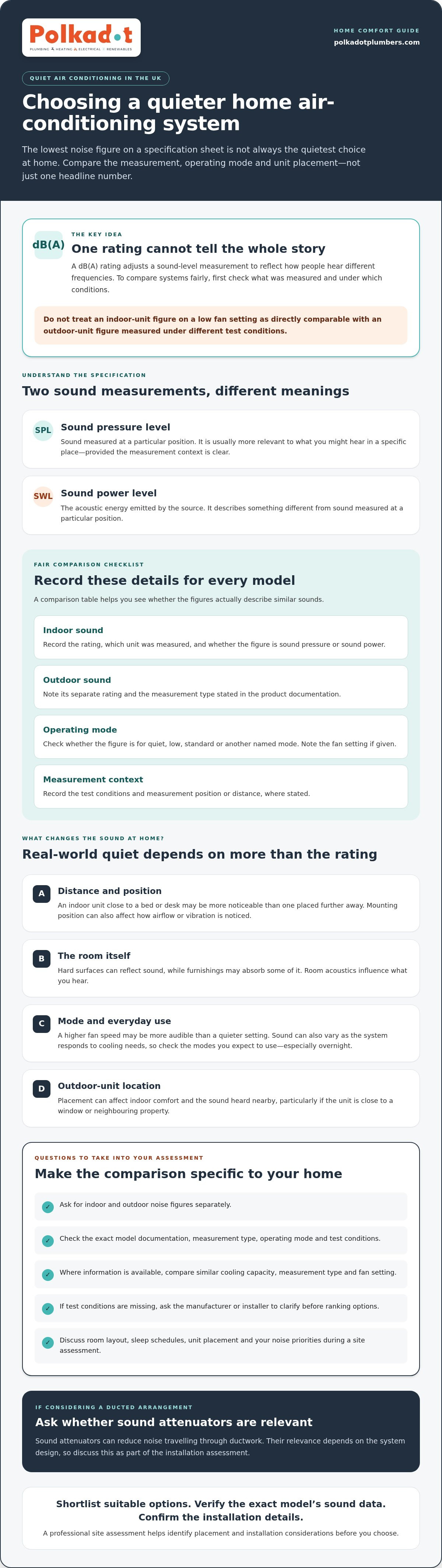
A dB(A) rating is a sound-level measurement adjusted to reflect how people hear different frequencies. However, two figures labelled dB(A) may describe different things. Sound pressure level (SPL) relates to sound measured at a particular position, while sound power level (SWL) describes the acoustic energy emitted by the source. SPL is usually more relevant to what you might hear in a specific place, but only when the measurement context is clear.
Check the product documentation for the unit being measured, its operating mode and fan setting, and the test conditions, including measurement distance where stated. Don’t compare figures as if they were like for like when one describes an indoor unit on a low fan setting and another describes an outdoor unit under different test conditions. Verify ratings against the exact model documentation rather than relying on a general range or headline claim.
Why can the same system sound different at home?
Distance and position affect how much sound reaches you. An indoor unit close to a bed or desk may be more noticeable than one placed further away. Room acoustics matter too: hard surfaces can reflect sound, while furnishings may absorb some of it. Mounting position can also affect whether airflow or vibration is especially noticeable in a particular spot.
Everyday use changes the sound as well. A higher fan speed may be more audible than a quieter setting, and the sound can vary as the system responds to the room’s cooling needs. Compare figures for the modes you expect to use, especially overnight.
Consider the outdoor unit separately. Its position can affect comfort indoors and the sound heard by people nearby, particularly if it’s close to a window or neighbouring property. If you’re considering a ducted arrangement, sound attenuators can reduce noise travelling through ductwork, but their relevance depends on the system design. A site assessment can help you discuss room layout, mounting position and outdoor-unit placement before choosing.
How to compare air-conditioning noise ratings fairly
Noise specifications are most useful when they describe the same kind of sound under comparable conditions. A figure for a low-speed indoor unit can’t fairly be compared with an outdoor-unit figure measured at a different output. Use a comparison table to record what each number represents before deciding which systems may suit your home.
Which noise figures should buyers look for?
For a system with indoor and outdoor units, ask for the noise figures for each unit separately. Note whether each specification gives sound pressure or sound power, and check which operating mode applies. A quiet-mode figure may help you assess overnight use, but it might not represent the sound at a higher output when the system is working harder. Check the product documentation for the exact model, not just a general range or product-family claim.
How can you compare manufacturer claims without being misled?
Where information is available, compare systems with similar cooling capacity, measurement type and fan setting. If a specification leaves out the test conditions, ask the manufacturer or installer to clarify before using it to rank options. The Federation of Environmental Trade Associations (FETA) represents the UK heating, ventilation, refrigeration and air-conditioning sector; manufacturer documentation remains the place to verify a particular model’s figures.
A fair noise comparison uses figures measured for the same type of unit, at a comparable operating setting and under clearly stated test conditions.
Treat terms such as “silent” or “whisper-quiet” as marketing descriptions, not measurements. They don’t explain which unit was tested, the mode selected or how the result was obtained. To assess the quietest home air conditioning UK options for your priorities, compare the underlying specifications rather than relying on those labels.
If you’re planning an installation in London, a site assessment can help you discuss possible equipment positions and which noise information to verify. Discuss air-conditioning installation considerations with a specialist before settling on a shortlist.
Which home air-conditioning system arrangement may be quieter?
System layout affects where sound is generated and where you’re likely to hear it. A portable unit keeps its cooling equipment in the room, while a split arrangement places some equipment outside and connects it to an indoor unit. Systems marketed as having no outdoor unit keep their equipment within or at the building, but designs vary. None is automatically the quietest choice for every home.
The quietest suitable option depends on its location and operating conditions. Model design, output, fan setting and installation all matter. The categories below explain trade-offs, not guarantee how a particular unit will sound. Polkadot provides air-conditioning installation and maintenance in London. Ask about the system options available for your home before adding a particular type to your shortlist.
What noise trade-offs should you consider between system types?
With a portable or other self-contained unit, the fan and compressor are in or close to the occupied room, so check the model’s indoor sound figures and the conditions behind them. Confirm practical installation requirements too, including how the unit needs to be positioned and whether its outlet arrangements suit the room.
A split system has an indoor unit and an outdoor unit. Moving some equipment outside may change what you hear indoors, but it doesn’t remove the need to consider sound. Indoor airflow can still be audible, and the external unit needs a suitable location. Both depend on the exact model and installation. The CIBSE guidance resource can help readers explore the professional building-services context, but ask an installer to explain how the proposed design applies to your home.
How do UK homes and flats affect system choice?
Start with the room where sound matters most. In a bedroom, consider how close an indoor unit would be to the bed and whether its operating modes suit your usual sleep times. Room size affects the cooling capacity needed; windows, room layout and available mounting positions can also shape what is practical. Don’t choose on noise figures alone if the proposed system isn’t suitable for the space.
Flats need extra checks. Before arranging work, review your lease and ask the building manager or freeholder about requirements for equipment, external alterations and shared areas. In London, limited external space and close neighbours can make outdoor-unit siting a particular consideration, but the restrictions depend on the property and proposal. Don’t assume one rule applies to every home.
To narrow down the quietest home air conditioning UK option for your property, shortlist by room use and installation layout, then verify the exact model’s sound data and operating modes. Ask a specialist to assess possible positions and discuss your noise priorities before you decide.
How to choose a quiet air conditioner for your home
Use this checklist to turn noise priorities into practical questions before choosing a system. Start with how you use the room, then check the specific equipment and installation plan rather than relying on a general claim that a unit is quiet.
Set your priorities. Is the system for a bedroom, home office or living space? Note when you need it to run, whether sleep is a priority and which times call for quieter operation.
Match capacity to the room. Share the room’s dimensions and intended use with the installer. A suitable recommendation should account for the space as well as your noise preferences.
Check model-specific sound data. Ask for the exact model’s indoor and, where relevant, outdoor sound figures. Confirm which operating mode and fan setting each figure describes, and compare the settings you expect to use.
Review the proposed locations. Ask where indoor and outdoor equipment would go, why those positions are suitable, and whether the indoor unit would be close to a bed or desk.
Clarify the work involved. Ask how installation and commissioning will be handled, what electrical requirements need to be considered, and what future maintenance the system may require.
For advice based on your room layout and noise priorities, discuss air-conditioning installation with Polkadot. A site assessment can help you understand practical options without assuming any system will be silent.
What should a quietness-focused site assessment cover?
Make sure the assessment considers room dimensions, how the space is used, sleeping areas and your likely operating schedule. Discuss possible mounting surfaces, pipe routes and practical equipment positions. These details help connect model specifications to how the installation may work in your home.
Ask what building permissions or current UK requirements need checking for the proposed work, particularly if you live in a flat or the plan involves external equipment. Requirements can depend on the property and installation, so confirm what applies rather than relying on a general assumption.
What should you ask before accepting a recommendation?
Request the exact model and operating mode behind any quoted noise figure. Ask why the proposed indoor and outdoor positions have been selected, and how commissioning and future maintenance will be managed. If a figure or installation detail is unclear, ask for an explanation before proceeding. This gives you a clearer basis for choosing the quietest home air conditioning UK option suited to your property and routine.
Plan quieter air conditioning installation with a London specialist
Once you have shortlisted suitable options, check each model’s sound specifications and operating modes, then assess how the equipment could fit your home. A site assessment connects product information with room layout, possible unit positions and external constraints. Confirm the proposed equipment and installation details before agreeing to work.
Correct positioning and careful commissioning can support comfortable operation, but no installation can guarantee silence. For an overview of the wider process, consult the air conditioning installation in London guide alongside the model-specific information for your shortlisted system.
What happens during a professional air-conditioning assessment?
An installer can review which rooms you want to cool, how you use them and where you’d prefer equipment to go. Share any concerns about sleep, work or noise near neighbouring properties. The assessment should also consider whether the proposed equipment and installation are feasible for your property, including practical locations and any relevant constraints.
Ask for clear information about the specific model being proposed, including which sound figures apply to which operating modes. If the recommendation changes after the site review, request an explanation of what changed and why.
How can you prepare for an installation conversation?
A little preparation makes it easier to discuss what matters to you. Before speaking with an installer, note:
Which rooms you want to cool and how each is used.
When you expect the system to run, including any overnight use.
Any sleep-related noise concerns or preferred equipment locations.
Relevant property details, including flat-management or building requirements you’ve been given for proposed work.
Use this information to compare your shortlist, verify the specifications and confirm the proposed equipment positions and installation approach. These steps can help you decide which option may suit your priorities, rather than relying on a broad claim about the quietest home air conditioning UK homes can have.
Polkadot provides air-conditioning installation and maintenance across London. Discuss home air-conditioning installation with Polkadot to talk through your rooms, noise priorities and installation considerations.
Make your next step a quieter, better-planned installation
Choosing the quietest home air conditioning UK option isn’t just about finding the lowest number on a specification sheet. Compare sound figures for the exact model and the operating modes you expect to use, then consider how room layout and equipment position could affect what you hear. A suitable choice depends on your home and how you use it.
Before agreeing to work, shortlist options, verify their noise data and ask for a clear explanation of the proposed equipment positions and installation details. Good positioning and commissioning can support comfortable operation, though no system can be guaranteed silent.
Polkadot provides residential air-conditioning installation and maintenance across London. If you’d like to discuss your rooms, noise priorities and installation considerations, discuss a quieter air-conditioning installation for your home.
With the right questions and a site-specific plan, you can move forward with greater confidence and find an option suited to your home.
Frequently Asked Questions
What is the quietest type of air conditioning for a home?
There isn’t one arrangement that’s quietest in every home. Split systems can keep some equipment outside the room, while ducted systems can distribute air through outlets, but the sound you hear depends on the model, operating mode, design and installation. Portable and self-contained units have their equipment in or near the room. To find the quietest home air conditioning UK option for your needs, compare model-specific sound figures and consider where each component would sit.
How quiet should a home air conditioner be?
There’s no single noise rating that guarantees an air conditioner will feel quiet in every room. Check the indoor sound-pressure figure for the exact model and the mode you expect to use, then look at its test conditions. Consider whether that setting provides enough cooling for your needs. If sleep is a priority, discuss the intended bedroom position and overnight operation with an installer before choosing.
Are air conditioners quieter at night?
They can be, if the model has a quieter operating mode and the lower fan speed still meets your cooling needs. A quiet-mode rating won’t necessarily describe the sound at higher output, so check the manufacturer’s figures for the settings you expect to use. Position matters too: an indoor unit close to a bed may be more noticeable. Ask how the recommended placement and night-time operation suit your room.
Can an outdoor air-conditioning unit disturb neighbours?
Yes, an outdoor unit may be audible beyond your home, depending on its sound output, position and nearby surroundings. Placing it close to a neighbouring window or a quiet outdoor area could make noise more noticeable. Ask the installer to assess possible locations and explain the model-specific outdoor sound data. In London, where homes can be close together, consider neighbours as well as your own comfort when discussing siting.
Are air conditioners without an outdoor unit quieter?
Not necessarily. A system without a separate outdoor unit still has components that produce sound, and their location may make that sound more noticeable indoors. Performance varies by model and operating mode, so compare its indoor sound specifications with those of other suitable arrangements using the same measurement type and comparable conditions. Also check installation requirements and whether the design fits your room and property.
How can I compare air-conditioner noise ratings?
Compare the exact models, not broad product categories. Check whether each figure describes sound pressure or sound power, which unit it refers to and the operating mode or fan setting used. Review the stated test conditions, including measurement position where provided. A quiet-mode figure shouldn’t be treated as representative of higher-output operation. If the documentation is unclear, ask the manufacturer or installer to explain the rating before deciding.
Can I install quiet air conditioning in a London flat?
It may be possible, but suitability depends on the flat, the equipment and the proposed installation. Before proceeding, check your lease and ask the building manager or freeholder about requirements, particularly for external equipment or changes to the building. Ask an installer to assess room layout, possible unit positions and installation feasibility. Polkadot provides air-conditioning installation and maintenance across London and can discuss the considerations for your property.


Comments