
Power Flushing Service London: Clearer Heating, Better Circulation
Could a power flush be the wrong fix for radiators that warm slowly or unevenly? Sludge and corrosion can restrict circulation, so a power flushing service London homeowners may consider can help when those deposits are the cause. But the same symptoms can point to other heating faults, and flushing isn’t automatically the answer. The useful first step is to understand what’s happening in your system before committing to work.
This guide explains what power flushing does, which warning signs may make it worth considering, and why a professional assessment matters before choosing a treatment. You’ll also learn what to expect and how to prepare for a visit. Polkadot provides plumbing and heating services across London for domestic and commercial properties, taking the wider system into account when assessing a practical next step.
Table of Contents
Power Flushing Service London: What It Does and When It May Help
Radiators that warm unevenly or take a long time to heat can be frustrating, but they don’t automatically mean your system needs flushing. A power flushing service London assessment should consider the symptoms and condition of the heating system, then establish whether cleaning is a suitable next step.
What does a power flush do to a central heating system?
Power flushing is a professional cleaning method that circulates water through a compatible heating system to help dislodge and remove accumulated debris. Suitable equipment is connected to the system so water can move through components such as the boiler, pipework and radiators. The aim is to clear deposits that may be restricting circulation, not to guarantee a particular repair or outcome.
Debris can include magnetite, a dark residue formed through corrosion, alongside other material that gathers over time. What is present depends on the system’s condition. A typical central heating system moves heat from its source through pipework to radiators, so restricted flow in parts of that circuit may affect how heat is distributed.
Power flushing is different from bleeding a radiator. Bleeding releases trapped air through a radiator valve; it doesn’t circulate cleaning water through the system to address accumulated deposits. If a radiator remains cool after bleeding, or the same problem returns, further assessment can help clarify the cause.
Which heating problems might point to sludge or poor circulation?
Consider an assessment if one or more radiators heat more slowly than others, have persistent cold areas, or take a long time to respond after the heating starts. Cold spots can sometimes be associated with restricted circulation, but they aren’t proof of sludge. Air, balancing issues, a pump fault or a boiler problem can produce similar symptoms, so the pattern across the system matters.
Unusual heating-system noise or recurring performance problems are also reasons to investigate, rather than signs that confirm a power flush is needed. A professional assessment can consider the system as a whole and whether cleaning is suitable for its condition and components. If another fault is responsible, flushing alone may not resolve it.
Before a visit, note which radiators or rooms are affected, when the symptoms occur, and whether they change as the heating runs. Include any recent changes to the system, such as heating work or a period when it wasn’t used. These details give the assessment a useful starting point and help guide the next step.
How a London Power Flushing Service Assesses and Cleans the System
A careful approach starts with the heating problem, not with equipment already connected. For a power flushing service London homeowners can expect an assessment of the symptoms alongside the system’s condition, components and access. This helps establish whether flushing is suitable or whether another issue needs attention first.
What happens before the power flush begins?
The first step is understanding what you’ve noticed. Which radiators are affected? Do cold areas persist, or does the heating take a long time to respond? Sharing when the symptoms occur and any recent changes to the system gives the assessment useful context.
The heating system can then be considered in context, including the radiators, boiler area and accessible pipework. Visible leaks, existing faults, component condition and practical access may all affect what work is appropriate. The method shouldn’t be assumed in advance: the system’s layout and condition help determine whether flushing is suitable and how the work should be approached.
Before the visit, clear access around radiators and the boiler area where possible. Move furniture or belongings that could obstruct relevant pipework, and keep your symptom notes to hand. This preparation makes it easier to discuss the system and understand the proposed next step.
What happens during and after the flushing process?
If flushing is judged suitable, cleaning water is circulated through the heating system to help shift and carry away accumulated debris. The precise method, equipment and any cleaning products depend on the system and the work required, so they won’t be identical for every property. The Which? Trusted Traders consumer guide to power flushing also explains why suitability matters when considering this type of cleaning.
Once the cleaning work is complete, the system’s operation can be reviewed and any remaining concerns discussed. If symptoms persist, another fault may need attention; flushing shouldn’t be presented as a guaranteed cure. A clear explanation of what was considered and what remains unresolved helps you understand the next steps for your system.
In short, the process is guided by the reported symptoms and system assessment, followed by suitable cleaning work and a review of any remaining concerns. Polkadot provides plumbing and heating services across London, considering the property and heating system in context. For help with your heating concerns, explore Polkadot’s London plumbing and heating services.
Is Power Flushing Always the Answer? London Heating Problems Compared
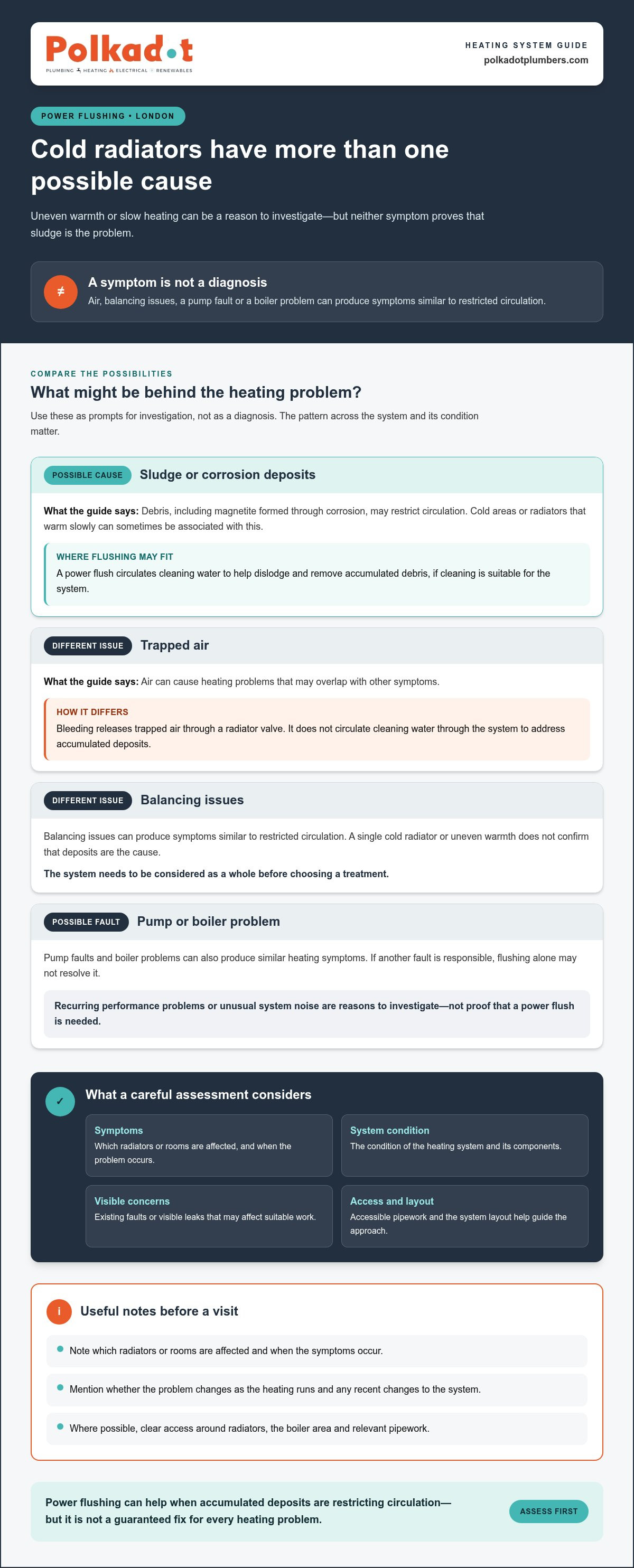
No. A cold radiator or uneven warmth can have several causes, and the right response depends on what’s happening across the system. A power flushing service London assessment should distinguish possible sludge-related circulation problems from air, balancing issues or a fault that needs repair. One symptom alone can’t confirm the cause.
Could cold radiators be caused by something other than sludge?
Use the patterns below as prompts for investigation, not as a diagnosis. Similar symptoms can overlap, and an on-site assessment is needed to understand what’s affecting your heating.
Possible air in a radiator: A radiator that’s cool at the top may have trapped air. Bleeding may help release it, but recurring symptoms or a radiator that stays cold afterwards warrant further investigation.
Possible flow or balancing issue: If some radiators heat well whilst others lag, water may not be flowing evenly around the system. Balancing may be relevant, but the pattern doesn’t prove this is the cause.
Possible sludge or debris: Persistent cold areas and uneven heating may be consistent with restricted circulation. Flushing may be considered if an assessment finds cleaning suitable.
Possible component or boiler fault: A pump, valve or boiler problem can also affect heat circulation. Cleaning won’t repair a failed component, leak or unrelated boiler fault.
If you’re confident using the radiator valve, bleeding can be a reasonable first step when air seems likely. If the problem persists, affects several radiators, returns repeatedly, or comes with unusual system behaviour, avoid relying on repeated bleeding as a fix. A heating professional can assess the system and distinguish a cleaning need from a fault requiring repair.
When might repair or replacement be more suitable?
Flushing removes debris; it doesn’t restore a damaged pump or valve, seal a leak, or repair a boiler fault. Where a component has failed, repair may be needed instead of, or alongside, cleaning. If equipment is ageing or persistently unreliable, a flush shouldn’t be treated as a guaranteed way to restore its performance. The appropriate option depends on the condition of the equipment and the wider system.
Where assessment points to replacement rather than cleaning or repair, read Polkadot’s London boiler installation guide to understand that separate option. The aim is to identify the cause first, then choose work that addresses it, rather than assuming every circulation problem needs a power flush.
Preparing for a Power Flush: What London Homeowners Can Expect
A little preparation can help the visit run more smoothly and give the engineer a clearer picture of your heating concerns. Before a power flushing service London appointment, focus on access and useful observations rather than trying to diagnose the problem yourself. The engineer can discuss the system’s condition and appropriate next steps before work begins.
How can you prepare your home before the engineer arrives?
Where practical, move furniture and belongings away from radiators, the boiler and visible pipework. Clear access helps the engineer assess relevant parts of the system and carry out suitable work. You don’t need to move anything heavy or make changes to the heating system yourself.
Keep a few notes to hand. Record which rooms or radiators are affected, whether there are persistent cold spots, how long the heating takes to respond, and when you notice unusual noises. Mention previous repairs or changes in performance too. If access is restricted, or you’re aware of a leak or another system concern, raise it during the booking conversation so it can be considered in advance.
Clear practical access to radiators, the boiler area and relevant pipework.
Note the symptoms, where they occur and when you notice them.
Share any previous repairs, recent changes or access constraints.
Every property is different, so the work and arrangements depend on the heating system and what the assessment finds. The engineer can explain what’s being considered and discuss the approach before work starts. Don’t assume a particular duration or level of disruption without taking the property and system details into account.
What should you ask about the findings afterwards?
Before the visit ends, ask for a plain-language explanation of the work completed and what was observed. If a radiator still heats poorly or another concern remains, ask what that could indicate and whether further investigation is recommended. This helps distinguish an unresolved symptom from a separate issue, without assuming additional work is automatically necessary.
It’s also sensible to understand any recommended repair, what problem it addresses and how it relates to the original heating symptoms. After the visit, follow applicable boiler manufacturer guidance and advice given about maintaining your heating system. Keep a note of any ongoing symptoms so they’re easier to describe if you need further help.
For a considered assessment of your heating concerns, arrange a power flushing service with Polkadot.
Arrange a Power Flushing Service in London with Polkadot
If your heating is uneven or slow to respond, first understand why before deciding what work may help. Polkadot provides plumbing and heating services across London for domestic and commercial properties, including power flushing. An enquiry can begin with your symptoms and the system’s condition, helping the team consider a suitable way forward without assuming that flushing is always the answer.
What information helps Polkadot understand your heating issue?
Share which radiators or rooms are affected and when you notice the problem. For example, note whether a radiator stays cool, warms slowly, or changes behaviour as the heating runs. Mention any unusual noises, recurring concerns or changes in performance. You don’t need to identify the cause yourself; clear observations are more useful than a guess.
If you know details about the heating system, or can describe recent repairs or changes, include those in your enquiry. Property managers may also find it helpful to gather observations from occupants, particularly where symptoms vary between rooms or parts of a building. This context gives Polkadot a clearer picture of the property before discussing the assessment and next steps.
How does power flushing fit into wider heating care?
Cleaning is one possible part of maintaining heating-system performance, not a universal remedy. It may be considered when debris is affecting circulation and the system is suitable, but a pump, valve, boiler fault or another issue may call for a different response. The assessment should help distinguish between these possibilities and clarify whether flushing, repair or another course of action is appropriate.
Thinking about heating in the context of the wider property can also be useful. Polkadot’s plumbing and heating work sits alongside its property maintenance services, helping the team consider reported symptoms and system condition together. The aim is a practical recommendation based on the issue, not a promised result or unnecessary work.
Whether you’re a London homeowner or responsible for a property, describe the affected radiators, when the symptoms occur and any relevant system history. Contact Polkadot about London heating services to discuss your heating concern and arrange an appropriate next step.
Take the Next Step Towards Better Heating Circulation
Uneven or slow-warming radiators can be a sign of restricted circulation, but they don’t prove that sludge is the cause. Air, balancing problems or a faulty component may create similar symptoms, so an assessment should guide whether cleaning, repair or another solution is appropriate.
A power flushing service London homeowners arrange should be based on the system’s condition, not an assumption that every heating issue needs flushing. Note which rooms or radiators are affected and when, and share relevant system history to help explain the problem.
Polkadot provides plumbing and heating services across London for domestic and commercial properties, including power flushing. Describe what you’ve noticed and take a clear, considered step towards resolving your heating concern: Arrange a London heating enquiry with Polkadot.
With the cause properly considered, you can move forward with greater confidence.
Frequently Asked Questions
What is a power flush and how does it work?
A power flush circulates cleaning water through a compatible central heating system to help remove accumulated debris. Suitable equipment is connected to the system, allowing water to pass through components such as the radiators and pipework. The aim is to clear material that may be restricting circulation. It differs from bleeding a radiator, which releases trapped air rather than cleaning debris from the wider system.
How do I know if my heating system needs power flushing?
You can’t tell from one symptom alone, but unevenly heated radiators, persistent cold areas, slow warm-up or recurring circulation issues may be reasons to arrange an assessment. Similar problems can come from trapped air, balancing issues, a faulty pump or a boiler fault. Note which rooms or radiators are affected and when. A professional assessment can help establish whether flushing is suitable or another issue needs attention.
Can power flushing fix cold radiators?
It may help if debris is restricting circulation, but it won’t resolve every cause of a cold radiator. Trapped air, a valve or pump fault, system imbalance or a boiler problem may need a different remedy. If bleeding doesn’t resolve the issue, or the same cold area returns, avoid assuming a flush is the answer. An assessment can help identify the likely cause and an appropriate next step.
How long does a power flush take?
There isn’t one fixed duration that applies to every property. The time required can depend on the number of radiators, the heating system’s condition, its layout and access to relevant components. The work may also involve an initial assessment and a review afterwards. Polkadot can discuss the expected process in the context of your property and system rather than relying on a general estimate.
Is power flushing suitable for every central heating system?
No. Suitability depends on the system’s condition, components and access, so a power flush shouldn’t be assumed appropriate for every installation. A professional assessment can consider whether cleaning is likely to address the problem and whether another method or repair is more suitable. If a mechanical fault, leak or significant deterioration is causing poor heating, flushing alone may not resolve it.
Will power flushing damage an old boiler or radiators?
Age alone doesn’t establish whether flushing is suitable, and no cleaning method should be assumed safe for every system without assessment. The condition of the boiler, radiators, pipework and other components matters. An assessment should consider visible concerns and system condition before work is recommended. If components are worn, damaged or leaking, those issues may need separate attention rather than being treated as problems a flush can repair.
How often should a central heating system be power flushed?
There isn’t a universal power-flushing schedule; it’s a cleaning method to consider when system condition and symptoms indicate it may be appropriate. Regular flushing without a reason shouldn’t be assumed necessary. Ongoing heating maintenance is a separate matter: follow relevant boiler manufacturer guidance and ask for system water condition to be considered during servicing. If performance changes or recurring problems develop, arrange an assessment rather than relying on a fixed interval.
What should I do after a power flush?
Ask for a clear explanation of the work completed, what was observed and whether any concerns remain. Follow the guidance provided for your heating system and boiler, and monitor any radiators that were previously slow or uneven. If symptoms persist or return, note when and where they occur and arrange further investigation. A flush aims to remove debris; it doesn’t guarantee that unrelated faults or worn components have been resolved.


Comments