
Solar panels for a three-bedroom home: costs and savings
A three-bedroom home doesn’t have one standard solar installation cost. The cost of solar panels for a 3 bed house in the UK depends on the system’s capacity, whether you include battery storage, and the roof and electrical work involved. A tailored price needs to reflect the property, not just the number of bedrooms.
It’s sensible to weigh the upfront cost against the electricity your household could use and any surplus you export. Solar panels may be worthwhile when the system suits your energy use, but the balance varies from home to home.
This guide explains what affects typical costs, how to assess potential savings and payback, and how the Smart Export Guarantee (SEG) works when you send surplus electricity to the grid. It also covers battery storage, helping you understand the main choices before considering an installation.
Table of Contents
Average cost of a three-bedroom home solar PV system
Bedroom count is only a starting point. It does not determine the system specification or total installation cost: roof suitability, electricity use, equipment and installation work all shape the design.
Solar system price breakdown
The total system cost covers more than the panels. They capture sunlight, while an inverter converts their output into electricity your home can use.
Mounting equipment, cabling, installation labour and system design also contribute to the overall cost. A battery adds storage for electricity generated during the day, which can then be used later. According to UK Government, from 1 February 2024, residential battery installations qualify for the temporary zero rate of VAT. Check that the proposal clearly identifies included equipment and work.
Typical system size and output
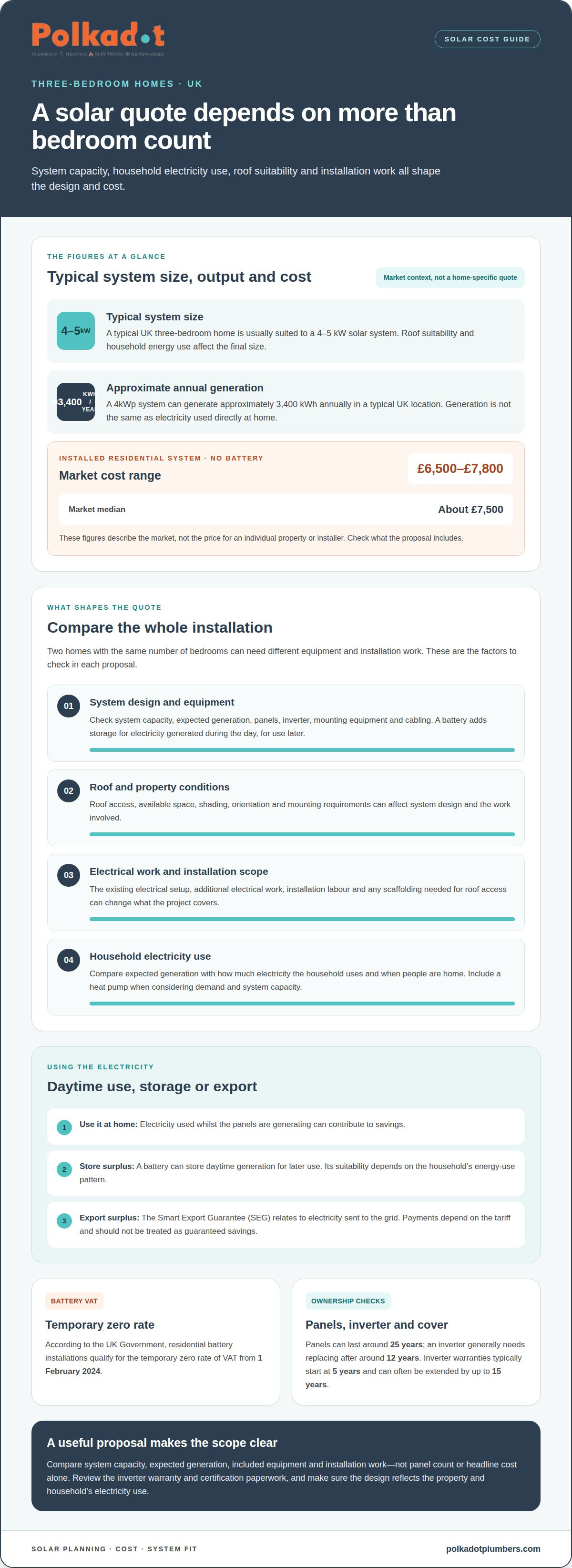
A typical UK three-bedroom home is usually suited to a 4-5 kilowatt (kW) solar system, although the roof and household energy use affect the final size. A 4kWp system can generate approximately 3,400 kWh annually in a typical UK location.
Generation estimates do not mean the home will use all the electricity directly. Compare expected output with household consumption and when people are home. Electricity used during daylight can contribute to savings, while surplus may be stored or exported. A heat pump can also affect household electricity demand, so include it when considering system capacity.
Installation costs
Domestic installation costs reflect the complete project, not just the number of panels. Roof access, available space, shading, mounting requirements and electrical work can change the scope. A three-bedroom home with a straightforward roof may need different work from one with restricted access or a complex layout.
Battery storage, inverter choice and additional electrical work also affect the specification. Ask for a proposal that separates equipment from installation work and identifies system capacity, expected generation and certification paperwork. This makes it easier to understand what is included and how the system relates to your home’s energy use.
Solar panels - are they worth it?
Solar can be worthwhile when the electricity generated offsets enough household use to justify installation costs. The balance depends on system design, storage and when your home uses energy.
Panels need little routine attention, but the inverter may need replacing; typical inverter warranties start at five years and can often be extended by up to 15 years. Shading, roof suitability and equipment faults can affect output, so consider these risks alongside expected savings.
What affects installation costs
Installation costs depend on the equipment, property and work needed to connect the system safely. Two three-bedroom homes can therefore require different designs and installation work.
Roof access, available space, shading and the existing electrical setup all affect a quote. Adding a solar battery expands the project, while an inverter converts the panels’ output into usable electricity. Compare proposals by included equipment, installation work and expected generation, not panel count alone.
Comparing regional cost averages
Regional averages offer context for typical installation costs across the UK, but they do not set the price for an individual property. The roof and installation requirements determine the work involved.
Regional data covers England, Scotland, Wales and Northern Ireland, where average costs differ. For your household, focus on whether a quote accounts for the property, system capacity and any battery storage. Surplus electricity may also be exported, but payments depend on the tariff and should not be treated as guaranteed savings.
Maintenance, warranties and risks
Maintenance helps keep a system working as intended, while warranties define cover for particular equipment. Understanding both helps households plan for faults and future component replacement.
Solar panels can last around 25 years, but an inverter generally needs replacing after around 12 years. Its warranty is typically at least five years and can often be extended by up to 15 years. Check the warranty terms for each component and understand how shading or an unsuitable roof could affect output. For a property-specific view of the work involved, explore solar system planning.
Average solar-panel cost for a three-bedroom home
The cost of solar panels for a three-bedroom house in the UK varies with the system specification and the work the property needs. Bedroom count alone cannot determine the final figure. Roof access, available space and household electricity use all shape the installation.
For context, an installed residential panel system without a battery typically costs between £6,500 and £7,800 on the market, with a median of about £7,500. These figures come from market data collected on 22 November 2026. They describe the market, not a quote for a particular home or an individual installer’s price.
The cost of a solar panel system for a three-bedroom house in the UK also depends on what the proposal includes. A battery stores electricity generated during daylight, while scaffolding may be needed if roof access requires it. Check whether the stated total covers the panels, inverter, mounting equipment, electrical work and installation.
Panel efficiency and roof layout influence the system design. Higher-efficiency panels can produce more power from a given area, while shading and orientation affect expected generation. Battery storage may suit a household that uses more electricity later in the day, but the right specification depends on its energy-use pattern.
Compare proposals by matching system capacity, equipment, expected generation and included work. A lower headline figure may reflect a smaller system or a different installation scope. The cost of solar panels for a three-bedroom house in the UK is easier to assess when each proposal covers the same requirements and states its assumptions clearly.
What should homeowners check before choosing a UK solar panel installer?
A sound installation proposal explains how the system fits the property, not just its headline total. Check its capacity, panel arrangement, inverter, battery options and expected generation, then compare the same details across proposals.
UK homeowners are advised to get quotes from at least three suppliers. Compare the scope line by line: equipment, installation work, roof access, electrical connections and any scaffolding. A cheaper proposal may cover a different system or exclude work another quote includes, so compare like for like before weighing the totals.
Ask for the design assumptions to be clear. Roof orientation, shading, available space and household electricity use affect expected output. A proposal should explain how estimated generation relates to the home’s usage and whether surplus electricity is expected to be stored or exported. This helps you judge whether the panel system suits your needs.
Review warranties for the panels, inverter and battery separately. Inverter warranties in the UK are typically at least five years and can often be extended by up to 15 years. Read the terms to understand what each warranty covers, its duration and the process for making a claim. Don’t assume every component has the same cover.
Installation quality also depends on a design suited to the property’s roof and electrical setup. A clear proposal should identify the equipment and explain what handover information you’ll receive, including relevant certification. Make sure you understand how the system operates and who to approach about faults after installation.
Use those details to compare technical suitability, included work and warranty terms, rather than relying on the lowest total alone. For a tailored solar installation proposal, discuss your solar installation.
Polkadot
Polkadot helps homeowners with property maintenance and improvements, including electrical installations, heating, air conditioning and refurbishment. If you’re considering solar alongside other upgrades, understanding your property’s electrical and heating requirements can help inform your plans.
Turn to Polkadot when you’re considering electrical work as part of a wider improvement or want to discuss how maintenance and refurbishment fit your plans. Start by outlining the work you’re considering and the questions you need answered.
Contact Polkadot to discuss your property plans.
Make your next step fit your home
Before moving ahead, consider how your household’s needs could change. An electric vehicle, a heat pump or more time working from home can affect when and how much electricity you use, and how much you may want to generate or store. Include those plans in the discussion to shape a system around more than today’s routine.
The cost of solar panels for a three-bedroom house in the UK is best considered alongside your property, energy use and future plans. Discuss your home’s requirements and what you want the system to achieve, whether that means using more of your own generated electricity or considering battery storage.
Polkadot provides solar services and can discuss how an installation may fit your property plans. Share what you want to achieve and your questions, then contact Polkadot to discuss the next step.
Contact Polkadot to discuss solar and move forward with a clearer plan for your home.
Frequently Asked Questions
Does my roof face the right way?
A south-facing roof generally offers the strongest solar generation, but east- and west-facing roofs can also work. In UK estimates, east- or west-facing systems generate around 15-20% less energy than south-facing systems. Panel angle and shading matter too: an ideal angle is usually 30° to 40°, and panels should ideally be unshaded from 10am to 4pm. Roof suitability depends on the whole layout, not direction alone.
How much could I earn from selling surplus energy via the Smart Export Guarantee?
A three-bedroom home with a 3.5kWp system could earn around £73 per year through the Smart Export Guarantee (SEG). Actual payments depend on how much electricity you export and the tariff rate, which can range from 1p to 25p per kWh. SEG pays for exported electricity, not all the energy the panels generate. A meter capable of half-hourly export readings is needed to qualify.
Is there any government assistance towards the cost?
Solar installations have a 0% VAT rate through 2027, which reduces the amount payable on eligible work. This is a tax relief, not an upfront grant. SEG payments are separate: they compensate households for electricity exported to the grid after installation. Factor the VAT treatment into the quoted total, and assess export income separately from the initial installation cost.
How much does a typical solar panel system cost for a three-bedroom house in the UK in 2026?
On the market, an installed residential panel system without a battery typically costs between £6,500 and £7,800, with a median of about £7,500 in data collected on 22 November 2026. This is a market range, not a Polkadot price. Battery storage, roof access and installation requirements change the system specification, so compare proposals that cover the same equipment and work.
How many solar panels and what system size are suitable for a UK three-bedroom house?
A three-bedroom UK home is usually suited to a 4-5kW system. One typical example is a 3.5kWp system with 10 panels, although panel count depends on each panel’s rated output and the roof layout. The right capacity also reflects household electricity use, shading and available roof area. A system’s output estimate helps show how its size relates to expected consumption.
What affects solar panel installation prices in the UK, including roof type and location?
Roof access, shape, condition, shading, system size and battery storage all affect installation scope. These averages provide context, not a fixed price for an individual home. A quote should reflect the actual roof and installation work required.
Comments