
Solar panel installation: a practical guide for London homes
The right solar panel installation for your London home isn’t necessarily the biggest system. It’s the one designed around your roof and energy use. Before work begins, it helps to understand how roof suitability, permissions, electrical work and access can affect the project.
A successful project starts with the property. Roof condition, orientation, shading and usable space all help shape the design. Your household’s electricity use can help you decide whether to consider battery storage. Planning requirements and grid notifications are also part of the picture, with the applicable steps depending on the property and system.
This guide explains what to expect, which decisions matter and how to prepare. You’ll learn how an assessment informs system choices, what to consider around permissions and grid connections, and how installation work fits into your home. Polkadot provides solar installation across London, alongside electrical installation and solar power battery services for renewable energy projects.
Table of Contents
Is your London home suitable for solar panel installation?
There isn’t one ideal roof type for solar. Suitability depends on usable roof space, sunlight, and whether the roof can support the proposed system. A pitched roof isn’t automatically better than a flat one, and an east- or west-facing roof may still be worth assessing even if it doesn’t face south.
Roof orientation, shade, usable area, condition and structural suitability all help determine whether a roof merits a solar assessment. Together, these factors shape where panels could go and how a system might work for the property. Understanding the basics of solar panel technology can also help explain why panel position and exposure matter.
Which roof conditions matter before solar installation?
Start with the roof’s condition. If repairs or replacement may be needed soon, consider doing that work before fitting panels. Access to the roof could be more difficult once equipment is in place. The roof’s current condition and expected remaining service life are relevant to project timing and design.
Shape and space matter too. A simple roof plane may allow a more straightforward layout, while hips, dormers, skylights, roof windows, vents and chimneys can divide the available area or limit panel placement. Assess the usable sections rather than assuming the whole roof can be covered. Structural suitability also needs to be considered as part of a property-specific assessment.
Roof upkeep can help homeowners understand what to look out for before planning improvements. Polkadot’s London roofing services guide offers further context on maintaining a home’s roof.
How do shade and London surroundings affect suitability?
Look beyond the roof boundary. A chimney, mature tree or neighbouring building can cast shadows across panels, and the pattern may change throughout the day and year. In London, closely spaced homes, extensions, roof terraces and varied rooflines can mean that one part of a roof receives different light from another.
Shade doesn’t automatically rule out solar. It means the assessment should consider where and when shadows fall, alongside orientation and usable space. A postcode alone can’t show whether a particular roof is shaded by a nearby building or receives clear sunlight for much of the day.
Before discussing a design, note obvious obstructions and which roof areas receive direct sun at different times. You don’t need to make a technical judgement yourself. A property-specific assessment brings those observations together with roof condition and layout, giving you a clearer basis for deciding whether solar is worth exploring.
How solar panel installation works, from survey to commissioning
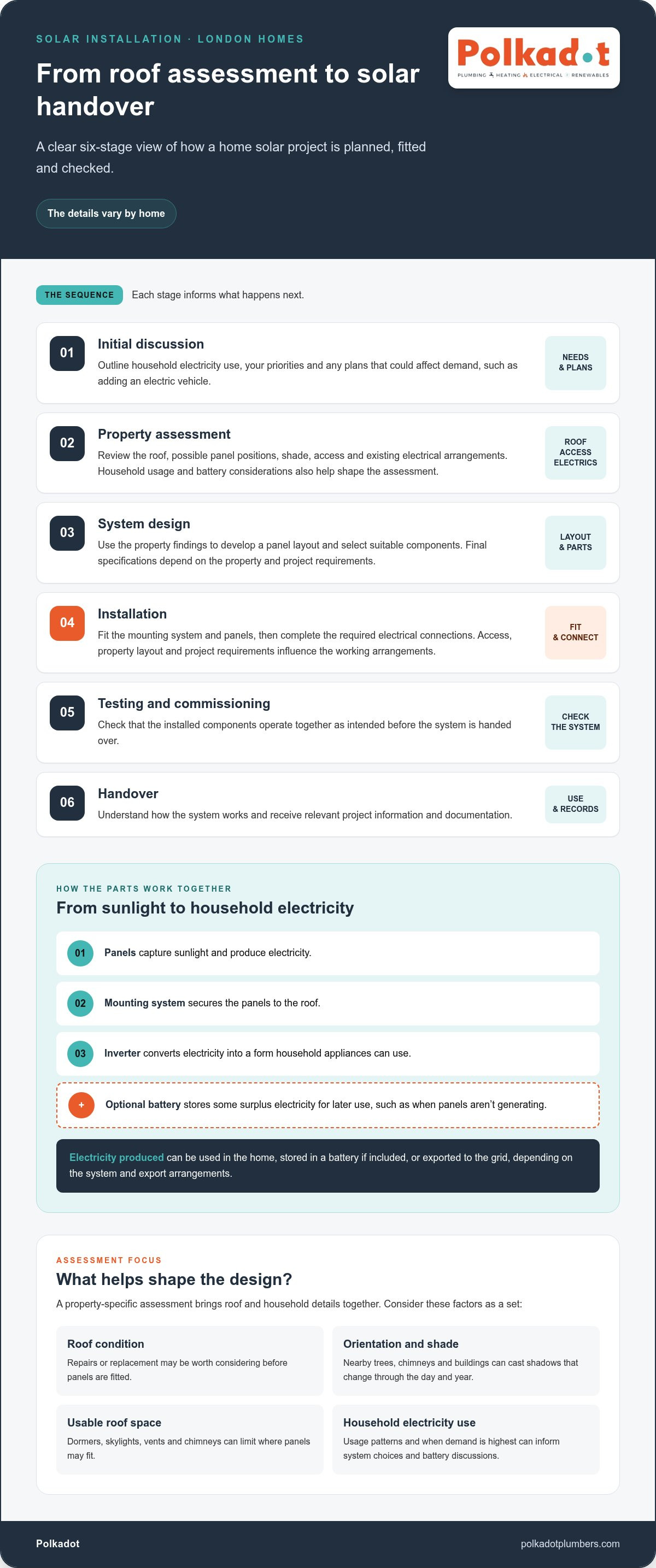
A well-organised project moves through clear stages, from discussing your needs to checking the finished system. The details vary by home, but knowing the usual sequence helps you understand what decisions are made and when. Solar panels generate electricity, but the rest of the system and its connection to your home matter just as much.
Initial discussion: Outline your household’s energy use, priorities and any plans that could affect demand, such as adding an electric vehicle.
Property assessment: Review the roof, possible panel positions, access and existing electrical arrangements.
System design: Use those findings to develop a layout and select suitable components for the property.
Installation: Fit the mounting system and panels, then complete the required electrical connections.
Testing and commissioning: Check that the installed components operate together as intended.
Handover: Explain how the system works and provide relevant project information and documentation.
The panels capture sunlight and produce electricity. A mounting system secures them to the roof, while an inverter converts the electricity into a form household appliances can use. An optional battery stores some surplus electricity for later use, such as when the panels aren’t generating. Equipment choices and final specifications depend on the property and project.
Generated electricity can be used in the home, stored in a battery if one is included, or exported to the grid, depending on the system and export arrangements. Generation isn’t the same as household use: the amount produced and when it’s available can vary with conditions and usage. The design discussion should explain how the proposed setup is intended to work for your home.
What happens during a solar site assessment?
An assessment considers roof layout, shade, access and the electrical arrangements that will affect the project plan. It also looks at how your household uses electricity, including when demand is highest and whether you’re considering a battery. This information helps shape a practical design instead of relying on a generic system. Final specifications depend on the individual property and project requirements.
What happens on installation and handover day?
The work involves fitting the mounting system and panels, making the electrical connections, and carrying out checks before explaining how to use the system. Access to the roof, the property layout and project requirements influence the working arrangements, so disruption can vary. Ask for a clear explanation of which areas need access and how the work will be coordinated.
Commissioning is the set of checks that confirms an installed solar system operates as intended. Before handover, make sure you understand the operating information and know which documents relate to your installation. Grid connection, notification and export steps depend on the project and current requirements, so these should be addressed as part of the installation arrangements. Polkadot provides solar installation in London, alongside electrical installation and battery storage services for a coordinated project.
Professional solar installation or DIY kit: which route fits your home?
A DIY kit can look straightforward because its parts are packaged together. Professional installation brings design and fitting into a planned project. Neither route is automatically right for every property. The practical difference is who works out what fits the roof, handles electrical connections and coordinates the steps needed to use the system safely.
Compare the responsibilities before choosing:
Design: A professional project considers the property and household requirements. With a DIY kit, you’ll need to understand whether its components and layout suit your home.
Roof work: A kit doesn’t remove the need to plan panel placement around the roof, access and obstructions. Consider who will carry out and coordinate the roof work.
Electrical work: The system must connect appropriately with the home’s electrical arrangements. Understand the work involved and which tasks you’re equipped to manage.
Monitoring and handover: Systems may include ways to view generation or operation. Consider how setup, troubleshooting and ongoing monitoring will be handled for the route you choose.
Grid connection, safety and applicable requirements need attention with either option. A kit’s instructions may explain its components, but they can’t assess every feature of your property or resolve every project-specific question. Professional input doesn’t make a system suitable by default either: the design still needs to fit the home and its requirements.
What does a professionally installed system help coordinate?
Professional solar panel installation brings design, roof work and electrical installation together as parts of one project. This can make responsibilities clearer, particularly where panel placement affects cabling or the electrical setup. A layout matched to the usable roof area and household needs helps ensure the proposed system reflects the property, rather than treating a standard package as a universal answer.
Polkadot provides solar and electrical installation services in London, supporting a joined-up approach to planning renewable and electrical work. The design and arrangements are specific to the home and project.
What should homeowners understand about DIY solar kits?
Choosing a kit means taking an active role in understanding its design, installation instructions and electrical responsibilities. Consider how its components fit together, where panels could be positioned and how the system relates to the home’s electrical setup. A product described as simple to assemble may still require careful planning and suitable skills.
Think about the practical work, not just what’s in the box. Roof access, fixing the mounting system, cable routes, connection arrangements and monitoring all need consideration. An unusual roof layout or a more involved electrical setup may make a packaged option harder to assess. A kit’s apparent simplicity doesn’t confirm its suitability or remove the need to understand applicable requirements.
For a professional route, Polkadot’s London solar installation service brings the project into a property-specific design and installation plan, with electrical work considered alongside the renewable system.
How to prepare for solar panel installation in a London property
A little preparation can make the early project discussion more useful. You don’t need to inspect the roof yourself or carry out electrical checks. Gather information you already have, note anything that could affect access, and be ready to explain how your household uses electricity. The property’s layout and the work involved will shape the plan.
Use this checklist to get started:
Roof: Note any known repairs, leaks or planned roof work, and gather existing roof documents or photographs if available.
Access: Consider how a team would reach the property and roof, including shared entrances, narrow passages or arrangements with neighbours or a managing agent.
Household needs: Think about when you use the most electricity, whether you may want battery storage and whether you expect your energy needs to change.
Existing electrical information: Set aside relevant paperwork you already have, such as information about electrical work or equipment. Don’t remove covers or attempt electrical tests.
What information helps shape the installation plan?
Share what you know about the roof, property access and household energy use. An electricity bill or records showing how usage varies may help explain your needs, but you don’t need to calculate technical requirements. Mention plans such as an electric vehicle or battery storage, too. These can inform project planning, while the final design remains specific to the home.
London homes can bring extra coordination considerations. A flat, maisonette or converted property may have a different roof arrangement from a detached house. Shared access or roof areas can also affect how work is planned. Explain who manages shared parts of the building and whether access needs to be arranged. For broader context, Polkadot’s Solar Panels London homeowner’s guide covers solar considerations for local properties.
What permissions and grid steps should be considered?
Planning permission depends on the property and the rules that apply to it. Listed status, a conservation area or other property-specific restrictions may affect what is permitted, so check current planning guidance for your circumstances. Building Regulations may also be relevant. Don’t assume requirements are identical across London or across different types of home.
Grid connection arrangements need attention as well. DNO notification and the G98 or G99 process depend on the proposed system and current requirements. These aren’t details to guess from a kit description or a neighbour’s installation. Have the project requirements reviewed and clarify which grid-related steps apply, who is responsible for them and what documentation will be provided. Considering these points early can help keep planning clear and reduce avoidable uncertainty.
For a property-specific route from preparation to installation, explore London solar installation with Polkadot.
Solar panel installation with Polkadot: practical next steps in London
You don’t need to settle every technical decision before exploring solar. Bring together what you know about your property, roof and household priorities, then discuss how these factors could inform a project. Suitability, system design and installation planning are connected, so a clear view of the home helps shape a more relevant conversation.
Before speaking with Polkadot, note:
Any known roof repairs or planned building work.
How your household uses electricity and whether that may change.
Whether battery storage is something you’d like to consider.
Any access arrangements or shared parts of the property that may affect planning.
You don’t need to measure the roof or assess the electrics yourself. Share useful context and identify the questions that matter to you, such as how roof suitability will be considered, what installation involves and which project decisions depend on the property. Polkadot provides solar installation across London, with renewable energy and electrical installation capabilities to support project coordination.
What should a homeowner expect from the first conversation?
The discussion can establish the type of property, your priorities and how you expect to use the electricity generated. Raise concerns about roof condition, access, shading or the practicalities of work at your home. Relevant paperwork or photographs may help provide context, but you don’t need to arrive with technical measurements. The design and next steps are tailored to the project.
Keep your questions direct. For example, ask how the roof and household needs will inform the proposed layout, what information is needed to develop the plan, and how installation arrangements will be explained. A clear conversation should help you understand what is known, what needs consideration for your property and how the project can move forward.
How can solar fit into a wider property energy plan?
Solar panels can be considered on their own or alongside battery storage where it suits the project. A battery may store surplus generated electricity for later use, but it isn’t a requirement for installing solar. Whether it makes sense depends on your priorities and the system design, rather than being an automatic addition.
Thinking about other planned changes can also put the project in context. If you expect household electricity use to change, mention that during the discussion. Polkadot’s electrical and renewable energy installation services can support consideration of how solar and related electrical work fit together, without assuming every home needs the same combination.
Once you’ve considered your property, priorities and questions, you can take a practical next step. Discuss a solar panel installation for your London property with Polkadot.
Take the next step towards solar for your home
You don’t need to have every detail decided before exploring a project. Use the first conversation to connect your plans for the property with the way your household uses energy. That can help shape a solar panel installation around your priorities, rather than starting with a system choice and trying to make it fit.
Polkadot provides solar installation in London, alongside renewable energy and electrical installation services. If battery storage is relevant to your plans, it can be part of the discussion without being treated as essential for every home. Start with your questions about the roof, project arrangements or how solar could fit into your wider plans for the property.
Start a conversation about solar for your London home and take a considered step towards a project shaped around your property.
Frequently Asked Questions
Can solar panels be installed on any roof?
No, not every roof is suitable for solar panels, and some may need adjustments to the layout. Suitability depends on roof condition, orientation, shading, usable area and property-specific constraints. An assessment is needed before deciding whether installation is feasible and where panels could go. London homes differ in age, design and surrounding buildings, so a layout that works for one property isn’t a guarantee for another.
Do I need planning permission for solar panel installation in London?
Not necessarily, but requirements depend on the property, proposed installation and applicable planning rules. Listed status or a conservation area may call for particular attention, and requirements aren’t identical for every home. Check current official planning guidance for your property and make sure project-specific requirements are understood before work begins. If you rent or share responsibility for the building, clarify who can authorise changes to the roof.
How long does solar panel installation take?
The physical fitting is only one part of the overall project, so distinguish installation work from the time needed for assessment, design, coordination and grid-related steps. Property access, roof configuration and project scope all affect the schedule. For example, a shared roof or restricted access may need additional coordination. There isn’t one standard timescale for every London home, so timing should be discussed in relation to the specific project.
Can solar panels work on a shaded London roof?
They may, but shade can reduce solar generation. The practical effect depends on where and when it falls and how the system is designed. A chimney might shade one section in the morning, while a tree or neighbouring building could affect another area later in the day. Shading doesn’t automatically make installation impossible. An assessment can help establish which roof areas are affected and what that means for the proposed design.
Do I need a battery with solar panels?
No, a battery is optional. Panels generate electricity, while a battery stores some electricity for later, so they serve different purposes. Whether storage suits your household depends on when you use electricity, when the system generates it and what you want the system to do. Polkadot also installs solar power batteries, which can be considered where relevant, but not every solar installation needs one.
What happens to solar panels during a power cut?
A grid-connected system may stop supplying household circuits during a power cut because of its safety controls. Continued power depends on whether the system has suitable backup capability and how it has been designed. Don’t assume backup is included. If backup power matters to you, raise it during project planning. Check your system’s design documents and operating instructions to understand what your particular installation can do during a grid outage.


Comments