
Commercial Drainage Inspections, Installation and Repairs for London Sites
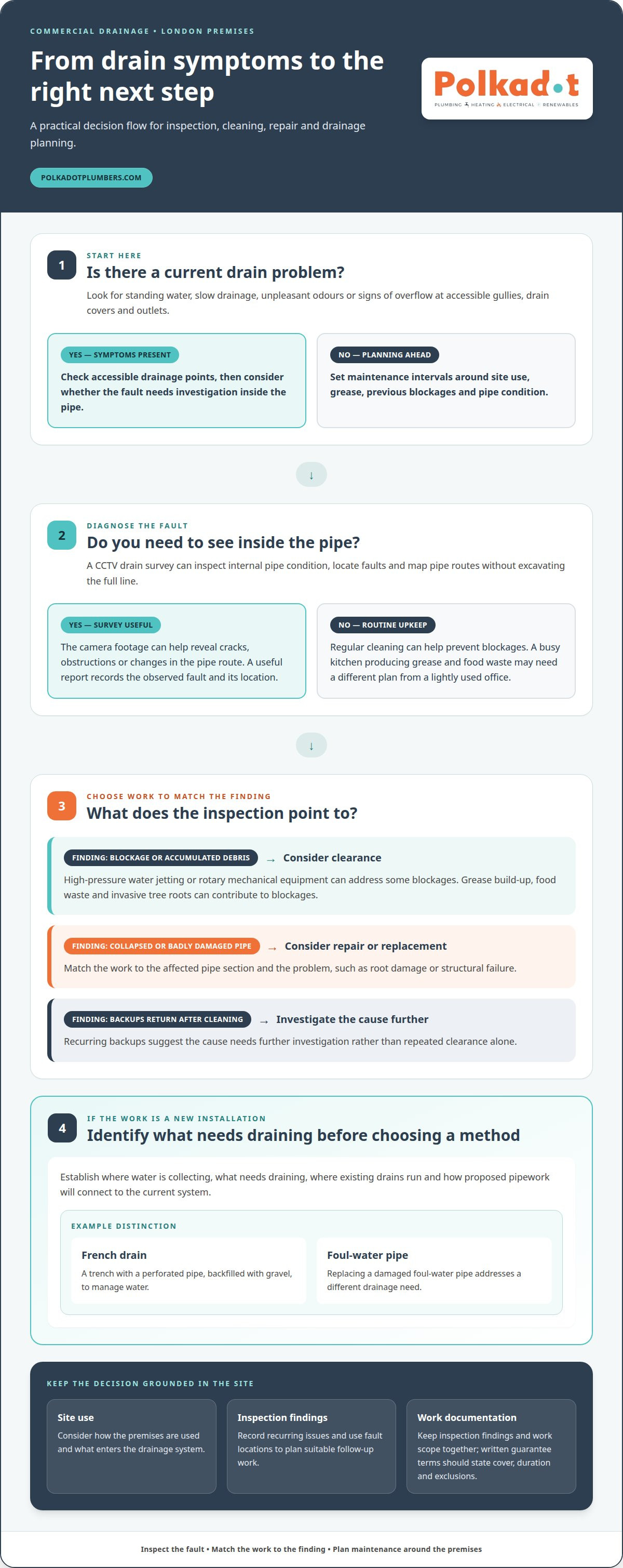
A drainage problem can disrupt a commercial site well beyond the affected pipework. For London businesses, commercial drainage solutions may involve inspecting, cleaning, repairing or installing drainage, depending on the site and the fault. CCTV drain surveys, high-pressure water jetting and rotary mechanical equipment can help investigate and clear problems. Grease build-up, food waste, collapsed pipes and invasive tree roots can all contribute to blockages.
Blocked drains can cause unpleasant odours, water to back up and interruptions to daily operations. Understanding the available options helps you choose a suitable response, from inspecting existing pipework to repairing faults or installing drainage. Regular cleaning can help prevent blockages, while the right repair depends on the cause and condition of the pipe. This guide explains how drainage needs can vary between London premises and what to consider when dealing with a current problem or planning maintenance.
Table of Contents
Drain inspection, installation and repairs
Commercial drainage problems may require inspection, cleaning, targeted repairs or replacement pipework. Set maintenance intervals according to site use, grease, previous blockages and pipe condition.
Drain Inspection and Maintenance
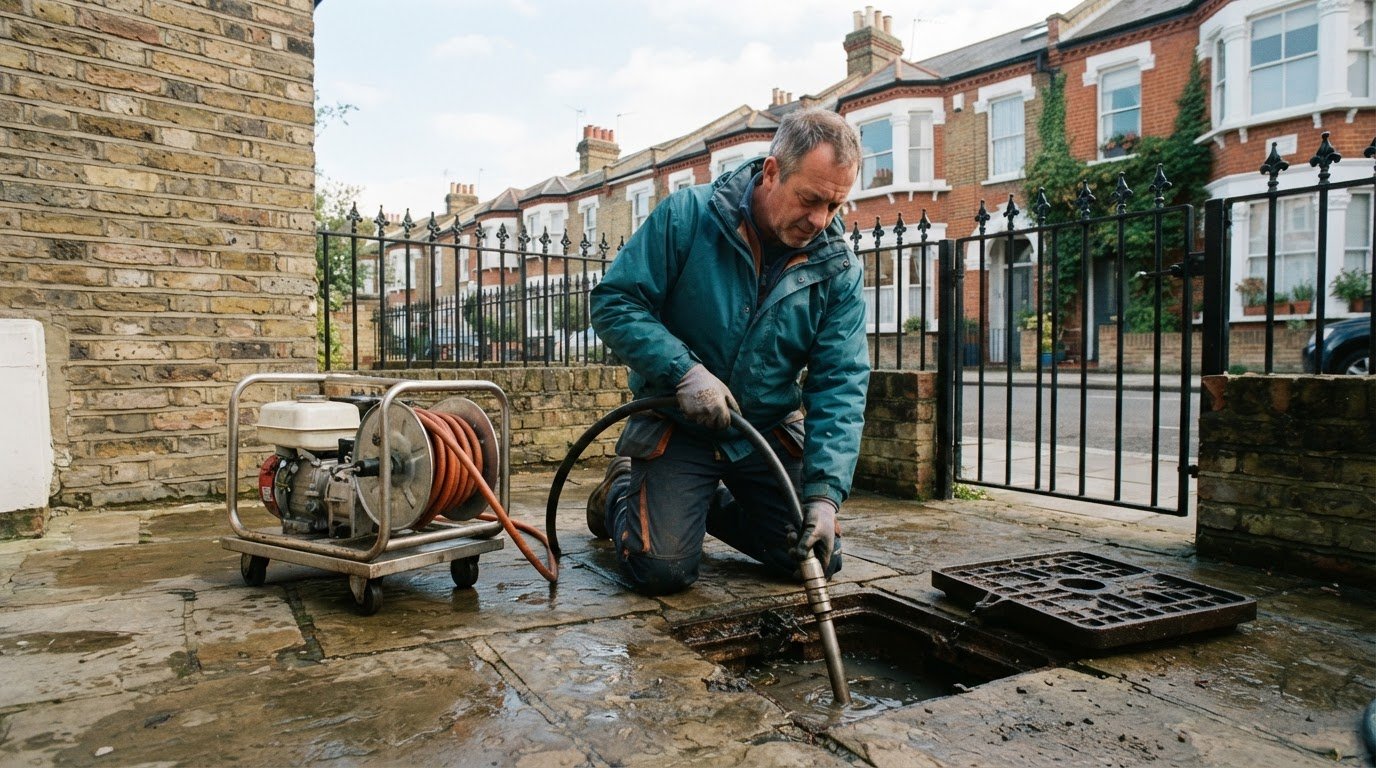
Begin with a visual check of accessible gullies, drain covers and outlets. Look for standing water, slow drainage, odours or signs of overflow. A CCTV drain survey can reveal defects inside pipes, while high-pressure water jetting clears accumulated debris. Regular cleaning helps prevent blockages and support smooth operations. A busy kitchen producing grease and food waste may need a different maintenance plan from a lightly used office.
Drain Repairs and Pipe Replacement
Choose a repair based on the fault identified during inspection. Jetting or rotary mechanical equipment can address some blockages, while a collapsed or badly damaged pipe may need repair or replacement. Recurring backups after cleaning, for example, suggest the cause needs further investigation rather than repeated clearance alone. Match the repair to the affected pipe section and the problem, such as root damage or structural failure.
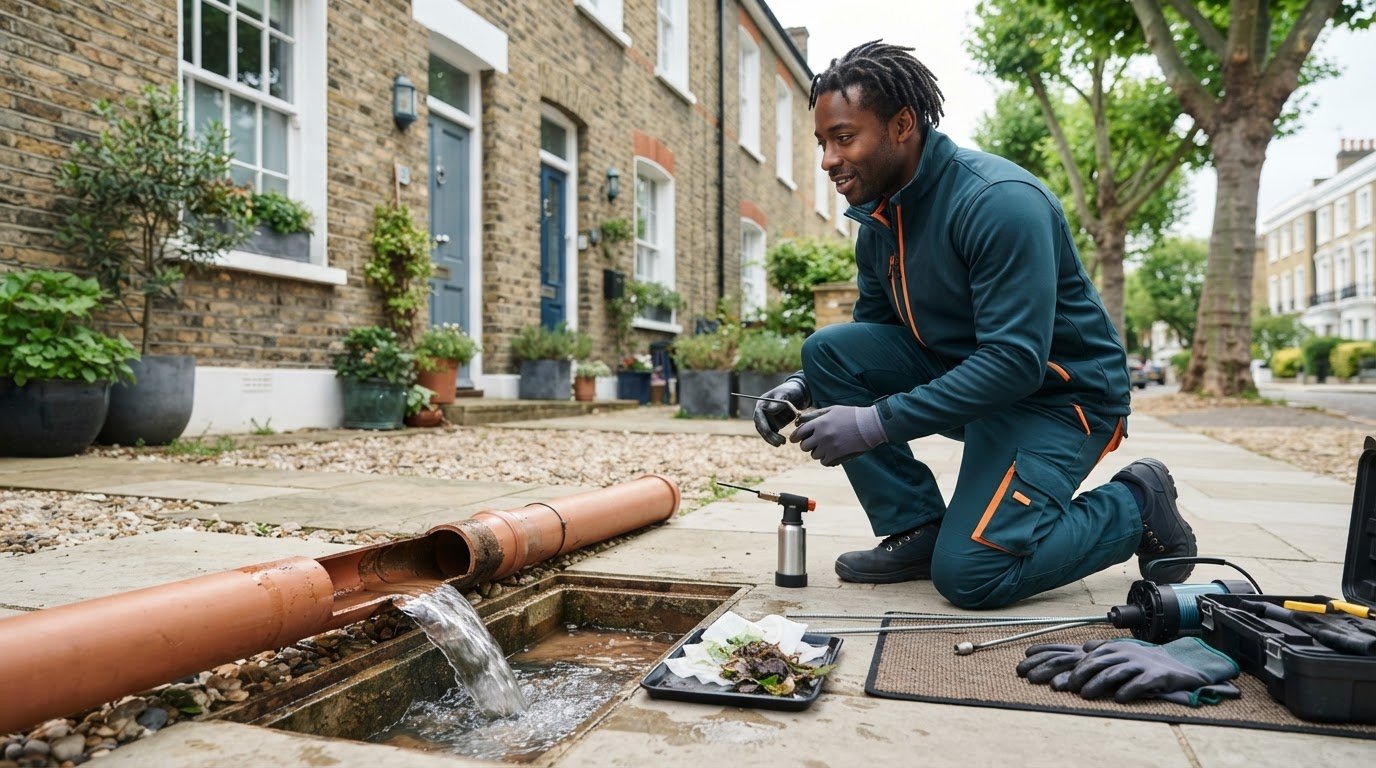
Drainage installation also depends on the site’s requirements. A French drain is made by digging a trench, laying a perforated pipe and backfilling with gravel. This manages water differently from replacing a damaged foul-water pipe. Before choosing an installation method, identify where water is collecting, what needs draining and how new pipework will connect to the existing system.
For repairs or replacement, keep the inspection findings and work scope together. Written guarantee terms should state which work is covered, for how long and any exclusions. Insurance documents should clarify relevant cover and how to record damage or make a claim. These details can help distinguish a defect in completed work from a new blockage, such as food waste entering a drain after repairs.
Do you work with commercial properties in London?
London commercial sites can use CCTV drain surveys to investigate faults and map pipework. Survey findings help identify a suitable next step, from cleaning to repair or installation.
CCTV Surveys and Fault Diagnosis
During a CCTV drain survey, a camera is fed through an accessible drain so the pipe’s internal condition can be inspected. The footage can help locate cracks, obstructions or changes in the pipe route without excavating the full line. For a blockage, a survey can support diagnosis before choosing jetting or rotary mechanical equipment. A useful report records the observed fault and its location, helping teams plan work and limit unnecessary disruption.
Drainage Design and Pre-installation Surveys
Before installation, establish where existing drains run and how the proposed system will connect. A survey can trace pipe routes and highlight access points, damage or constraints that may affect the design. For example, a planned kitchen refurbishment may require drainage positioned around new sinks and equipment. Using survey findings to plan pipework helps align the installation with the site layout and intended use.
Commercial Drainage Regulations
Requirements depend on the wastewater and its discharge route. Consider trade effluent and grease management alongside the premises’ drainage design. Before planning changes, identify what enters the system and where it flows. A kitchen discharging wash water and cooking residue has different drainage considerations from an office with ordinary wastewater. The site’s processes and discharge arrangements are key to assessing relevant controls.
Without maintenance, blockages can lead to odours, water backing up, flooding or hygiene issues that disrupt business. Regular cleaning helps prevent blockages and keep operations running smoothly. Set a maintenance plan around site use, previous faults and inspection findings, and record recurring issues. CCTV surveys can help identify developing problems early, giving facilities teams clearer evidence to prioritise follow-up work.
Commercial drainage services across London and the Home Counties
Commercial drainage work from Polkadot can support restaurants, schools, hospitals, hotels and other large premises. The right scope depends on the property, its drainage system and the problem being addressed.
Commercial drainage work covers business drainage systems, including inspection, cleaning and repairs. When assessing a service plan, consider its scope, how completed work is recorded and how urgent incidents are handled. Accreditations may be relevant, but a badge alone does not explain what work is included. A restaurant’s needs, for example, may differ from a school’s because site use and drainage demands vary.
For London boroughs and the surrounding local areas, establish the exact property location and access requirements before planning a visit. A premises in central London may present different access and working constraints from a site elsewhere in the capital. State whether the issue affects one drain, shared pipework or the wider drainage system. This makes the required work and site arrangements clearer, without assuming every contractor covers every area.
Restaurants, hotels, hospitals and schools need plans suited to their daily operations. Identify the affected facilities, when work could take place and whether the fault is disrupting staff or visitors. If water is overflowing into a working area, prioritise the affected location and immediate operational impact. Distinguish urgent response needs from planned maintenance.
Vacuum tanker services may be used by Polkadot to remove standing flood water where access and site conditions allow. Before arranging removal, identify where water has collected, how equipment can reach the area and what further drainage work may be needed. Removing water addresses the immediate accumulation, but does not explain why flooding occurred. A follow-up inspection can help determine whether the drainage system also needs attention.
Across London, compare each proposed service against the property’s specific needs. A clear scope should identify the affected site, planned tasks and whether follow-up maintenance is included. This helps businesses assess what the service plan covers before work begins.
Commercial drainage for London businesses and premises
For a London business, drainage problems can affect staff, customers and day-to-day operations. UK Commercial Group says blocked drains at commercial properties can cause unpleasant odours, water backups, flooding and hygiene issues, as well as disrupt business. Treat drainage as an operational concern: note where symptoms appear, which facilities are affected and whether the issue is worsening.
Build a clear response around how the site is used. A restaurant can record when sinks drain slowly and whether grease or food waste is involved. A hotel might log which guest or service areas are affected, while an office can identify shared facilities with restricted use. These details help narrow down the problem and explain its impact to the people arranging repairs.
Keep a simple drainage log for the premises. Record recurring symptoms, previous work and any changes in how the site uses its facilities. For example, repeated problems around a kitchen outlet may point to a pattern worth investigating, rather than an isolated incident. EPML states that regular cleaning of commercial drains helps prevent blockages and maintain smooth operations.
Plan maintenance around the building’s operating demands. Identify which drains serve kitchens, washrooms and shared areas, then note where access may affect staff or visitors. A site manager can use this information to arrange work efficiently and reduce avoidable disruption. If water is backing up, record its location and keep people away from affected areas until the problem is addressed.
Make the next action clear: log the symptoms, identify the affected facilities and share the site’s access constraints. This gives a drainage specialist useful context for assessing the issue and planning the response. For a plumbing problem affecting your premises, request help with the issue.
Polkadot: Air Conditioning
Polkadot provides air conditioning, heating, electrical installation and refurbishment services for commercial premises. These address different building needs from drain inspection or repair, so keep drainage faults within the drainage workstream. If a refurbishment also involves changes to heating or electrical systems, plan the related work alongside the wider building project.
When planning changes to occupied premises, consider how refurbishment could affect access to existing services. Set out the work required and the parts of the building it affects, so the next steps are clear. Choose Polkadot when your premises need support with one of its building services, rather than for a drainage issue.
Contact Polkadot to discuss air conditioning or another relevant building service.
Make your next site decision clear
As you plan commercial drainage solutions in London, make the next decision easy to act on: record the affected area, its operational priority and who can approve work. Note any access restrictions and keep the information in a shared site record. A brief account helps facilities teams, managers and contractors work from the same details, especially when responsibility is split across departments or tenants.
Use that record to keep drainage decisions distinct from other building projects. If planned refurbishment or system work affects access, coordinate timings and responsibilities before work begins. Agree who will update staff and occupants about any impact on their area. This gives your team a practical way to manage site plans while keeping responsibilities clear.
Polkadot can support separate building-services needs. For the next step on those requirements, contact Polkadot about your premises. A clear brief helps start a focused conversation and keeps your plans moving.
Frequently Asked Questions
Need fast, professional drainage help?
Polkadot provides London emergency plumbing for urgent plumbing problems affecting London premises. When you get in touch, describe what has stopped working, where it is happening and whether water is escaping or facilities are unusable. Include the site address, access instructions and a contact person. These details explain the operational impact and help focus the conversation on a practical next step.
What causes a blocked drain?
Wipes, sanitary products and paper towels can obstruct pipes when flushed or washed into a drain. Mineral scale can also build up inside pipework, narrowing the space available for water to flow. At a commercial site, check that staff and visitors have clear disposal points, and note which facilities are draining slowly. This can help identify repeated misuse or a developing restriction.
What commercial drainage services are available in London?
London businesses may need diagnostic surveys, drain cleaning, blockage clearance, repairs, replacement pipework or new drainage installation. The appropriate work depends on whether the immediate need is to locate a fault, restore flow or change the system. Some sites may also need standing water removed after flooding. Describe the affected facilities and the outcome you need, such as reopening a washroom or restoring kitchen drainage.
How quickly can London drainage contractors respond to commercial emergencies?
Response timing depends on the severity of the problem, its effect on operations, site access and contractor availability. Help assess urgency by reporting whether water is actively escaping, which areas are affected and whether essential facilities have stopped working. Provide the exact address, entry arrangements and a site contact. Clear details help the team understand the situation and plan the next response.
How often should businesses in London maintain and inspect their drainage systems?
Set maintenance intervals according to site use, grease, previous blockages and pipe condition. Regularly inspect accessible gullies, drain covers and outlets, and use inspection findings and recurring issues to guide follow-up work.

Comments