
Commercial Electrical Maintenance in London for Business Sites
Electrical maintenance is about more than fixing faults during trading hours. For commercial electrical maintenance in London, a sound plan fits work around site operations and identifies which systems and equipment need attention.
If you’re wondering whether maintenance can take place out of hours, the answer depends on the work and the access a site requires. This article explains how commercial and industrial maintenance can accommodate out-of-hours work, what to consider for fire alarms and emergency lighting, and how to plan for industrial sites. It also covers how maintenance supports dependable operations while taking day-to-day needs into account.
Table of Contents
Fire alarms and emergency lighting
Fire alarms and emergency lighting need planned checks, clear records and prompt attention when faults appear. A sound maintenance plan distinguishes scheduled prevention from repairs needed after a fault.
Emergency Lighting Maintenance and Tests
Emergency lighting maintenance checks whether fittings work when normal power fails. A test can simulate a supply interruption, then confirm that escape-route lights illuminate and remain functional. Inspect corridors, stairwells and exits, not just reception areas.
Record the test date, failed fittings and remedial work completed. If a light does not illuminate, investigate and repair it, then carry out a follow-up test. Fire alarm checks should also examine the control panel for fault indicators and confirm that alarm devices respond during testing.
Planned and Reactive Maintenance
Planned preventative maintenance schedules inspections and tests before faults disrupt a site. It can identify issues such as damaged wiring, a failing emergency light or a fire alarm panel showing a fault. Reactive maintenance addresses faults after they occur, such as a circuit failure affecting an occupied area.
Emergency call-outs address urgent faults; 24-hour service is a separate availability commitment. The service arrangements need to state whether attendance is available outside normal hours. A call-out or hourly price depends on the fault, access, timing and required work, and is provided after a quote request.
Urgent Maintenance Risks and Signs
Arrange urgent attention for burning smells, visible scorching, exposed wiring, repeated trips or sparking sockets. These signs can indicate a fault that may put people or equipment at risk or disrupt operations. A fire alarm fault indicator or an emergency light that fails its test also needs prompt investigation.
For an emergency electrical callout, describe the affected circuit, equipment and location, and report any immediate hazards. This helps the electrician understand the issue and plan safe access. Avoid using visibly damaged equipment until the fault has been assessed and dealt with.
Need Reliable Commercial Electrical Maintenance in London?
Testing helps identify faults and gives site managers a record of the installation’s condition. The inspection plan should reflect the building, its electrical use and operational needs.
Commercial Electrical Testing and Certification
Testing examines electrical circuits and equipment for faults, damage and signs of deterioration. The resulting report records observations and any remedial work needed, giving facilities teams a practical basis for maintenance planning.
Choose an electrician with technical knowledge, practical skills and experience for the work. According to the Scottish Government, electrical installation work should be inspected and tested by people with those capabilities. Ask for clear findings and documentation that identifies affected circuits and follow-up actions.
EICRs and Fixed-Wire Testing
A commercial EICR records the condition of fixed electrical installations, including distribution boards, circuits and wiring. Fixed-wire testing assesses the installation itself, not portable equipment such as desk lamps or kettles. The findings help prioritise remedial work and maintain a useful record for the premises.
There isn’t one inspection interval suitable for every commercial property. The frequency depends on the installation, its condition, how it is used and the findings of earlier inspections. A competent electrician can recommend a suitable schedule based on those factors.
Out-of-Hours and Phased Testing
Testing outside trading hours can reduce disruption when access or temporary isolation affects normal operations. Phased testing divides a larger site into manageable areas, such as floors or departments, with access and work sequences planned in advance.
Portable appliance testing (PAT) checks portable electrical equipment, rather than fixed wiring. Sheaworks Ltd describes yearly PAT tests as essential for landlords overseeing commercial property. The appropriate programme depends on equipment use and condition; test records can help track faults and actions.
Choosing and Arranging Maintenance
To arrange work, provide the site address, building use, access arrangements and any known electrical concerns. Identify areas that cannot be isolated during working hours, then agree a testing sequence and the format of the final report.
UK Government says the Electricity at Work Regulations 1989 require electrical equipment that could cause injury to be maintained safely, but do not specify what work must be done, by whom or how often. Commercial call-out and hourly charges depend on timing, access, fault and required work; the price is given after a quote request. A planned scope helps clarify the work before it begins. Discuss electrical testing for your site.

Do you work on commercial and industrial sites?
Electrical needs vary between offices, residential blocks, retail premises and industrial buildings in London. An office may need attention to lighting and distribution boards, while a shop’s work may need coordinating around customer areas. A residential block has shared supplies and communal spaces to consider. Industrial sites can include machinery, production areas and electrical systems that need careful access planning.
For each London site, map the areas, equipment and access requirements. In an office, identify circuits by floor and locate plant rooms. In a residential block, include communal lighting and electrical cupboards. In a warehouse or industrial unit, note machinery zones and restricted areas. This gives the maintenance team a practical scope and helps organise work around building activity.
Fire alarm servicing also needs to reflect the building layout. A retail unit may have call points near exits, while a residential block has shared corridors and stairwells. Maintenance records should show which devices and areas were inspected, any faults found and the corrective work completed. Keep relevant service and certification documents with the site’s electrical records so facilities teams can review the system’s condition and follow-up actions.
For businesses with several London premises, coordinate access arrangements, identify local site contacts and prepare a separate asset list for each address. An office and a warehouse, for example, may need different schedules because their equipment, access windows and operational demands differ. Clear site details help define the work without treating distinct buildings as one standard job.
Before work begins, record the London site address, building type, affected equipment and access restrictions. Note whether the task involves an office distribution board, communal lighting or industrial machinery. These details help shape a suitable work sequence and keep the scope specific to each property.
For staffing context, a South East London renewable-energy electrician vacancy lists 40000 - 50000 per annum; a maintenance electrician role advertises 42000 per annum, plus an on-call allowance.
Commercial and industrial electrical installation and maintenance
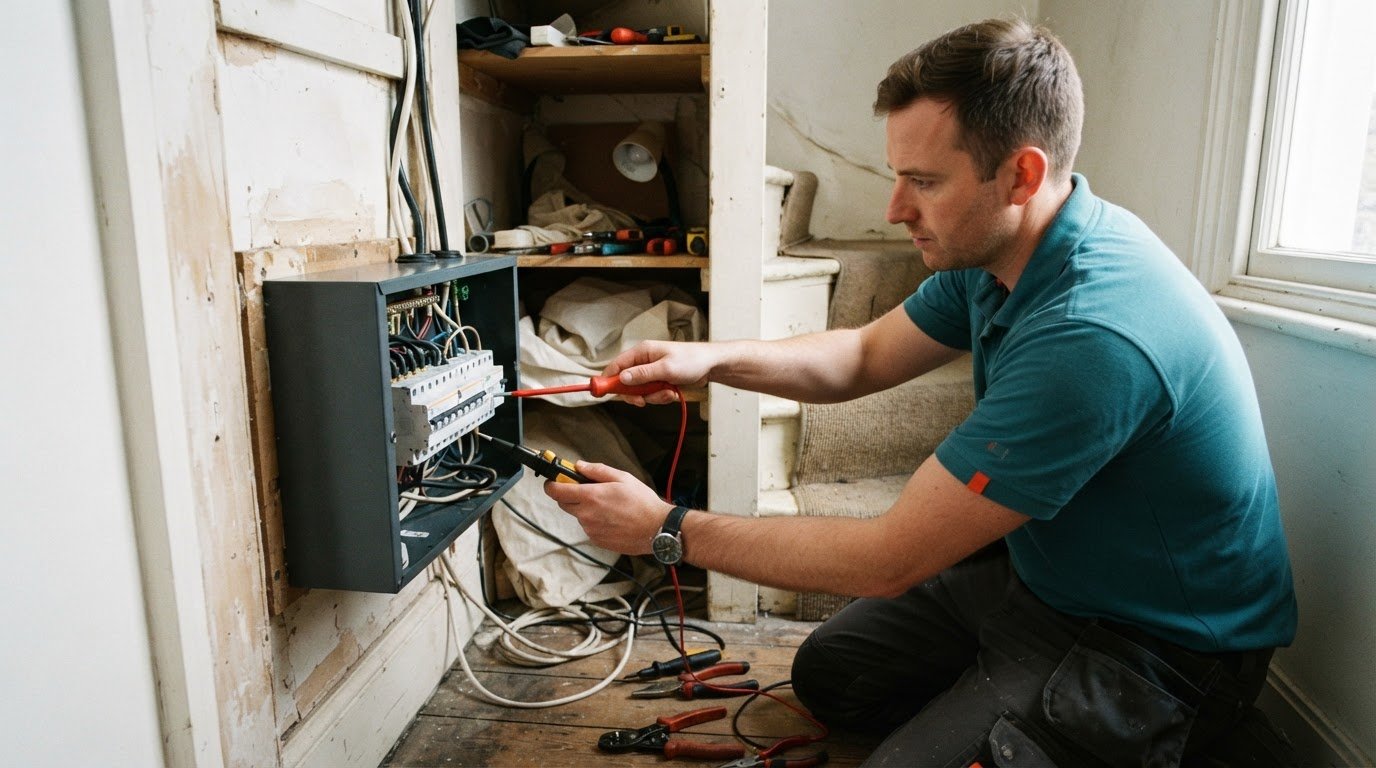
Commercial electrical maintenance can include inspecting, testing and repairing electrical systems, as well as installation work. At a London premises, this might mean reviewing a distribution board, repairing damaged wiring or installing equipment for a new workspace. The work should reflect how the building is used and which systems it relies on.
A clear scope helps organise installation and ongoing maintenance. Identify the areas, equipment and access requirements, then plan the work sequence, including any circuits that need isolation and potential effects on occupants or operations. A retail unit, for example, may need work scheduled around stockrooms and customer areas, while an industrial premises may require coordination around machinery access. Record completed work and test results for future planning.
The Electricity at Work Regulations 1989 require electrical equipment that could cause injury to be maintained safely, but do not specify what work must be done, by whom or how often, according to UK Government. For a business, this means maintenance arrangements should address the equipment and risks present at its premises, rather than rely on a one-size-fits-all checklist. The condition and use of each installation help shape a sensible programme.
Industrial installations may serve production equipment, workshop tools and lighting across separate areas. Maintenance planning should identify which systems support essential operations, where access is restricted and how work can be sequenced. For an office, the focus may instead include shared circuits and equipment serving work areas. According to the Scottish Government, electrical installation work should be inspected and tested by people with sufficient technical knowledge, practical skills and experience for the work undertaken.
Keep the practical record useful: note the areas covered, findings, repairs and any follow-up actions. A clear record helps facilities teams connect later faults with previous work and plan the next task. To discuss electrical installation and maintenance for your premises, plan your commercial electrical work.
Polkadot: Electrical Installations
Polkadot provides Electrical Installations for businesses planning electrical work at their premises. If maintenance findings show that installation work is needed as part of a property project or operational change, this service can help move the work forward.
A clear scope helps set the next step: outline the premises, areas involved and intended work. For example, a refurbishment may include electrical installation needs that should be planned alongside the building programme. Polkadot also provides refurbishment and air conditioning for connected property improvements.
Share your site details and intended work to discuss the installation requirements. Contact Polkadot to discuss commercial electrical installations for your London premises.
Plan your next site maintenance step
A maintenance plan is most useful when it becomes part of managing the premises, rather than a document filed away after testing. Keep next steps visible, assign responsibility for arranging them and update the site record when work is complete. This gives facilities teams a practical starting point when electrical needs change or new work is planned.
For commercial electrical maintenance in London, consider how electrical work connects with wider building plans. If a refurbishment is underway, or heating and air conditioning upgrades are being considered, include them in the planning conversation. Polkadot offers refurbishment, heating and air conditioning alongside electrical installations. Share your site’s priorities and intended work to start the conversation. Contact Polkadot about your site and take the next step with a clear plan.
Frequently Asked Questions
Can you work out of hours?
Yes, electrical work is available during listed out-of-hours periods. Polkadot’s electrical hours include Monday to Friday, 17:00 to 00:00, and Saturday, 08:00 to 17:00. This isn’t a 24-hour service. For a London site, share access arrangements and any operating constraints when discussing the work, such as whether equipment or areas need to remain in use.
Do you offer planned maintenance contracts?
Polkadot provides commercial electrical maintenance for London premises, planned around site operations. A useful schedule identifies the electrical assets, tasks, access arrangements and how findings will be recorded. For example, a site with separate office and storage areas may need work staged to suit access and daily operations.
What is an EICR for a commercial property, and when is it required?
An Electrical Installation Condition Report (EICR) records the condition of a property’s fixed electrical installation, including its wiring and circuits. It identifies issues that need attention, helping premises managers plan remedial work. The Electricity at Work Regulations 1989 require equipment that could cause injury to be maintained safely, but don’t set a specific EICR interval. Inspection timing should reflect the installation’s use, condition and previous findings.


Comments