
Commercial Electrical Services for London Businesses
Electrical work in a business needs to fit the way the premises operate. A commercial electrician in London can help with electrical installations, lighting and energy management. The Electricity at Work Regulations 1989 require electrical installations to be maintained in a safe condition, according to UK Legislation.
Concerned about disruption? The timing and scope of work should be planned around how your premises are used, including whether out-of-hours work is needed. This guide explains the commercial electrical services available, what to consider for lighting and energy management, and how work can be arranged across London and Surrey.
The right approach depends on the building, its existing installation and the needs of the business. You’ll learn what information helps shape a project, how an electrician approaches the work, and which factors affect the plan. Whether you’re upgrading a workspace, addressing an electrical issue or planning improvements, the aim is to make the next steps clear and manageable.
Table of Contents
Need an Electrician in London?
Commercial electrical work can include new installations, changes to existing systems and ongoing maintenance. The right scope depends on the building, its facilities and how your business operates.
Commercial Installations and Fit-outs
A fit-out can include new circuits, sockets, distribution equipment and lighting, planned around the premises’ layout and intended use. In an office, for example, power points may need to serve desk areas and shared facilities; retail and industrial spaces have different operational demands. Ask for a clear scope covering the work, materials and handover. Check that the electrician has relevant qualifications and insurance for the work.
Electrical Maintenance
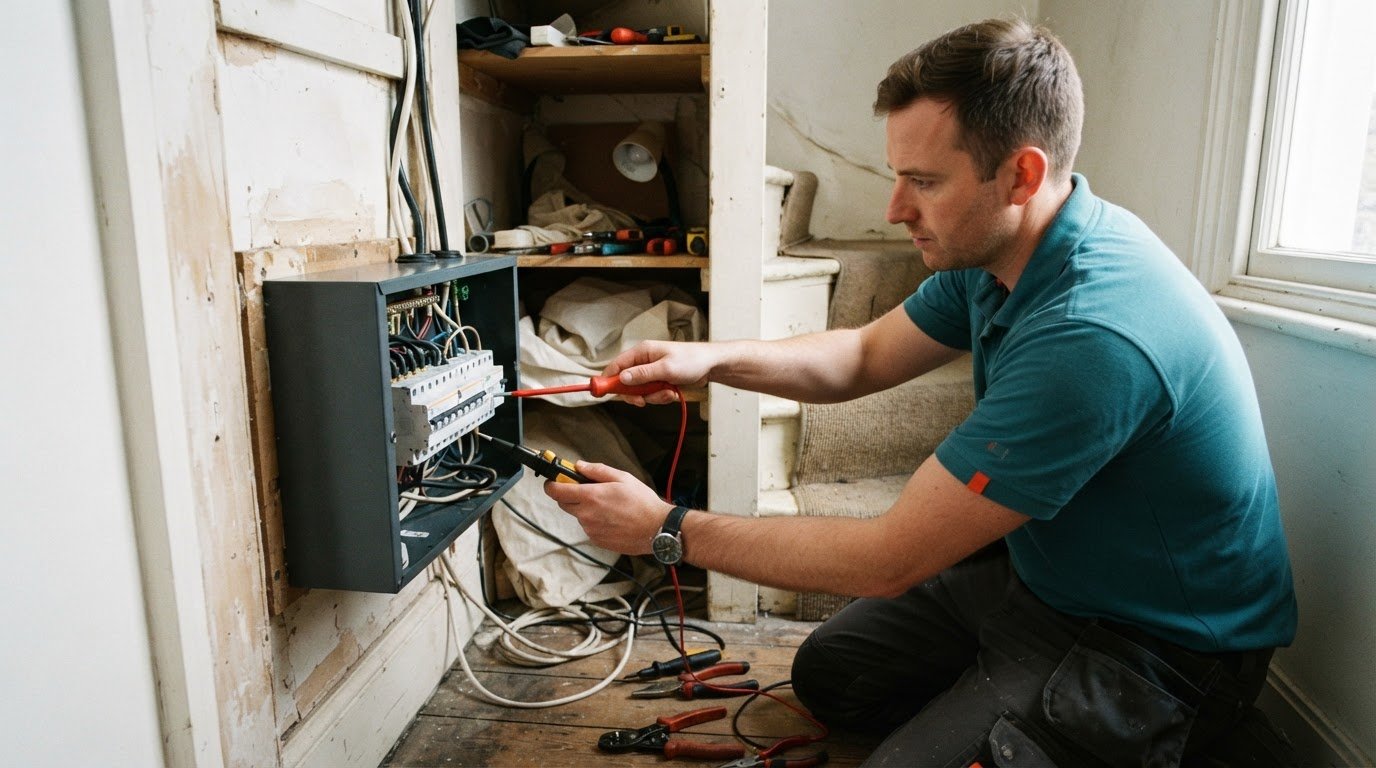
Maintenance can identify faults, address wear and help keep existing electrical installations in safe working condition. According to UK Legislation, the Electricity at Work Regulations 1989 require electrical installations to be maintained in a safe condition. Commercial premises should have fixed-wire testing at least every five years, or more often in higher-risk environments. Before hiring, check that the proposal explains the inspection or maintenance scope, findings and any remedial work.
Lighting and Power System Design
Plan lighting and power around how each area is used, from workstations and meeting rooms to storage or production areas. Before installation, the design can set out lighting positions, switching, socket locations and circuit requirements. Consider whether the layout suits daily tasks, access to facilities and future changes. A coordinated plan helps reduce clashes between electrical work and other fit-out activities.
Comparing Electrician Quotes
Compare quotes by checking their scope, specified materials, included testing, remedial work and handover documents. Clarify exclusions and how changes to the agreed work would be priced. This makes it easier to compare like with like instead of relying on the total alone. How much do commercial electricians charge in London per hour or per day? The cost depends on the scope, complexity, access and timing, so compare quotes against the same requirements.
What services do commercial electricians offer?
Electrical work varies by premises, from a shop refit to an industrial site inspection. The scope also depends on location, building use and operational priorities.
Services for Commercial Premises
Offices may need new circuits, power points and lighting for changed desk layouts. Retail work can include display lighting, till-area power and alterations during a refit. Industrial installations may involve machinery supplies, distribution systems and planned inspections or testing. A manager can help define which facilities must stay operational and when work can take place.
Coverage depends on the electrician’s operating area and the project’s requirements. For work in West London, Greater London or elsewhere across the South East, set out the site address, access arrangements and scope at the start. This helps establish whether one project plan can cover several premises or locations.
Electrical work may also be needed in high-value residential properties, including large apartment buildings with shared facilities. Chelsea Creek in Chelsea Harbour comprises two apartment blocks and an onsite spa. In properties with shared areas, a project may need to account for residents’ access alongside lighting and power needs.
Emergency Electrical Services
Urgent electrical work can address faults affecting essential power or facilities. Emergency lighting is a separate consideration: its purpose is to provide lighting when normal lighting fails. A site manager can identify affected areas, operational impact and access constraints, helping the electrician assess and plan the work.
For ongoing safety management, commercial properties typically need an EICR every 3 to 5 years, or at each change of tenancy. Inspections can identify issues in the fixed installation; testing helps assess its condition. The findings can inform planned maintenance, remedial work and decisions about future changes to offices, retail premises or industrial facilities.
Commercial lighting and energy management
Lighting affects visibility, power use and how staff use each area. A useful plan considers the building’s activities, existing fittings and operating hours.
Commercial Lighting Upgrades
An LED upgrade can replace older fittings while maintaining suitable light levels for each task. Start by assessing the current layout, operating hours, controls and areas that need focused lighting. A warehouse aisle, reception desk and meeting room have different requirements. The design should also consider applicable standards and the building’s environment.
Energy management starts with understanding where and when electricity is used. Lighting controls, such as switching separate zones independently, can help avoid illuminating unused areas. Compare the proposed arrangement with the existing system, including the fittings and controls involved. LED lighting can use less electricity than older alternatives, which may help manage lighting costs.
Office Lighting and Power
In offices, coordinate lighting with desks, screens, meeting rooms and circulation routes. A lighting plan can show where general lighting is needed and where task lighting may be more suitable. Consider screen glare, natural light from windows and the position of power points. These details help create an efficient layout for the way staff work.
Consider emergency lighting separately from everyday office lighting. It provides illumination if normal lighting fails, so the design needs to account for routes and spaces used to leave the building. In a mixed-use property with commercial and residential areas, plan for the different layouts and users. Set out operating patterns and planned changes before work begins, so the design reflects the premises.

Commercial electrician coverage across London and Surrey
Coverage across London and the surrounding boroughs matters when premises are spread across several locations or a project involves linked sites. A clear address, access plan and description of the work help an electrical contractor prepare for each visit.
London’s varied buildings can bring different practical demands. A commercial unit in a busy high street may need work planned around customers, while an office building could require coordination with facilities management. In Greater London, a site may have specific access arrangements or existing infrastructure. These details shape the work plan, including how electricians reach distribution equipment and route cabling.
For multiple premises, group the requirements by site. Record which areas need new electrical installations, repairs or testing, and note any shared systems. This gives the contractor a clearer picture of materials, access and sequencing. It also helps identify where work can be coordinated to limit disruption to staff, customers or tenants.
Ask how the schedule accounts for trading hours, building access and other contractors on site. A shop alteration, for example, may need coordination with a fit-out team, while office cabling could depend on access to occupied work areas. Discuss work outside business hours as part of scheduling, based on the project and site arrangements.
When reviewing credentials, note any scheme or registration a commercial electrician London provider states, such as NICEIC, and consider it alongside the written scope, insurance details and handover documentation. The location alone does not show whether a proposal covers the work required at each site.
For a useful project brief, provide the premises’ addresses, existing drawings if available, access constraints and the outcome needed at each location. This helps the electrical contractor plan consistently across the capital, rather than treating different premises as identical. For commercial electrical installation planning with Polkadot, set out the sites and work requirements together.
Polkadot: London Emergency Plumbing
Polkadot can help when a London business needs emergency plumbing, rather than electrical work. For issues affecting water or plumbing in commercial premises, London Emergency Plumbing offers a relevant next step. Separate building needs may call for heating, air conditioning or refurbishment.
Direct each issue to the relevant service: electrical faults call for electrical work, while plumbing problems may need plumbing services. Refurbishment may suit premises requiring broader improvements, and heating or air conditioning can address specific building needs.
Describe the issue and the premises when making an enquiry, so the request is clear. Contact Polkadot to discuss the service you need.
Plan the next stage of your project
Before work begins, turn your priorities into a practical brief: describe the premises, the outcome you need and any operational constraints. This gives a commercial electrician in London a clearer starting point for discussing the project and its sequence. If electrical work forms part of a wider building upgrade, consider how it fits alongside other planned improvements, rather than treating each system in isolation.
Polkadot Plumbers also provides air conditioning, refurbishment and heating services. These may be relevant when your premises project extends beyond electrical installations. Discuss the building’s needs to decide which work to address and how to plan the next step.
Ready to discuss your requirements? Contact Polkadot about your project. A considered plan can make it easier to move forward with confidence.
Frequently Asked Questions
Can you work out of hours to avoid disruption?
Work outside business hours can be scheduled to limit disruption when the project plan and site arrangements allow. Set out trading hours, access restrictions and areas that must remain operational before the work is scoped. A retailer, for example, may prefer tasks affecting customer access to take place outside trading hours. Include timing in the project plan rather than assuming a particular attendance window.
Do you provide RAMS and compliance documentation?
RAMS means risk assessments and method statements, which describe job hazards and how work will be carried out safely. Compliance documents can include reports or records related to electrical work, depending on the project. The scope and type of installation affect which documents are relevant. Include documentation requirements in the project brief so they can be considered alongside the work itself.
How can I tell if my business needs a three-phase power installation?
A three-phase supply may be relevant if your premises use equipment designed for it or have substantial electrical demand. Examples might include particular commercial machinery or systems with significant power requirements. The decision depends on the equipment, the existing supply and the planned load. A commercial electrician in London can assess these factors and explain whether the current installation suits the premises.
How quickly can you attend a commercial fault?
The response to an electrical fault depends on its impact, any immediate safety concerns, site access and the work required. A loss of power affecting essential business operations differs from a fault limited to one area. Describe what has stopped working, which parts of the premises are affected and any access constraints to clarify the appropriate next steps.
What commercial electrical certificates can you provide?
An Electrical Installation Condition Report, or EICR, records the condition of a fixed electrical installation. It can help identify observations requiring attention, including C1 or C2 observations. Installation work may have different documentation needs from a condition inspection, so the relevant record depends on the work completed. Specify whether you need an installation record, a condition report or both in your project brief.
What services do commercial electricians in London provide?
Commercial electrical work can include installations, fault investigation, maintenance, lighting changes and condition inspections. Requirements vary: an office may need additional power points, while a business planning vehicle charging may need charging equipment installed. Polkadot Plumbers provides electrical installations, solar, solar power batteries and car charging. The premises, existing systems and intended use shape the work required.

Comments