
Heat pump efficiency in old homes: costs and performance
An old home can still achieve strong heat pump efficiency in the UK, but the result depends on the building as well as the system. Fraunhofer’s 2018-2019 study found that air-source heat pumps in buildings aged 15 to 150 years achieved an average seasonal performance rating of 3.1. The homes had been partially or fully refurbished with energy-saving measures, so insulation and system design matter alongside age.
It’s understandable to wonder whether a heat pump can keep an older property comfortable without making running costs difficult to manage. The answer depends less on the home’s age than on its heat loss, radiator sizing and the temperature the system must deliver.
This article explains heat pump efficiency in old homes in the UK, how heat pumps compare with gas boilers and what affects running costs. You’ll also learn how insulation and a system suited to the property can improve performance.
Table of Contents
How efficient are heat pumps?
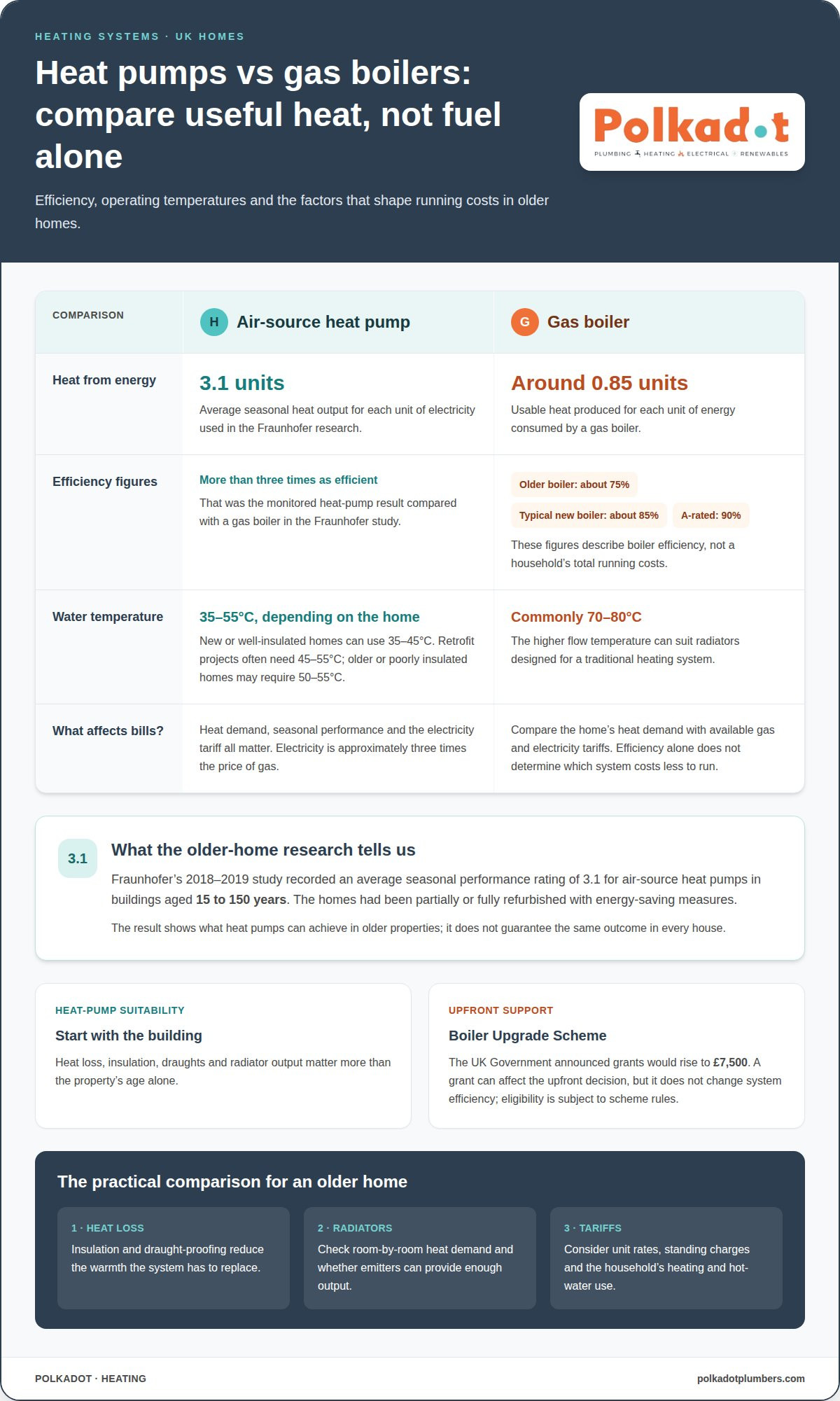
Heat pump efficiency in old homes across the UK can be strong, but depends on heat loss, insulation and system design. Fraunhofer’s 2018-2019 study found air-source heat pumps in buildings aged 15 to 150 years achieved an average seasonal performance rating of 3.1. Those homes had energy-saving improvements, showing that age alone doesn’t determine performance.
Insulation and heat loss
Insulation slows heat escaping through walls, the roof and floors, while draught-proofing reduces heat lost through gaps. Both matter because a heat pump must replace lost warmth to maintain a comfortable indoor temperature.
In an uninsulated home, around a third of heat can escape through the walls. Older houses, especially those built before the 1920s, may have solid walls and greater air leakage. A fabric-first approach tackles these losses before installing a new heating system. Loft insulation can slow 25% of a home’s heat loss; wall and underfloor insulation together can slow 50%.
Assessing radiators and retrofit needs
A heat-loss assessment estimates each room’s heating demand, and radiator sizing shows whether existing emitters can meet it. Before installation, assess heat loss and radiator output room by room, taking account of insulation, draughts, windows and layout.
This helps establish a suitable flow temperature. New or well-insulated homes can use 35-45°C, while 45-55°C is often sufficient for retrofit projects. Older or poorly insulated homes may require 50-55°C, particularly if radiator upgrades are limited. Higher temperatures can affect efficiency, so radiator output must be considered with the property’s heat demand.
Improving performance in poorly insulated homes
Higher heat loss makes it harder for a heat pump to maintain a steady indoor temperature. Improving the building fabric before installation reduces the heating demand the system must meet.
To improve heat pump efficiency in old homes across the UK, assess room-by-room heat loss, prioritise suitable insulation and draught-proofing, then size radiators for the expected flow temperature. Upgrade emitters where their output is insufficient. These measures can help the system deliver comfortable warmth at a lower temperature where the property allows. For a property-specific assessment, discuss heat pump system design.
Heat pump performance compared with gas boilers
Heat pumps and gas boilers produce warmth differently, so compare useful heat output rather than fuel use alone. A typical new gas boiler runs at around 85% efficiency, while an older boiler due for replacement averages around 75%. An A-rated boiler should convert 90% of its fuel into usable heat. These figures describe boiler efficiency, not the household’s total running costs.
How boiler type affects the comparison
Condensing boilers recover heat from gas combustion more efficiently than conventional boilers. A gas boiler produces around 0.85 units of heat for each unit of energy consumed, and boilers commonly heat water to 70-80°C. That higher flow temperature can suit radiators designed for a traditional heating system, but it doesn’t mean a boiler will cost less to run in every home.
Heat pumps use electricity to move heat from outside into the home. In Fraunhofer’s 2018-2019 study, air-source heat pumps in monitored buildings were more than three times as efficient as a gas boiler. The study included buildings aged between 15 and 150 years, partially or fully refurbished with energy-saving measures. Its results show what heat pumps can achieve in older properties, rather than guaranteeing the same outcome in every house.
Understanding the Boiler Upgrade Scheme
The UK Government announced that Boiler Upgrade Scheme grants would rise to £7,500. A grant can affect the upfront decision to replace a gas boiler, but it doesn’t change how efficiently either heating system performs once installed. Eligibility is governed by the scheme’s rules, so treat the grant and the home’s technical suitability as separate considerations. Heat loss, radiator output and required flow temperature still shape heat pump performance.
Compare the systems against the property’s heat demand and the energy tariffs available to the household. A heat pump’s efficiency advantage doesn’t automatically translate into lower running costs, because electricity and gas prices also matter. A room-by-room assessment of heat loss and radiators helps establish whether the existing system can deliver comfortable heating. For a property-specific comparison, arrange a heating system assessment before deciding on an upgrade.
Heat pump running costs and electricity tariffs
Heat pump bills depend on the home’s heat demand, seasonal performance and electricity tariff. A high efficiency rating is useful, but it cannot predict what a household will pay on its own.
Seasonal performance and electricity tariffs
A seasonal performance factor measures a heat pump’s heat output against its electricity use across changing conditions. The typical value in the research is 3.1, meaning the system provides 3.1 units of heat for each unit of electricity consumed over the season. Actual running costs also depend on the tariff and how much heating and hot water the household uses.
Electricity is approximately three times the price of gas, so the tariff can strongly affect the comparison with a gas boiler. A heat pump may use electricity efficiently and still lead to higher bills if the tariff is expensive or the property needs substantial heat. Compare unit rates and standing charges on available tariffs, then consider them alongside the home’s seasonal heat demand.
What case studies can show
This example illustrates how outcomes can vary, but it isn’t a bill estimate for every older home. Occupancy, weather, comfort settings and hot-water use all affect consumption.
Solar generation can reduce the grid electricity a heat pump uses when generation and demand coincide. A single-day result doesn’t represent annual bills: shorter winter daylight and household demand affect how much solar electricity is available.
Planning for household energy use
For a practical estimate, combine the home’s heat demand with its seasonal performance and electricity tariff. Include hot water as well as heating, and consider whether underfloor heating or radiators can meet comfort needs at a lower flow temperature. A well-planned system can support energy saving, while solar panels may offset some electricity use. Even a small tariff difference can change the running-cost comparison.
Heat pump efficiency
Efficiency describes how much useful heat a system produces from the electricity it consumes. A heat pump with a Coefficient of Performance of 3.0 delivers three units of heat for each unit of electricity. It moves existing heat from outside rather than generating all its heat through fuel combustion. That source can be air, water or the ground.
Seasonal performance matters more than a single reading because outdoor conditions and heating demand change. Fraunhofer monitored about 300 heat pumps over 20 years and found heat pumps outperformed gas boilers in buildings more than 100 years old. This shows that a property’s age alone doesn’t determine whether a heat pump can work effectively.
System design can make the difference between good and poor performance. The heat pump must match the home’s demand, and radiators or underfloor heating must distribute warmth effectively. Underfloor heating spreads warmth across a broad surface; correctly sized radiators can also deliver the required heat. If the emitters cannot meet demand, the system may need hotter water, reducing efficiency.
Assess the whole heating system, not just the unit’s headline specification. Insulation, heat loss, controls and flow temperature all influence performance. A model’s stated efficiency doesn’t show how it will operate in every home: design and installation determine how well its components work together. Assess the building and heat distribution alongside the heat pump, rather than treating efficiency as a standalone product feature.
For a property-specific view, arrange a heat pump system assessment to consider the home’s needs and suitable system design.
Polkadot: Heating
Polkadot can help homeowners assess heating options for older properties, including air source heat pumps. Turn to Polkadot when you’re considering a change and want the system design to account for your home’s heat demand, insulation and existing radiators.
Refurbishment may also help prepare a property for a new heating system. Considering the building and its heating together can clarify which changes may support comfortable, efficient operation. Polkadot also provides heating services when a heat pump isn’t the right fit for the home’s current requirements.
Share your property’s heating needs with Polkadot and discuss the options. Contact Polkadot to talk through your home’s heating requirements.
Make your next heating decision with confidence
Use your home’s needs, not its age alone, to guide your decision. Start by bringing together what you know about comfort, energy use and planned improvements, then consider how a heating upgrade fits your longer-term plans for the property. This gives the discussion a practical focus instead of treating a heat pump as a standalone purchase.
Heat pump efficiency in old homes across the UK depends on how the system and property work together, so the right approach is specific to the house. Polkadot can help you discuss heating options and whether an air source heat pump fits your plans. If refurbishment is also on your agenda, consider how that work could align with your heating decisions.
Talk through your heating options with Polkadot and take a clear next step for your home.
Frequently Asked Questions
What kind of heat pump is right for me?
The right type depends on the available heat source and your property’s layout. Air-source models draw heat from outdoor air, while ground-source systems take heat from the ground. For a London home, outdoor space, ground conditions, heating distribution and hot-water needs help determine which option fits. Choose for the property’s design, not simply its age.
Does efficiency drop in cold weather?
Heat pump efficiency can fall as outdoor temperatures drop because the system must extract heat from colder air or ground. That doesn’t mean it stops working in winter: most current models work in temperatures down to about -25°C. For an older home, the key practical consideration is whether the system and heat emitters can maintain indoor comfort during colder spells.
How do heat pumps work?
A heat pump transfers heat from outside into your home rather than creating warmth by burning gas. In an air-source system, the outdoor unit captures heat from the air; a compressor raises its temperature, then the system transfers that heat to water for radiators or hot water. Electricity powers the process, while the outside air supplies the heat being moved.
Is a hybrid system better for my home?
A hybrid system pairs a heat pump with a boiler, allowing both to contribute to home heating. It may suit a property where keeping the boiler is part of the plan, while the heat pump supplies warmth under suitable conditions. It isn’t automatically the better option: consider the existing boiler, available energy sources, control strategy and whether maintaining two heating technologies suits your household.
Is it worth it?
A heat pump may be worth considering if you plan to stay in your home and want to move away from gas heating. Weigh expected performance against the property’s retrofit needs, energy tariffs and household heating pattern. Make the decision based on a whole-home assessment and a clear view of the changes needed, rather than equipment efficiency alone.
Radiators: do you always need new ones?
No. Existing radiators can remain if they provide enough heat at the flow temperature the heat pump is designed to use. A room-by-room assessment shows whether each radiator has adequate output, rather than assuming they all need replacing. In some homes, only radiators in rooms with higher heat demand need upgrading; others may work well with existing emitters.


Comments