
Troubleshooting heat pump problems and knowing when to call a professional
If your heat pump still isn’t heating or cooling properly after you’ve checked its controls and airflow, it needs professional attention. When troubleshooting heat pump problems, arrange a repair if the fault persists, ice keeps building up, the system repeatedly trips a breaker, or you notice a burning smell or unusual grinding noise. Turn the unit off if it smells of burning.
It’s frustrating when a heat pump runs but your home doesn’t feel comfortable. Incorrect settings or restricted airflow may be simple causes, while recurring faults can involve components that need professional diagnosis.
This guide covers what to check with the controls, outdoor ice, airflow and cooling, and when to arrange a repair. You’ll also learn which warning signs not to ignore, so you can decide on a practical next step.
Table of Contents
1. Heating controls and weather compensation
Common signs of a heat pump problem include weak heating or cooling, rooms that stay unevenly warm, repeated start-up failures and unusual on-off cycling. A display showing heating mode while the system runs without warming the home can indicate a control, airflow or equipment fault. Note when symptoms occur, such as during a cold spell or after changing the thermostat. This record can make troubleshooting heat pump problems more focused.
For winter comfort, the recommended thermostat setting is between 18°C and 22°C. If warm air feels cool, a professional checks that the thermostat is set to heating and the fan to auto. Continuous fan operation can circulate air between heating cycles, making it feel cooler. Settings should be adjusted seasonally, including when switching from heating to cooling.
Weather compensation links the outdoor temperature to the heat pump’s flow temperature. The control curve sets how warm the circulating water needs to be as outdoor conditions change. If the curve or thermostat settings don’t suit the home, heating may feel insufficient or the system may keep running. A professional can review the controls and how the system responds as outdoor temperatures vary.
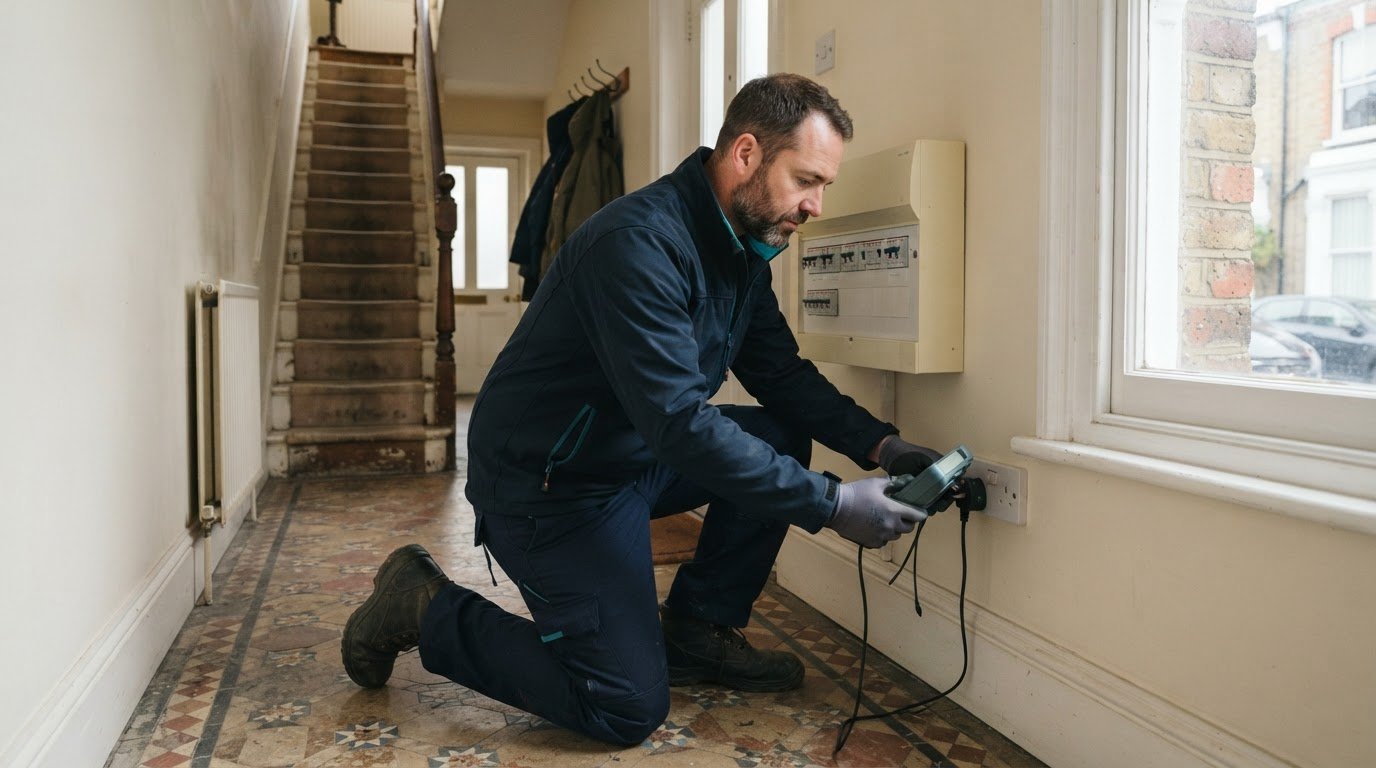
How does a professional check a heat pump thermostat, settings and circuit breakers? They check the selected mode and temperature, thermostat communication, power supply and relevant breakers. Indoor and outdoor units have separate circuit breakers, so a fault affecting one may not affect the other. If a breaker keeps tripping, repeated resets won’t solve the problem; the cause needs diagnosis.
For a start-up failure, a professional also checks that the disconnect switch is on and looks for electrical faults or internal control issues. If basic checks are satisfactory, switching the heat pump off at the thermostat and breaker, waiting 60 seconds, then restarting it may resolve a temporary control issue. A recurring failure requires further investigation.
Flow rates matter because water must carry heat through the system. Air-source heat pumps typically operate with a 5°C difference between flow and return temperatures. A professional considers this difference alongside the system’s output and circulation when reduced heating suggests a flow problem. This measured approach to troubleshooting heat pump problems helps distinguish settings issues from faults. Don’t adjust technical settings without diagnosis.
2. Outdoor unit ice, debris and defrost cycles
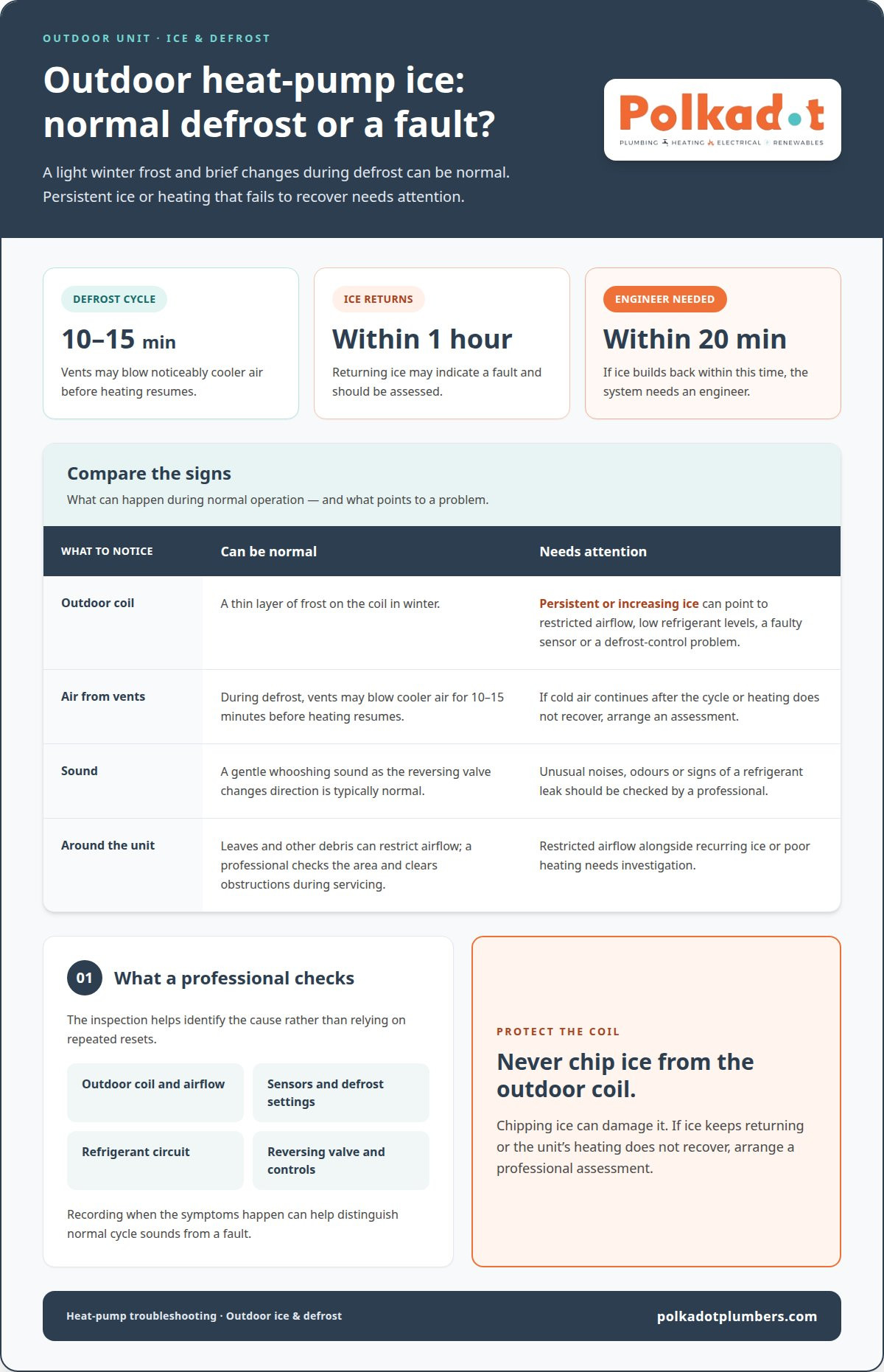
A thin layer of frost on an outdoor coil in winter can be normal. Heat pumps use a defrost cycle to clear frost and keep operating. Leaves and other debris can restrict airflow, so a professional checks the area around the unit and clears obstructions during servicing. Never chip ice from the coil, as this can damage it.
During defrost, the system temporarily changes how it moves heat. Indoor vents may blow noticeably cooler air for ten or fifteen minutes before heating resumes. A gentle whooshing sound as the reversing valve changes direction is typically normal. If cold air continues after the cycle or heating doesn’t recover, arrange an assessment.
Persistent or increasing ice can point to restricted airflow, low refrigerant levels, a faulty sensor or a defrost-control problem. Ice that returns within an hour may indicate a fault; if it builds back within twenty minutes, the system needs an engineer. A professional can inspect the coil, sensors, defrost settings and refrigerant circuit instead of relying on repeated resets.
Warranty and grant eligibility depend on the equipment, the work required and the relevant scheme terms. Consider these separately from the fault itself, and keep installation and warranty documents available when discussing a repair or replacement.
How much does heat pump repair cost in the UK? The cost depends on the fault, parts and labour, and is provided after a quote request.
Cold air during heating can be part of a defrost cycle, but continued cold output needs investigation. If you notice strange noises, odours or signs of a refrigerant leak, a professional can record when they occur and check the reversing valve, controls, refrigerant levels and airflow. This helps distinguish normal cycle sounds from a fault without attempting major repairs.
If outdoor ice keeps returning or the unit’s heating does not recover, arrange a professional heat pump assessment to identify the cause and appropriate repair.
3. Poor airflow and uneven room temperatures
Uneven temperatures can point to restricted airflow rather than a thermostat fault. For example, a living room may reach its target while a bedroom stays chilly. A professional checks whether air moves freely through indoor vents and whether the heat pump’s fan is operating properly. Blocked vents or a failing fan motor can reduce airflow and leave rooms at different temperatures.
Filters need regular attention. A dirty filter can restrict air passing through the system and reduce efficiency by up to 15%. Engineers inspect the filter’s condition and clean or replace it as appropriate. They also check for dust or other obstructions around the indoor unit, which can limit air movement even when the thermostat setting is correct.
The outdoor unit also needs clear space to transfer heat effectively. Its fan draws air through the coil, so leaves, garden debris or objects placed nearby can impede airflow. Keeping a two-foot clearance around the unit can help air circulate. In winter, accumulated debris or restricted space may make the system work harder to maintain the selected temperature.
What should a professional assess when some rooms feel colder? They compare airflow at different vents, inspect filters and check for blockages along the air path. They can also assess whether the fan and system operation match the heating demand. This helps distinguish a local obstruction from a wider performance issue, without assuming every cold room has the same cause.
Grinding or rattling alongside weak airflow needs attention. A professional checks whether an obstruction or loose component is affecting the fan, then assesses how the system operates. Note which rooms feel uncomfortable, when the temperature difference occurs, and whether an unusual sound starts at the same time. Those details help an engineer narrow down the fault and choose the next diagnostic checks.
4. Heat pump not cooling
If an air-source heat pump runs but the room stays warm, first check whether the system is set to cooling. The unit can appear active even when a mode or thermostat setting prevents cooling. Compare the displayed mode with the temperature you want, then observe whether the outdoor unit starts. If the setting is correct but cooling remains weak, arrange professional diagnosis.
The reversing valve changes refrigerant flow direction, allowing the system to switch between heating and cooling. A fault in this valve can prevent the changeover, so the heat pump may continue heating or fail to cool effectively. A professional assesses the unit’s operation and controls instead of repeatedly turning it off and on.
A dirty filter is another possible cause. Restricted airflow reduces the air passing across the indoor coil, limiting heat transfer from the room. Blocked vents can also affect cooling, even when the outdoor unit appears to be running normally. A professional checks filters and airflow alongside the system’s cooling performance.
Reduced cooling can also involve refrigerant levels or another issue within the system. A professional checks refrigerant and airflow to distinguish these causes from a settings problem. The assessment may include whether the outdoor unit runs, whether the indoor air changes temperature, and whether performance changes after selecting cooling.
Pay attention to the pattern. For example, cooling that starts briefly and then fades, or strange noises when switching modes, gives an engineer useful diagnostic clues. Persistent electrical noises or repeated cycling need professional attention, not continued attempts to restart the system. Note what the display shows and when the symptoms occur.
If the heat pump still won’t cool after its mode and thermostat settings are correct, arrange an assessment of your heat pump’s cooling fault. A professional can identify whether the cause lies with airflow, refrigerant, controls or the reversing valve, then explain the repair needed.
Polkadot: Heating
Polkadot can help when a heat pump’s cooling or heating fault persists after basic control and airflow checks, or when ice, repeated cycling or unusual noises point to a system problem. Its heating and air source heat pump services are a natural next step when professional diagnosis or repair is needed.
To explain the issue clearly, note what the system is doing, which mode is selected and when the symptoms began. Details such as cold air during heating, poor cooling or ice returning outdoors can help focus the assessment. Polkadot also provides air conditioning and refurbishment for cases where wider property work forms part of the solution.
For a persistent heat pump fault in London, contact Polkadot to discuss the next step.
Take the next step towards reliable comfort
A measured approach to troubleshooting heat pump problems means knowing when an observation is enough and when a recurring fault needs professional diagnosis. If performance remains poor, avoid repeated resets or adjustments to technical settings. Clear notes about the symptoms and when they occur can make the next conversation more useful.
Polkadot provides heating, air conditioning and refurbishment for wider property work in London. If a heat pump fault is affecting your comfort or you’re unsure what to do next, a professional assessment can help establish a practical way forward. Describe what you’ve noticed when you get in touch so the next step can reflect the symptoms and system condition.
Contact Polkadot for help and take a clear step towards resolving the issue.
Frequently Asked Questions
When should you call a professional for heat pump repair?
Call a professional if the heat pump repeatedly stops, a breaker keeps tripping, or heating or cooling stays poor after you correct the settings. Turn the system off if you notice a burning smell or grinding noise. A unit that starts briefly and then shuts down each time needs diagnosis, not repeated restarting. Persistent clicking or recurring ice also warrants professional attention.
How does an engineer troubleshoot a heat pump that is not heating or cooling?
An engineer starts by comparing the reported symptoms with the system’s operation. They can assess controls, power, airflow and the outdoor unit, then check refrigerant levels and components such as the reversing valve if cooling is affected. Tell them which rooms are uncomfortable, which mode is selected and whether performance changes during operation. This helps focus the investigation on the likely cause.
What causes a heat pump to freeze up or enter defrost mode?
Frost can form as the outdoor coil draws heat from cold air, and the system’s defrost mode is designed to clear it. Persistent ice can indicate restricted airflow, low refrigerant or a fault in the defrost controls or sensors. Ice that keeps returning after a defrost cycle needs assessment. Don’t chip at the coil, as this risks damaging it.
Which heat pump problems should a professional repair, and when should you call an engineer?
Leave electrical faults, refrigerant problems, internal control faults and repairs involving pressurised components to a professional. Call an engineer if the system repeatedly trips a breaker, makes persistent unusual noises or cannot maintain comfort despite correct operation. A blocked filter or vent may be a simple cause, but recurring symptoms or faults inside the unit need professional diagnosis, not dismantling.
How often should a UK heat pump be serviced, and what does servicing include?
Arrange professional servicing at least once a year. A service can assess the indoor and outdoor units, airflow, filters, controls and defrost operation, helping identify developing issues before they cause a breakdown. The engineer can also assess heating or cooling performance and check refrigerant-related concerns. Keep a record of recurring symptoms to discuss during the visit, especially changes in noise or comfort.
Comments