
Drain lining repair in London: Areas and local impacts
London’s borough boundaries do not determine whether a drain can be lined. For drain lining repair in London, the key factors are the damaged pipe’s condition, layout and accessibility. Local drainage problems can also affect nearby properties and the surrounding environment.
It’s understandable to want to know whether this repair applies to your area, especially when a damaged drain raises concerns about leaks, pollution or flooding. This guide explains how to think about district coverage without assuming every drain or location is the same, and how lining may relate to local water pollution and flood control.
This overview covers the London context, the site-specific factors that determine whether lining is suitable, and why repairing a damaged drain can matter beyond one property. Use these points to understand what to consider before deciding on a repair.
Table of Contents
What factors affect the price of drain lining in London?
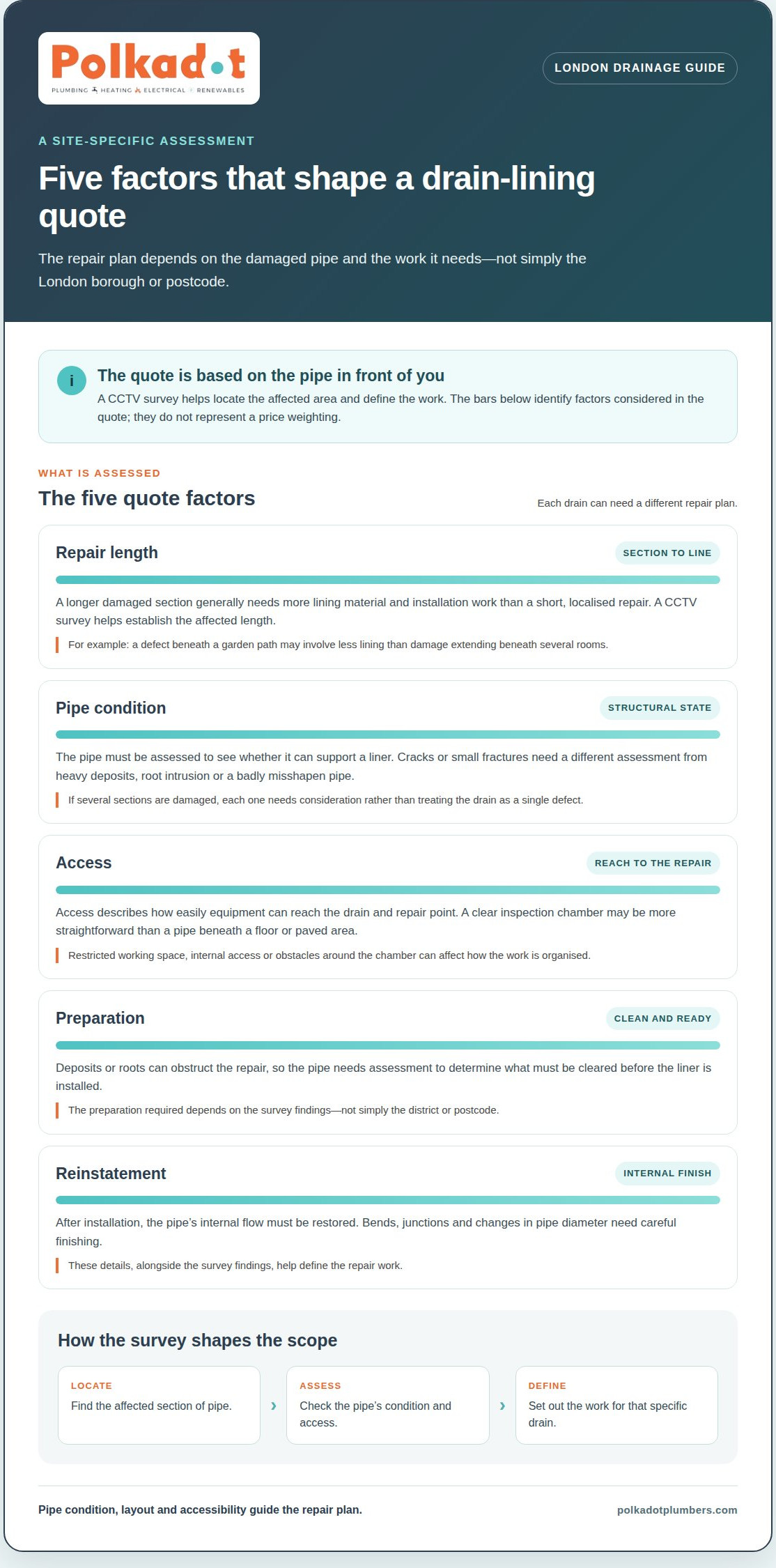
A drain-lining quote is based on the repair work identified for a particular pipe. For drain lining repair in London, the key factors include the damaged section’s length and condition, access, and preparation required. The appropriate repair depends on the survey findings, so the scope should be assessed for the specific drain.
Repair length means the section of pipe that needs a liner. A longer damaged section generally requires more lining material and installation work than a short, localised repair. For example, a defect beneath a garden path may involve less lining than damage extending beneath several rooms. A CCTV survey helps locate the affected area and define the work.
Pipe condition describes the drain’s structural state and whether it can support a liner. Cracks or small fractures need a different assessment from heavy deposits, root intrusion or a badly misshapen pipe. If multiple sections are damaged, each one needs to be considered rather than treating the drain as a single defect.
Access is how easily equipment can reach the drain and repair point. A clear inspection chamber may make access more straightforward than a pipe beneath a floor or paved area. In a London property, restricted working space, internal access or obstacles around the chamber can affect how the work is organised.
Preparation means cleaning and readying the pipe before lining. Deposits or roots can obstruct the repair, so the pipe must be assessed to determine what needs clearing before the liner is installed. The amount of preparation depends on the survey findings, not simply the district or postcode.
Reinstatement is restoring the pipe’s internal flow after the liner is installed. Bends, junctions and changes in pipe diameter need careful finishing. These details, alongside the survey findings, help define the work and explain why two London drains may need different repair plans.
How does drain lining compare with drain excavation and replacement?
Drain lining creates a new lining inside an existing pipe. After the drain is prepared, a resin-impregnated liner is positioned within the damaged section and forms a smooth internal surface. The original pipe stays in place. This can avoid digging up a patio, driveway or floor when the existing pipe remains suitable for lining.
Excavation and replacement means digging down to remove damaged pipe and installing new pipework. It can address a drain that has collapsed, shifted badly or lost its shape, when a liner cannot restore a usable passage. The trade-off is disruption: reaching a buried section may mean lifting paving, disturbing garden beds or opening an internal floor before reinstatement.
Disruption describes the effect each method has on the property during repair. Lining usually works through an existing access point, so it may avoid opening surfaces above the pipe. Excavation requires a trench at the damaged section, followed by reinstatement of the disturbed surface. For example, a pipe beneath a landscaped garden may make excavation more intrusive than lining, if the damage allows lining.
Suitability means whether the pipe’s condition allows a repair method to work effectively. Lining may suit local cracks or defects where the pipe still provides a route for the liner. A collapsed section or severe deformation may instead require replacement. A CCTV survey helps locate and assess the defect, so the repair plan reflects the pipe’s actual condition rather than assumptions based on symptoms.
Consider lining where the pipe remains accessible internally and structurally suitable.
Consider replacement where collapse or distortion prevents an effective internal repair.
Compare disruption by noting which surfaces each method would disturb and reinstate.
If a drain problem is affecting plumbing at your property, London emergency plumbing can be a practical next step for the immediate issue.
Drain lining: suitable repairs and when it's unsuitable
A hairline crack is a narrow split in a pipe wall. Lining can cover cracks where the pipe still holds its shape and remains open. For example, a CCTV image showing a local split without major distortion may indicate a defect suitable for lining. The liner forms a new internal surface across the damaged area.
A leaking joint is a connection between pipe sections that no longer seals properly. Lining may bridge a small gap and reduce leakage through that connection. Root ingress can also be addressed when roots enter through a crack or joint, provided they are cleared first and the liner can pass through the pipe.
Root ingress means roots have entered the drain through an opening. Roots must be removed before lining, because trapped growth can obstruct installation or prevent a close fit. For instance, a camera survey may reveal roots at one joint, while a separate restriction farther along needs its own assessment.
Pipe deformation is a change to the pipe’s original shape. A slight irregularity may still leave enough space for lining, but severe distortion can stop the liner travelling or fitting correctly. The key check is whether a continuous, usable passage remains from the access point to the defect.
A collapsed drain is a pipe section that has fallen in or lost its open channel. Lining is unsuitable where collapse blocks the route, since the liner needs a passage through the pipe. A CCTV survey can show whether the damage is local or whether multiple sections have failed.
A restriction is anything that narrows or blocks wastewater flow. Heavy deposits, an obstruction or a sharp offset may need clearing before a liner can be installed. If the pipe cannot be cleaned or the liner cannot reach the damaged section, excavation and replacement may be more appropriate.
Look for the defect type, location and extent in the CCTV findings.
Confirm whether the pipe remains open, cleanable and accessible for lining.
Use the damage pattern to distinguish a local repair from a failed section.
What are the steps involved in a CCTV drain survey and lining repair
A CCTV drain survey is an inspection using a camera inside the pipe. It records the drain’s condition and helps locate defects before repair. The process moves from access and inspection to preparation, lining and a final check. Each stage informs the next, so the repair responds to what the camera reveals.
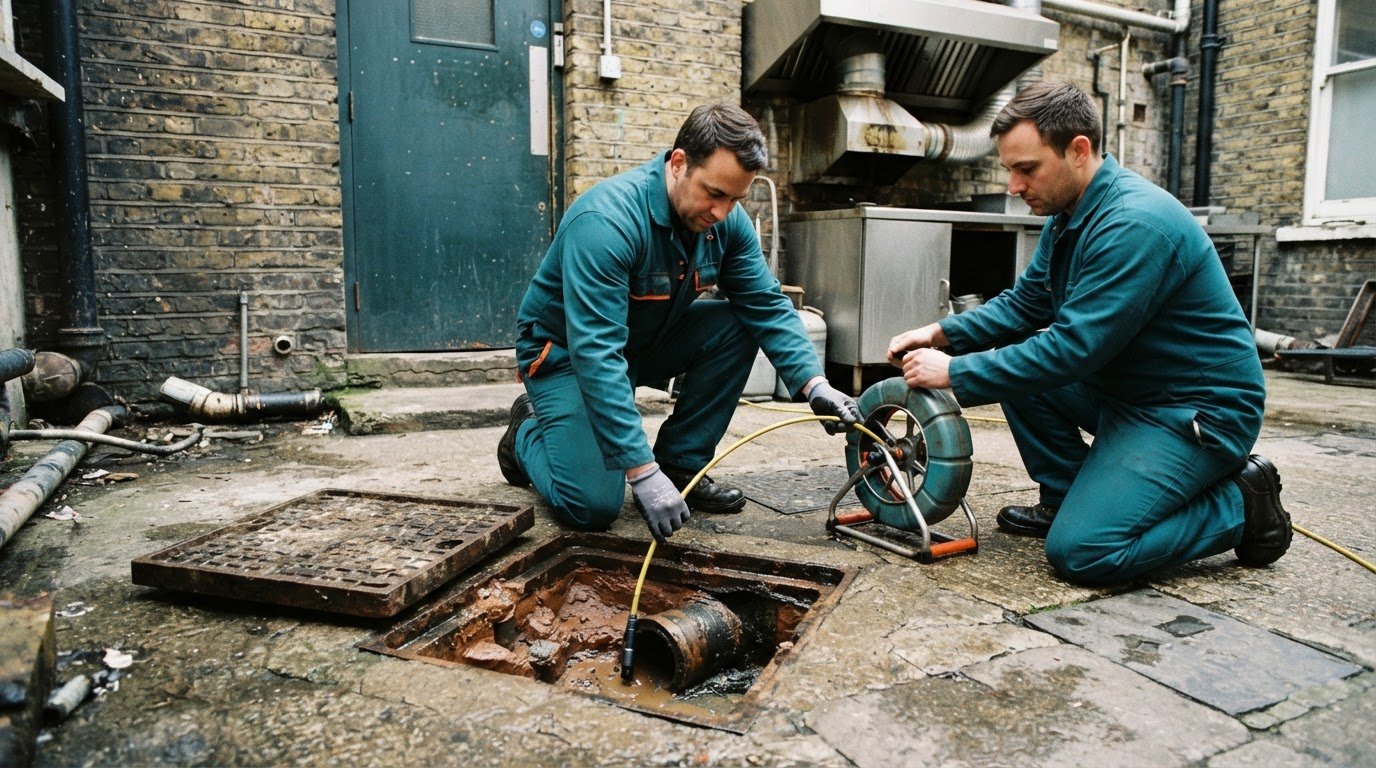
Locate an access point. The survey begins at an available drain opening, such as an inspection chamber. The camera enters through this point and travels along the pipe. If access is obstructed, the team assesses the route before proceeding.
Inspect and record the pipe. The camera shows the pipe’s internal condition, including cracks, joints, roots or blockages. Its footage helps identify where a defect sits and whether the pipe remains open. For example, a crack beside a joint differs from a collapsed section.
Assess the findings. The survey information is used to decide whether lining suits the damage. The team considers the defect’s position, extent and the pipe’s shape. A clear route matters because equipment and liner must reach the repair area.
Prepare the drain. Preparation means clearing material that could interfere with the liner. Deposits or roots may need removal, and the pipe must be accessible along the section being repaired. This stage creates a suitable surface for fitting the liner.
Install and inspect the liner. The liner is positioned inside the prepared pipe and allowed to set. The team then checks the repaired section, including its internal finish and flow. A final camera inspection can show whether the liner covers the intended defect.
A plumbing survey assesses plumbing conditions and helps clarify the next step. Use a plumbing survey to investigate a concern and understand what the inspection reveals about your property’s plumbing.
Polkadot: London Emergency Plumbing
Polkadot provides London Emergency Plumbing for urgent plumbing problems affecting your property. If a blocked or leaking drain is causing an immediate plumbing concern, this service is a relevant next step. A plumbing survey can also help clarify the condition of your property’s plumbing and identify what needs attention.
Drain lining and emergency plumbing address different needs: lining repairs a suitable damaged pipe, while emergency plumbing responds to urgent plumbing issues. If a survey identifies wider plumbing concerns, Polkadot can help with the relevant plumbing service. Other property services include heating, air conditioning, refurbishment and electrical installations.
Contact Polkadot to discuss your plumbing concern and the appropriate next step.
Plan the next step for your property
Choosing drain lining repair in London means considering the condition of a particular property, while also protecting the space around it. A clear record of the inspection and agreed repair scope helps you understand what has been addressed and plan related property work. If you are considering improvements beyond drainage, Polkadot offers air conditioning, refurbishment and heating.
When you get in touch about a drain concern, share the issue and any CCTV survey findings. This gives the discussion a practical starting point, whether you need help with a plumbing problem or want to understand what support suits your property. If the situation is urgent, explain what is happening and how it is affecting your home.
Contact Polkadot about your drain concern and take the next step with a clearer picture of your property’s needs.
Frequently Asked Questions
What is drain lining repair and how does no-dig pipe relining work?
Drain lining repairs a damaged pipe from the inside, usually through an existing access point. A flexible liner is positioned against the drain’s inner surface, creating a sealed passage without opening the ground above the pipe. For example, this may avoid lifting paving over a repairable crack. It cannot restore a pipe that has collapsed and lost its open route.
How can I choose a reputable drain lining company in London?
Choose a company that bases its recommendation on the drain’s recorded condition and explains the proposed work clearly. A useful survey report identifies the defect and its location, helping distinguish a blockage from structural damage. Polkadot provides plumbing surveys, CCTV surveys, drain cleaning, jetting and blockage removal in London. Jetting cleans drains; cracked or collapsed pipework requires structural repair, not cleaning.
Comments