
Fix a Blocked Toilet in London: Costs and Next Steps
To fix a blocked toilet in London, stop flushing to prevent an overflow. If the water is rising, turn off the water supply. For a minor blockage, try a toilet plunger that forms a firm seal. Avoid harsh chemicals, which can cause further damage.
A blocked loo is stressful, especially when it’s unclear whether the problem is in the toilet or further along the drain. The symptoms can help you choose what to do next. Repeated flushing can make the problem worse.
This guide covers practical first steps, what affects the cost of unblocking work, and signs of a shared-drain blockage. It also explains when a careful attempt at home may be appropriate and when to call a plumber.
Table of Contents
What do I do if my toilet is blocked?
Stop flushing, particularly if the water is rising. If the toilet overflows, turn off the water supply. Consider what may have entered the bowl before choosing how to tackle the blockage.
Common causes of blockages
Excess toilet paper can collect in the trap, while wipes, sanitary products and other foreign objects can obstruct the toilet or drain. Fat and grease can build up further along the drainage system. Thames Water clears tens of thousands of blockages a year, with wipes and fat responsible for the overwhelming majority. Don’t flush wipes, even if they’re labelled water-soluble.
Notice whether the toilet’s flushing has suddenly changed, and consider whether anything unsuitable was recently put down it. A slow flush may point to a developing obstruction, rather than one object lodged in the pan.
Sudden and gradual blockages
A sudden blockage may follow a flush containing too much paper or an item the toilet wasn’t designed to take. A gradual blockage can develop as deposits narrow the route through the trap or drain. Either way, don’t keep flushing to test whether the water is flowing.
London’s Whitechapel fatberg, removed by Thames Water in 2017, weighed around 130 tonnes and stretched the length of two football pitches. It shows how flushed waste and poured fats can accumulate beyond one bathroom. A toilet blockage that keeps returning may need a different method from a one-off obstruction.
Start with these steps:
Stop flushing and keep other household members from using the toilet.
If the bowl is overflowing, turn off the water supply to the toilet.
For a minor blockage, use a toilet plunger with a proper seal and steady pressure. Avoid repeated force if the water level rises.
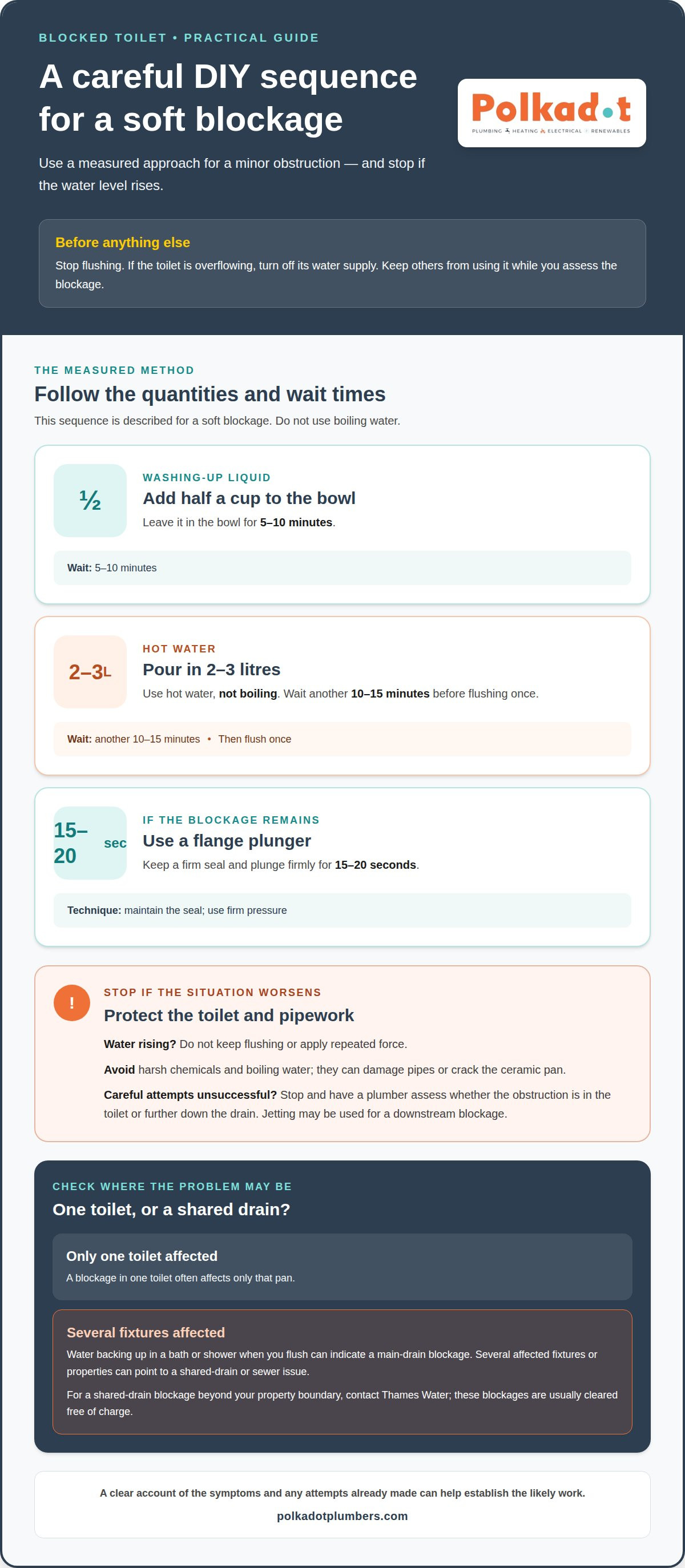
Don’t use harsh chemicals or boiling water, which can damage pipes or crack the ceramic pan.
If careful attempts don’t resolve the blockage, stop rather than risking damage. A plumber can assess whether the obstruction is in the toilet or further down the drain; jetting may be used for a downstream blockage.
How much does it cost to unblock a toilet in London?
The price depends on the case and is given after a quote request. The main factors are where the blockage sits, how accessible the toilet or drain is, and whether clearing it requires specialist equipment or repairs. A simple obstruction involving excess toilet paper differs from foreign objects lodged deeper in the pipework. Ask for the expected work and any additional charges to be explained before work begins.
Emergency attendance can affect the overall cost, particularly when work is requested outside ordinary hours. Availability varies: a service advertised as operating 24 hours describes its hours, not a guaranteed arrival time. Across London, an engineer may need to assess whether the problem is inside one property or affects a shared drain. That distinction can change the equipment and work required for unblocking.
Whether you’re in Wood Green or elsewhere in London, start with the same practical questions: is the toilet overflowing, are other fixtures affected, and can the engineer access the relevant drain? Describe the symptoms clearly, including when they began and whether flushing makes the water rise. This helps establish the likely work and gives a more specific basis for assessing the cost.
In a rented London property, responsibility for a blocked toilet depends on the cause and the tenancy agreement. Report the problem promptly to your landlord or letting agent, and explain whether misuse, an object or a recurring drainage issue may be involved.
Before arranging unblocking, describe the symptoms, access to the property and any attempts you’ve already made. Ask what the work covers, whether investigation or further repairs are additional, and how the charge is calculated. A clear account helps distinguish a blockage in the toilet from work involving pipework or a shared drain, so the next step can match the problem.
Identifying a toilet blockage versus a shared-drain blockage
A blockage in one toilet often affects only that pan. A shared-drain problem may disrupt several fixtures or properties. Check what happens when you use other toilets, sinks, baths or showers. Water backing up into a bath or shower when you flush can indicate a blockage in the main drain.
The right method depends on the blockage’s location and cause. Clearing an obstruction in the toilet may require different equipment from inspecting or jetting drain pipework. Recurring problems may call for a CCTV survey to locate the blockage and identify what is affecting drainage. Avoid adding chemicals while the cause is unclear, especially if water is already backing up.
Could a blocked toilet point to a problem with London’s public sewer, and who should you contact? Several affected fixtures or properties can indicate a shared-drain or sewer issue. For a shared-drain blockage beyond your property boundary, contact Thames Water. These blockages are usually cleared free of charge.
The transfer of private sewers in 2011 made most lateral drains beyond a property’s boundary and shared drains the water company’s responsibility. A blockage within the property boundary may need separate investigation. For commercial premises or multi-site properties, note which toilets and fixtures are affected at each location; a pattern across sites helps distinguish a local toilet fault from a wider drainage issue. Across Greater London, this location check helps direct emergency response and choose suitable clearing equipment.
DIY steps and when to call a plumber
For a minor blockage, choose a method suited to the likely obstruction and stop if the water level rises. Whether in a home or commercial bathroom, repeated attempts can make a small problem harder to manage.
DIY unblocking steps
For a soft blockage, add half a cup of washing-up liquid and leave it in the bowl for 5-10 minutes. Pour in 2-3 litres of hot, not boiling, water, then wait another 10-15 minutes before flushing once. If that doesn’t work, use a flange plunger, keeping its seal and plunging firmly for 15-20 seconds.
A toilet auger can reach obstructions beyond a plunger’s reach. Use it carefully to avoid damaging the toilet pan.
When to stop and call a plumber
Stop if two or three DIY methods fail, or sooner if water rises, leaks or backs up into another fixture. A recurring blockage may need investigation rather than another attempt on the same toilet. In a home or commercial property, note which toilets and nearby kitchen fixtures are affected.
If the blockage is persistent or overflowing, call us for London emergency plumbing rather than continuing to plunge.
Choosing a reliable licensed plumber
Ask what the attendance covers, how the plumber will identify the blockage, and whether further repairs or equipment would add work. Compare at least three quotes, as recommended for hiring a blocked-toilet plumber. Check that the proposed method addresses the symptoms, such as one blocked toilet versus several affected fixtures.
For credentials, ask about relevant licensing and professional qualifications. Fewer than 300 CIPHE Master Plumber certificates have been awarded in the UK, so don’t assume every plumber holds one.
Chemical cleaner and DIY risks
Harsh chemical drain cleaners can damage toilet pipes and complicate later plumbing work. Sink unblockers aren’t designed for toilets, and chemical products shouldn’t be mixed. Follow the manufacturer’s instructions for any toilet-specific cleaner, and keep children and pets away from the bowl.
Boiling water can crack a ceramic toilet pan. A homemade wire hanger can scratch the pan or push an obstruction deeper, while forceful flushing risks an overflow. Stop if the water rises or careful DIY clearing fails.
Polkadot: Air Conditioning
Once the toilet issue is dealt with, Polkadot can help with other property projects in London. Its services include air conditioning, refurbishment, heating and electrical installations, which may be useful if you’re planning broader work around your home.
A refurbishment may involve updating several parts of a property, while air conditioning, heating and electrical installations address different building needs. These services don’t replace identifying and clearing a blocked toilet. If you’re planning refurbishment or improvements to your home’s comfort, consider which work is needed and how the tasks fit together.
To discuss a property project in London, contact Polkadot about the work you have in mind.
Take the next step towards a working toilet
A persistent blockage can disrupt the household, so don’t keep repeating attempts that haven’t worked. If you rent, keep your landlord or letting agent informed. If you suspect a shared-drain issue, report the signs to the relevant water company. This helps the problem reach the right person.
When you contact a plumber to fix a blocked toilet in London, explain what you’ve already tried and whether the problem has returned. That gives them useful context before they assess the work. If you’re ready for professional help with the toilet, contact Polkadot for blocked toilet help.
After the blockage is cleared, pay attention to how the toilet behaves during normal use. If the same symptoms return, seek further assessment rather than repeating the same DIY method. A clear next step can help get your bathroom working properly again.
Frequently Asked Questions
Toilet not draining?
If the bowl stays full after flushing, stop using the toilet and see whether the water level drops on its own. A slow drop can indicate restricted flow; a steady rise means further flushing could spill water onto the floor. Keep children out of the bathroom and move nearby items, such as bath mats or stored toilet rolls, before deciding what to do next.
Toilet not flushing?
If the flush handle moves without resistance, check whether the cistern has water and whether the handle mechanism appears disconnected. Don’t force the handle or keep operating it: this won’t clear a blockage and could worsen a faulty mechanism. If the cistern fills normally but the bowl doesn’t clear, you may need to fix a blocked toilet in London or investigate a drainage problem.
Can you come out today?
Polkadot offers London Emergency Plumbing, but this doesn’t mean a same-day visit is guaranteed. Contact Polkadot with your London postcode, the toilet’s symptoms and any effect on other fixtures to discuss attendance. Polkadot also provides free, no-obligation estimates for plumbing work, real-time updates on service progress, automatic service and renewal reminders, and a 12-month labour guarantee on plumbing services.
Should you try to clear it yourself first?
Try a careful DIY method only if the blockage seems minor and the toilet isn’t overflowing. A plunger may work for a local obstruction, but stop if the water rises or the blockage persists. If the kitchen sink, bath or another toilet is also affected, don’t assume the problem is confined to one fixture. Get help diagnosing the wider issue.
Who pays: you or Thames Water?
Responsibility depends on where the blockage is. In London, a shared-drain blockage beyond a property’s boundary is usually cleared free of charge by Thames Water. If the problem appears confined to your home’s pipework, the cost may fall to the property owner or landlord. Renters should report the issue promptly and say which fixtures are affected.
How can I safely unblock a toilet myself?
Put on rubber gloves, protect the floor with old towels and use a toilet plunger that fits the bowl outlet. Keep the seal in place and apply controlled pressure to avoid splashing. If you need to fix a blocked toilet in London, don’t mix drain products or add another chemical if one has already been used. Stop if the bowl overflows, water leaks or your first careful attempt fails.
Comments