
Home EV charger grants in the UK: who can get funding
Funding is still available, but not for every homeowner. In 2026, the UK home EV charger grant can provide eligible applicants with up to £500 towards a chargepoint. The home EV charger grant in the UK in 2026 is aimed at people who rent or own a flat, and drivers with only on-street parking who need a cross-pavement solution.
It’s understandable to expect a grant to apply to any home charger installation. In practice, eligibility depends on your home, parking arrangements and electric vehicle, so a house owner with a driveway won’t qualify for the home grant on that basis alone.
This guide explains who may be eligible, how the home EV charger grant in the UK in 2026 works and which conditions can affect an application. You’ll also see how the on-street parking route differs from the grant for renters and flat owners, so you can understand which rules apply to your situation.
Table of Contents
Can you get a grant for a home EV charger?
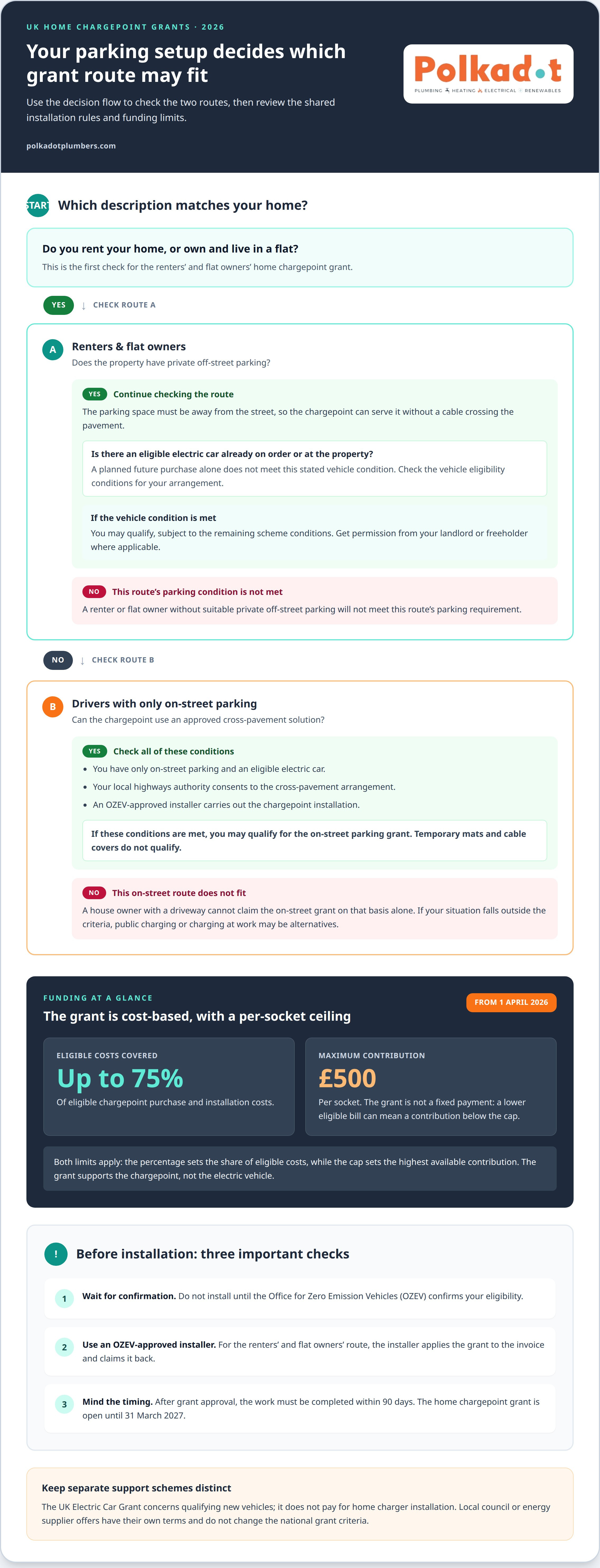
Eligibility for help with a home chargepoint can depend on a household’s parking and installation arrangements. The route depends on parking arrangements, an eligible electric vehicle and an approved cross-pavement installation.
Private off-street parking requirements
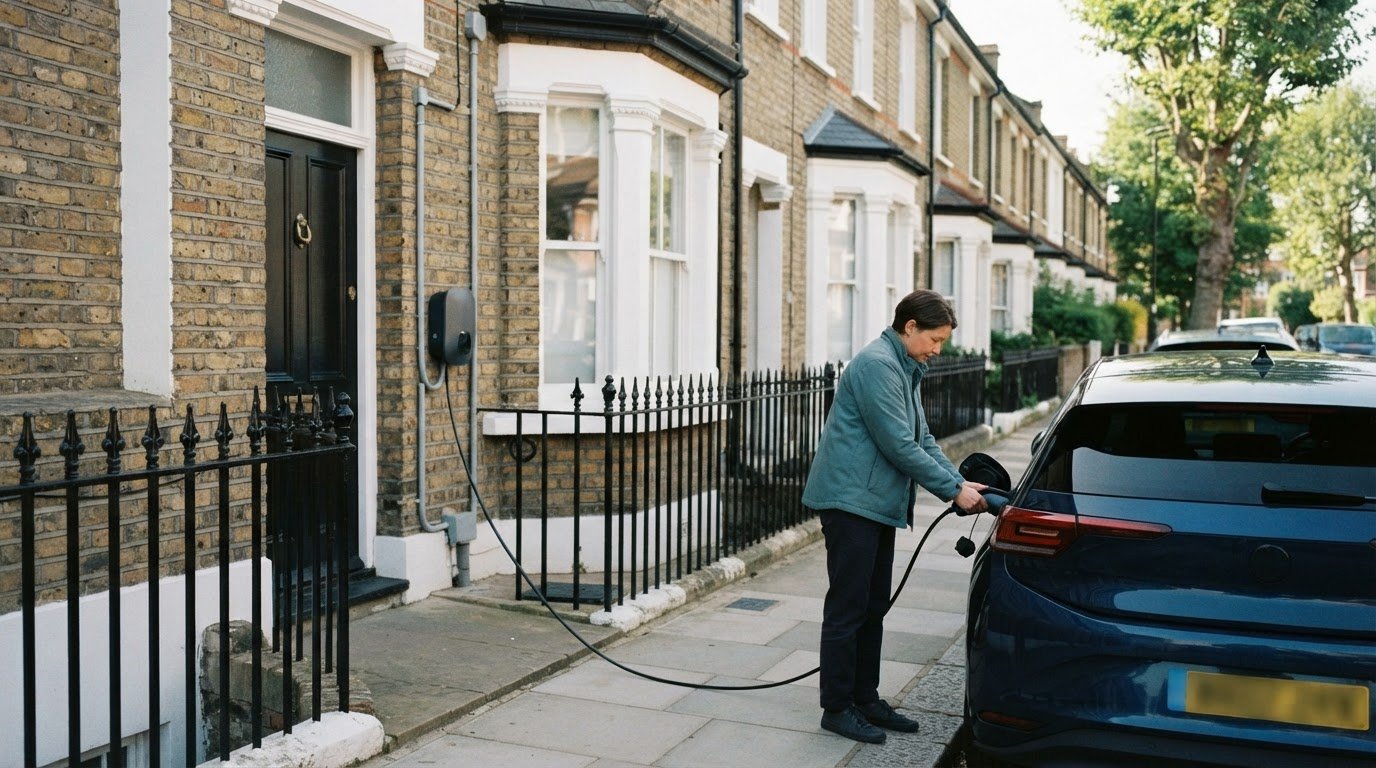
Private off-street parking means a space on your property, such as a driveway, rather than parking on the street. This distinction matters because the on-street grant is for applicants with only on-street parking who use a cross-pavement solution. A UK owner-occupier with a house and driveway cannot claim this grant on that basis. Temporary cable covers and rubber mats do not qualify.
Charger and installation requirements
The grant supports an installed chargepoint socket, not a temporary cable across the pavement. Applicants need an eligible electric car and consent from their local highways authority for the cross-pavement arrangement. An OZEV-approved installer must carry out the installation for the grant to apply. Wait for notification from the Office for Zero Emission Vehicles confirming eligibility before installation; after grant approval, the work must be completed within 90 days.
Alternatives to grant support
If your parking or property situation falls outside the criteria, public charging or charging at work may be alternatives to installing a home socket. The UK Electric Car Grant helps with the purchase of qualifying new electric vehicles, but does not cover home charger installation. The on-street parking grant is a UK scheme, including for drivers in Scotland, Wales and Northern Ireland. Its central criteria are on-street parking and a cross-pavement solution.
Combining grants and other offers
A local council or energy supplier offer has its own terms, so its availability does not change the national grant criteria. Don’t assume that a separate offer automatically increases the home grant or covers the same installation costs. National support may be available for eligible installations, subject to the scheme’s conditions. Consider each offer’s conditions and the work it supports before relying on combined funding.
Home charger grant eligibility for renters and flat owners
Renters and people who own and live in a flat may qualify for home chargepoint funding. Eligibility also depends on the vehicle, parking and installation arrangements.
Homeowners may qualify if they own and live in a flat. The grant also covers people renting and living in residential properties. It isn’t a general grant for every homeowner: owning a house with a driveway does not meet the on-street parking grant criteria.
Eligible EV ownership and leases
The vehicle condition links the application to an eligible electric car that is already on order or at the property. This matters because a planned future purchase alone doesn’t meet that stated condition. Check the vehicle eligibility conditions carefully, as they may depend on your arrangement with the EV. That helps distinguish an eligible vehicle arrangement from a short-term loan or rental.
Parking eligibility for renters and flat owners
For the renters’ and flat owners’ grant, the property must have private off-street parking. This means the chargepoint can serve a space away from the street, without a cable crossing the pavement. Parking arrangements matter whether you live in a flat or rent your home. Where applicable, get permission from your landlord or freeholder for the installation.
Which installer can claim the funding? The chargepoint must be installed by an OZEV-approved installer. The installer applies the grant to the invoice and claims it back, reducing the amount you pay. Wait until the Office for Zero Emission Vehicles notifies you that you’re eligible before installation.
Eligible renters and flat owners may be able to get help with the cost of installing a home chargepoint. The grant is open until 31 March 2027. These criteria mean that a flat owner with private parking and an eligible EV may qualify, while a renter without a suitable off-street space won’t meet this route’s parking condition.
Home chargepoint grant amount and percentage cap
For the home EV charger grant in the UK in 2026, funding combines a percentage of eligible costs with a maximum contribution. The £500 cap and 75% limit determine how much support applies to an installation.
Grant amount
From 1 April 2026, most UK EV charger grants increased to £500 per socket. For an eligible home chargepoint, this is the maximum grant contribution, not a fixed payment to every applicant. The amount depends on the eligible purchase and installation costs, as well as the percentage limit.
The grant applies to buying and installing the socket. It doesn’t fund the electric vehicle itself, and the UK Electric Car Grant does not pay for home charger installation. That vehicle grant concerns qualifying new cars, so treat vehicle funding and chargepoint funding as separate support.
Installation cost percentage and cap
The 2026 UK home EV charger grant covers up to 75% of eligible purchase and installation costs, subject to the £500 per-socket cap. Both limits matter: the percentage determines the share of costs, while the cap sets the highest grant available. A lower eligible bill means the 75% calculation may produce less than £500.
That example shows why the grant isn’t automatically £500: the contribution follows eligible costs, then stops at the cap. The installer applies the approved grant to the invoice and claims it back, so the customer pays the reduced amount.
The former £350-per-socket cap is not the current maximum for most grants from 1 April 2026. For eligible home chargepoint applicants, the current cap is £500 per socket. The scheme is available until 31 March 2027, so the date matters when planning an application and installation. The grant supports chargepoint infrastructure, rather than wider electrical work unrelated to installing the socket.
Home chargepoint grants available in 2026-27
Home and workplace chargepoint grants are available until 31 March 2027. The 2026-27 offer also includes funding routes for eligible landlords and education institutions.
Grant availability
The home chargepoint grant remains available to eligible renters, flat owners and drivers without off-street parking. For workplaces, the Workplace Charging Scheme supports eligible businesses, charities and public sector organisations until March 2027. It can fund up to 40 sockets across an applicant’s sites, subject to scheme criteria.
Eligible landlords can apply for up to 200 sockets across their sites, with grants of up to £500 per socket. These schemes have different applicants and limits, so a landlord’s property funding is not the same route as a household application.
Some older schemes have closed. Customer applications for the staff and fleets, commercial landlord chargepoint and residential landlord infrastructure grants closed on 31 March 2026. The Workplace Charging Scheme and eligible home grant routes remain relevant for the stated period.
Applying for the grant
For a home grant, submit an application through the grant platform. Wait for the Office for Zero Emission Vehicles to notify you of eligibility before installation. The installer applies the grant to the invoice and claims it back, reducing the amount you pay.
Applications and claims on the new platform are initially expected to take up to 10 working days to assess. After approval, installation must be completed within 90 days. For a workplace application, use the relevant scheme route; a Workplace Charging Scheme voucher is valid for 180 days from issue. The application route depends on whether you’re applying as a household, workplace, landlord or education institution.
Planning electrical work around an approved chargepoint application? Arrange electrical installation support for the property.
Polkadot
Polkadot Plumbers provides electrical installations and can help you understand the practical electrical work involved in planning a home chargepoint. If you’re eligible for funding, consider your property’s electrical installation alongside the grant application, so the proposed work fits your home and parking arrangement. If you don’t qualify, clear information about the installation can still help you decide what to do next.
Polkadot Plumbers provides electrical installations as part of its wider property services. When you’re ready to discuss electrical work connected with home improvement plans, get in touch. Grant rules determine eligibility and funding; installation planning addresses the work needed at your property.
Contact Polkadot to discuss your electrical installation requirements.
Plan your next step with confidence
As you assess the home EV charger grant in the UK for 2026, think beyond the application itself. A clear plan for your property can help you decide how a chargepoint fits alongside other improvements, your parking arrangements and the way you use your home. Keep the grant decision and the installation plan distinct: eligibility determines whether funding applies, while your property requirements shape the work to discuss.
Polkadot Plumbers also offers Air Conditioning, Refurbishment and Heating, which may be relevant if you’re planning wider property work. Consider how those projects fit your priorities rather than treating them as part of the chargepoint grant. A practical conversation can help you set out what you need and identify an appropriate next step for your home.
For help with your property plans, contact Polkadot. Take the next step when you’re ready, with a clearer view of what your home needs.
Frequently Asked Questions
How does the EV grant work?
An eligible chargepoint grant reduces the amount you pay for installation. The installer applies the approved grant to your invoice and claims the funding back. You must wait for the Office for Zero Emission Vehicles to confirm eligibility before installation begins. Receiving approval first helps avoid arranging work before a decision; installation must then be completed within the scheme’s permitted timeframe.
How much for EV charger installation?
Installation costs vary with the property and the work required, so there isn’t one price for every home. Factors include the cable route, chargepoint position and electrical work needed. The grant can reduce eligible costs, but it doesn’t set the installer’s price. The cost for a particular property depends on its installation requirements and is provided after a quote request.
How to get a free EV charger in the UK?
A home charger isn’t automatically free under the UK grant scheme. Eligible applicants receive a contribution towards qualifying costs and pay any remaining amount. The government’s Electric Car Grant is separate: it reduces the price of qualifying new electric vehicles, not home charger installation. When budgeting, treat the vehicle discount and chargepoint funding as separate forms of support, not a combined free installation offer.
What is included in the EV grant?
The home chargepoint grant contributes towards purchasing and installing an eligible socket. It doesn’t pay for the electric vehicle, routine charging electricity or unrelated home improvements. A discount on a new qualifying car, for example, falls under the separate Electric Car Grant, not the home charger scheme. Keep the chargepoint invoice distinct from vehicle costs so each type of funding is clear.
Who Is Eligible for the OZEV Grant?
Eligibility depends on the grant route. A household application may suit a renter or someone who owns and lives in a flat, while businesses, charities and public sector organisations may use the Workplace Charging Scheme. Landlords and state-funded education institutions have separate routes. Your property, parking, vehicle and intended use help determine which criteria apply, so identify the right applicant category before preparing an application.
🔋 What’s changed in 2026?
From 1 April 2026, most UK chargepoint grants increased to £500 per socket, and the application platform changed. The home and workplace grant routes are available until 31 March 2027. Some previous programmes closed to customer applications on 31 March 2026, so an older application route may no longer apply. Check which scheme matches your circumstances before starting an application.
Comments