
Outdoor Tap Installation London: 2026 Homeowner's Guide
Could the tap itself be the least important part of an outdoor tap installation? In London, the property and the route from the existing water supply often shape the job. If you’re considering outdoor tap installation London, it’s natural to wonder where a tap can go, how pipework will reach it and how to reduce the risk of leaks, frost damage or disruption indoors.
A reliable installation starts with those practical details, not simply choosing a fitting. The right position should make everyday tasks easier, while the pipework and safeguards need to suit your home. A clear plan helps make the work more straightforward.
This guide explains what to consider before arranging an installation, how a plumber assesses your property and pipe route, and which protections help keep the tap dependable in colder weather. You’ll also learn what to expect from the process and how Polkadot’s London plumbing service can help plan and install an outdoor tap.
Table of Contents
Outdoor Tap Installation in London: When Does It Make Sense?
An outdoor tap gives you a convenient water point connected to your property’s existing plumbing. It can save repeated trips indoors and make routine jobs easier, from watering plants to rinsing garden equipment or filling containers. The pipework and fittings form part of the Plumbing systems that carry water around a building. The practical question is how to connect an external tap to your home’s supply.
Think about how you’ll use the tap before choosing a position. Watering a small courtyard may call for a spot close to the planting area, while washing equipment or filling a larger container may need more working space. Consider where a hose will lie and whether it could cross a doorway or busy path. A well-chosen spot makes the tap useful without creating an obstacle.
A new installation isn’t the only option. If you already have an outdoor tap, a plumber can assess whether it needs repair or replacement. Repair may suit a local fault, while a worn, damaged or poorly positioned fitting may be better replaced. For a new tap, the existing plumbing and access to the outside wall help shape the installation plan. Polkadot’s London plumbing service installs outdoor taps and can plan the work around your property’s pipework and access.
Which London properties can usually accommodate an outdoor tap?
Houses often have an outside wall beside a kitchen or utility area, where existing plumbing may be nearby. Ground-floor flats can also have a practical route, though the tap may involve a shared wall or communal area. Establish any relevant property permissions before work is planned. Commercial premises vary too: access to the external wall, the internal plumbing layout and the intended use all affect the installation.
Look at the proposed position from both sides of the wall. Note cupboards, appliances, fixed finishes or restricted access that could affect the pipe route. A clear route may make planning simpler, while an obstructed one may call for a different approach. Outdoor tap installation in London should be planned around the building, rather than assuming every property has the same access.
Where should an outdoor tap be positioned?
Start near the area where you expect to use water most, such as a garden bed, paved space or outdoor work area. Choose a spot that’s easy to reach, with enough room to attach a hose or place a container. Avoid a location that forces a long hose run around steps, doors or walkways. Check that you can reach the tap without moving stored items or leaning over obstacles.
The most convenient position may not be the easiest to connect. The final choice depends on the property layout, nearby pipework and the route available through or along the building. Mark your preferred spot and note any access constraints so the plumber can assess whether it’s practical.
How Outdoor Tap Installation Works: Pipe Routes, Fittings and Safeguards
A dependable installation is planned around the existing water supply and the route to the outside wall. In London properties, access can vary considerably. Pipework may be close to the proposed position, or the route may need to work around fixtures, finishes or other obstacles. The right approach depends on the building and its plumbing configuration.
The work generally follows a clear sequence:
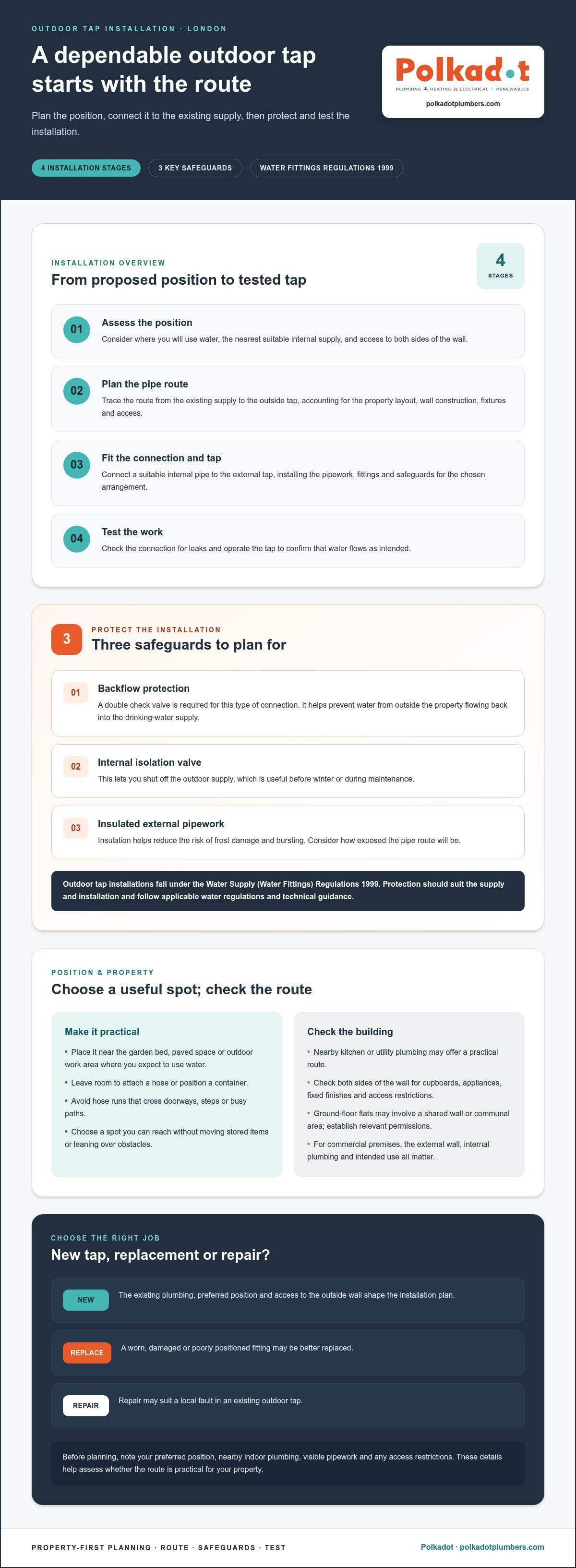
Assess the position. The plumber considers the intended tap location, the nearest suitable internal supply and access to both sides of the wall.
Plan the route. Pipework is traced from the supply to the tap, taking the property layout and any access challenges into account.
Fit the connection and tap. The necessary pipework, fittings and safeguards are installed for the chosen arrangement.
Test the work. The connection is checked for leaks and the tap is operated to confirm water flows as intended.
Planning ahead can identify practical issues, such as cabinetry or surfaces that affect access. It also allows the plumber to consider how the new connection can be isolated and protected from cold weather.
How is an outdoor tap connected to the water supply?
A suitable internal pipe supplies water to the external tap through a new branch connection. The route often passes through an external wall near the chosen position, but the best arrangement depends on the existing pipework, wall construction and access. A plumber assesses these conditions before deciding where the connection should run.
The route affects the work needed inside and outside. A clear path near a kitchen or utility area may be easier to access, while obstacles or a longer distance can change how the pipework is planned. Explaining your intended use and preferred position helps the installation plan account for both convenience and the building’s layout.
What protection does an outdoor tap need?
Backflow protection helps prevent water from outside the property, which may have been exposed to contaminants, from flowing back into the drinking-water supply. Outdoor tap installations fall under the Water Supply (Water Fittings) Regulations 1999. A double check valve is required for this type of connection. The plumber should select and fit protection appropriate to the supply and installation, following applicable water regulations and technical guidance.
Two further safeguards matter. An internal isolation valve lets you shut off the outdoor supply, which is useful before winter or during maintenance. External pipework should be insulated to reduce the risk of frost damage and bursting. Include these details in the installation plan, taking account of the pipe route and how exposed it is.
Polkadot installs outdoor taps in London, planning the route, fittings and safeguards around your home’s existing plumbing. Find out more about its London plumbing service.
Choosing an Outdoor Tap Installation for Your London Property
Choosing the right setup means looking beyond the tap itself. A new installation, replacement and repair each start from a different point. A new tap needs a suitable connection planned, while existing pipework and fittings affect the scope of a replacement or repair. The property layout matters too. A straightforward route in one home may be difficult to access in another, so the plan should reflect the actual property.
Use this comparison to organise your decision:
New installation: Consider this if you don’t already have an outdoor tap and want a convenient water point. The available pipe route and access to the proposed position will shape the plan.
Replacement: This may suit an existing tap that’s damaged or no longer works well. The fitting and its connection both need assessment.
Repair: If the tap has a specific fault, a plumber can assess whether the fitting or another part of the connection needs attention.
Then weigh the practical factors: where you’ll use the water, how easy the tap will be to reach, what tasks it needs to support and how exposed it is to the weather. A position beside a planting area may suit regular watering, while a tap used to rinse equipment may need clear space around it. These priorities can point to different positions and installation plans.
What should you consider when selecting the tap position and setup?
Match the position to your regular tasks, then consider how the pipework could reach it and what access the route requires indoors. Think about the finish around the external wall, including whether work could affect a decorated or tiled surface. In London homes with limited access, shared walls or communal areas, plan access and address relevant property permissions before work begins.
Compare possible positions by noting the intended task, access and pipe route for each one. A spot close to the garden may reduce hose runs, but a more accessible wall may provide a more practical connection. Aim to balance everyday convenience with a workable route through the property.
When is repair or replacement more suitable than a new installation?
Visible leakage, stiff operation or damage are reasons to arrange a plumbing assessment, not proof of a particular fault. A plumber can inspect the tap and connection to establish whether repair is suitable or replacement makes more sense. If a suitable supply and outdoor tap already exist, the work may differ from installing a new connection, but the condition of the existing parts still matters.
Note when the issue occurs and where you can see water escaping, without dismantling the fitting. This gives the plumber useful context and distinguishes an observed symptom from a confirmed repair need. For outdoor tap installation in London, Polkadot can assess your property and plan the work around its access, pipework and intended use.
Preparing for Outdoor Tap Installation: Access, Frost and Property Details
A little preparation helps the plumber understand your property and plan the work. Mark the preferred tap position, clear access to the relevant indoor and outdoor areas, and note nearby plumbing. These details give the plumber a useful starting point, though the property and pipework still need to be assessed to establish the route.
In London, access can be affected by the building layout, shared spaces or restrictions around the outside wall. Keep the proposed area clear and make sure the route to it is accessible. Don’t move fixed fittings or open walls yourself. The plumber needs to assess the property and existing pipework before deciding on a suitable approach.
What information helps plan the installation?
Before the assessment, note whether the property is a house, flat or commercial premises, and describe where you’d like the tap fitted. Include any shared access, boundary or communal-area considerations. Mention existing outdoor taps, visible leaks and plumbing alterations you know about. Photos of the proposed position and nearby pipework can help explain the layout, especially where access is limited.
Record what sits on the other side of the wall, such as a kitchen cupboard, utility area or fixed appliance. This helps identify potential access constraints without assuming where the pipes run. If you know of a previous repair or plumbing change, share that too. The plumber can assess the details on site and plan around the actual configuration.
How can you reduce the risk of frost-related problems?
Water left in exposed pipework or a tap can freeze in cold weather, creating a risk of damage. The protection needed depends on the installation, including how much pipework is outdoors and how exposed it is. External pipework should be insulated, and an internal isolation valve allows the outdoor supply to be shut off for seasonal protection or maintenance.
Ask the plumber to explain how your arrangement should be isolated and whether draining the outdoor section is appropriate before freezing conditions. The exact steps depend on the pipe route and fittings, so don’t assume closing a valve alone removes all water from the exposed section. A well-planned installation can reduce frost risks, but no setup is immune to freezing or damage.
Before the visit, make a short checklist:
Mark the preferred tap position and describe its intended use.
Clear access to the external wall and nearby indoor plumbing.
Note visible pipework, existing taps, leaks or known plumbing changes.
Flag shared areas, access restrictions and any seasonal concerns.
These details help Polkadot plan your outdoor tap installation around the property’s pipework, access and exposure. Arrange an outdoor tap installation assessment for your London property.
Arrange Outdoor Tap Installation in London with Polkadot
Planning an outdoor tap should feel manageable. Explain what you need, then assess how your property’s plumbing and access affect the installation. Polkadot provides plumbing services across London, including outdoor tap installation for domestic and commercial customers. The work is planned around the building, preferred position and available pipe route.
A tap for watering plants may suit a different location from one used to rinse equipment or fill containers. Sharing its intended use helps shape the installation plan. The route from an existing internal water supply, access to the relevant areas and the condition of any existing outdoor fittings also inform the work. Each property needs a plan that suits its own layout.
What to expect when arranging the work
Start by outlining your needs and sharing a few practical details. Let Polkadot know whether the property is a house, flat or commercial premises, where you’d like the tap and what you expect to use it for. Mention existing external taps, visible pipework, known plumbing changes and any access restrictions, such as shared spaces or limited access to the wall.
Polkadot assesses the property, proposed location and plumbing route to plan the work. This establishes how the connection can reach the outside and what access is needed. No two layouts are quite the same, so the installation approach is tailored to the property and its existing plumbing rather than relying on a standard route.
Take the next step for your London property
Before arranging the work, bring your priorities together. Confirm the area you want to serve, identify access considerations and note the existing plumbing details you can see. Planning the location, pipe route and safeguards together helps keep the installation practical, including isolation and protection from freezing conditions.
To make the initial conversation useful, have these details ready:
Your property type and preferred tap position.
The tasks the tap needs to support.
Nearby indoor plumbing or visible external pipework.
Any existing tap, leak, plumbing alteration or shared access issue.
These notes give the plumber a clearer starting point, while the property assessment establishes a suitable plan. Polkadot’s London plumbing service helps homeowners organise an outdoor tap installation around the property’s layout.
Ready to plan outdoor tap installation in London for your home? Arrange plumbing support with Polkadot and share your preferred location, intended use and property details.
Make Your Outdoor Water Point Work for You
A useful outdoor tap can make everyday jobs easier, but the next step is turning your preferred position and intended use into a practical plan. With outdoor tap installation in London, you don’t need to settle every technical detail yourself. Polkadot can assess your property’s plumbing and access, then plan an approach around the building.
Think about what would make the tap genuinely useful in your routine and share that when arranging plumbing support. Polkadot installs outdoor taps in London, planning the work to suit your property. Arrange outdoor tap installation with Polkadot and take the next step towards making outdoor tasks more convenient.
Frequently Asked Questions
Is outdoor tap installation suitable for a flat?
Yes, a flat may be suitable if there’s a practical connection to the water supply and permission for the proposed work. A ground-floor flat with an accessible outside wall may offer different options from an upper-floor home, where reaching an external area could be more involved. Before arranging outdoor tap installation in London, establish whether the wall or garden is shared and who manages the relevant area.
Can an outdoor tap be installed on any external wall?
No, not every wall is suitable. For example, a wall may open onto a communal corridor, sit far from accessible plumbing or have restricted access outside. These conditions can affect the position and work involved. A plumber can assess the wall and nearby supply, then advise whether your preferred spot is practical or another location better suits the property.
How long does outdoor tap installation take?
There isn’t one reliable timescale for every installation. A tap close to accessible pipework may involve less work than a position requiring a longer route or access through fitted cupboards, tiled surfaces or other obstructions. Existing plumbing issues can also affect the plan. Share known restrictions when arranging an assessment, then use the property-specific scope of work to set a realistic expectation.
Do outdoor taps need backflow protection?
Yes, an outdoor tap needs suitable backflow protection to help stop water from the external connection flowing back into the drinking-water supply. UK installations are subject to the Water Supply (Water Fittings) Regulations 1999, and a double check valve is used for this type of connection. The fitting must suit the arrangement, so include any hose or connected equipment in the installation discussion.
Can an outdoor tap freeze in winter?
Yes. Water remaining in an exposed tap or pipe can freeze in sufficiently cold weather and may cause damage as it expands. Before winter, find out how the supply should be isolated and whether the outdoor section needs draining for your setup. Don’t assume that turning the tap off indoors removes all water from the external pipe. The right seasonal steps depend on how it’s installed.
Will installing an outdoor tap affect water pressure indoors?
The effect depends on the existing supply and how the new connection is arranged, so it can vary between homes. If you already notice weak flow or pressure changes when several outlets are used, mention this before work is planned. That information helps the plumber consider the existing system and new connection together, rather than treating the outdoor tap in isolation.


Comments