
Slow Draining Sink Fix: Safe Steps to Clear a Blockage
A safe slow draining sink fix starts with checking the plughole, where hair, soap or food debris can collect, before reaching for chemicals or tools. The quickest-looking remedy may be the wrong one if you haven’t found where the blockage is. Standing water is frustrating, and it’s understandable to worry that a DIY attempt could cause a leak or damage your pipes.
You can often deal with a minor, accessible blockage yourself, but the right remedy depends on what’s causing the slow flow. Start with simple checks, then choose a method that suits what you can see and how many fixtures are affected.
This guide explains when to stop, which warning signs may point to a problem in the trap or pipework, and when a plumber’s investigation is the more practical next step. If you’re in London, it also explains how to prepare useful details before contacting a plumbing service.
Table of Contents
Why is your sink draining slowly? Start with these checks
If water takes noticeably longer than usual to leave the basin, the sink is draining slowly. The restriction may be close to the plughole, where you can see or reach it, or farther along the waste pipe. Hair, soap residue, food debris and grease can contribute, but the symptoms alone won’t confirm the cause.
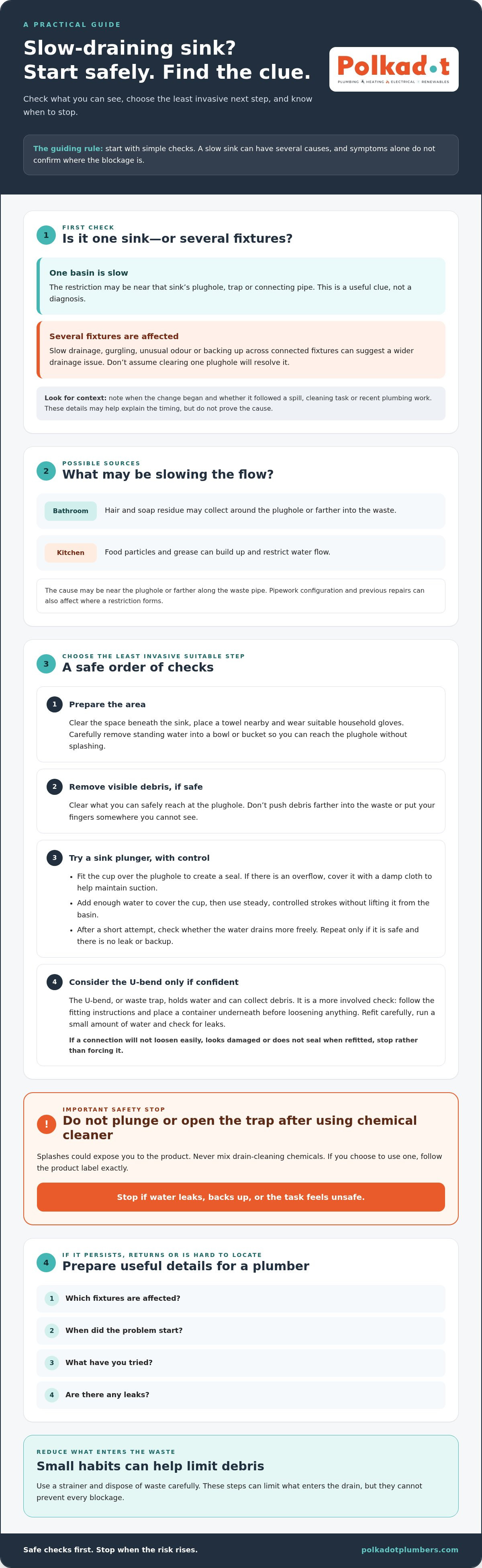
Before choosing a slow draining sink fix, check whether the problem is limited to one sink or affects other sinks and connected fixtures. A single slow basin may point to a local restriction, while several affected fixtures can suggest a wider drainage issue. This is a useful clue, not a diagnosis.
What can cause a basin or kitchen sink to drain slowly?
In a bathroom, hair and soap residue may collect around the plughole or farther into the waste. In a kitchen, food particles and grease can build up and restrict water flow. Neither pattern confirms the blockage location. Pipework configuration and previous repairs can also affect where a restriction forms.
Drain cleaners include different approaches, from chemical products to mechanical tools. This overview of types of drain cleaners explains some of the distinctions. Before choosing a remedy, check what you can see and whether more than one fixture is affected.
Is the blockage local to the sink?
If one basin is slow and nearby fixtures drain normally, the issue may be limited to that sink’s plughole, trap or connecting pipe. If several sinks or other connected fixtures are slow, gurgling, giving off an unusual odour or backing up, don’t assume that clearing one plughole will resolve the problem. Note which fixtures are affected and what you notice.
Consider when the change began. Did it follow a spill, a cleaning task or recent plumbing work? These details may help explain the timing, although they don’t prove the cause. First work out whether the issue seems confined to one sink, because that should guide which fix is safest and most suitable to try.
How to fix a slow-draining sink safely, step by step
Start with the simplest check and only move on to more involved tasks if you’re confident. Don’t force a fitting or tool. Clear the area beneath the sink, put a towel nearby and wear suitable household gloves. If there’s standing water, carefully remove it into a bowl or bucket so you can reach the plughole without splashing.
Clear the plughole and try a plunger
Remove visible debris from the plughole only if you can reach it safely. Don’t push it farther into the waste or put your fingers somewhere you can’t see. Next, use a sink plunger that fits over the plughole:
Position the cup over the plughole to create a seal. If the basin has an overflow, cover it with a damp cloth to help maintain suction.
Add enough water to cover the plunger’s cup, then use steady, controlled strokes without lifting the cup from the basin.
After a short attempt, lift the plunger and check whether the water drains more freely. Repeat only if it’s safe and there’s no sign of a leak or backup.
Don’t plunge indefinitely. If you’ve already poured chemical drain cleaner into the sink, don’t plunge or open the trap, as splashes could expose you to the product. Never mix drain-cleaning chemicals. If you choose to use one, follow the product label exactly.
When is it appropriate to check the U-bend?
The U-bend, also called the waste trap, holds water and can collect debris. Removing it is a more involved check, so only attempt it if you feel confident and can follow the fitting instructions. Place a container underneath before loosening anything, as water and trapped debris may spill out.
Reassemble the trap carefully, making sure the fittings sit correctly. Run a small amount of water and check for leaks. If a connection won’t loosen easily, looks damaged or doesn’t seal when refitted, stop rather than forcing it. This Old House explains how to clear the P-trap, but don’t proceed unless the setup is suitable for your sink.
Stop if water leaks, backs up, or the task feels unsafe. A persistent or hard-to-locate restriction may need professional investigation. In London, Polkadot provides plumbing repairs and drainage maintenance for homes and businesses. Find out more about London plumbing services.
Which slow sink fix should you try first?
Choose a remedy based on what you can see and how many fixtures are affected. If debris is visible at one plughole, start there. If the sink remains slow after a careful basic check, don’t jump straight to forceful tools or repeated chemical treatments. Choose the least invasive method that suits the symptoms, and stop if the problem worsens.
Do home remedies such as hot water or bicarbonate work?
Household remedies aren’t guaranteed to clear a physical obstruction. Hot water may be unsuitable for some pipework, seals or sink materials, so check what your sink and fittings can tolerate before using it. Bicarbonate-based mixtures may be suggested for minor residue, but don’t rely on them to shift a solid blockage. Never combine household ingredients with chemical drain products, and follow any product label exactly.
Chemical cleaners aren’t a universal solution. Check that a product is suitable for your sink and pipework, and don’t use it alongside another cleaner or a plunger if that could cause splashing. If you’re uncertain about the materials or instructions, choose a different approach or stop.
When should you stop trying DIY methods?
A single sink that improves after a simple check is different from recurring blockages or several affected fixtures. Stop if water returns through another fixture, you notice a leak, the blockage quickly comes back or unpleasant drainage odours persist. These signs may point beyond an accessible plughole restriction. Don’t dismantle pipework or use tools beyond your confidence and ability. A professional assessment can help locate the cause without further trial and error.
How to prevent a sink from draining slowly again
Regular habits can reduce the amount of hair, food and other debris entering your sink waste, though they won’t prevent every blockage. If slow drainage keeps returning after a slow draining sink fix, treat it as a reason to investigate the cause rather than repeatedly clearing the same symptoms.
Everyday habits for bathroom and kitchen sinks
Use a suitable plughole strainer to catch hair in the bathroom and food scraps in the kitchen. Empty it into the bin regularly rather than rinsing its contents away. In the kitchen, let cooking fats cool and dispose of them appropriately instead of pouring them down the sink. Scrape food waste from plates before washing up.
Clean the plughole and surrounding surface as part of your normal routine, using products suitable for your sink and fittings. Avoid harsh or incompatible chemicals, and don’t combine cleaning products. A strainer and careful disposal can limit debris entering the waste, but they can’t clear a restriction farther along the pipework.
What to monitor after clearing a blockage
After trying a suitable remedy, pay attention to how the sink behaves during ordinary use. Does water leave the basin at its usual pace, or does it begin to pool again? Notice any gurgling, returning odours or leaks. Check whether nearby sinks or connected fixtures show similar symptoms.
If the problem returns, note when the slow drainage happens, which fixtures are affected, how long it lasts and what you’ve already tried. For example, record whether the kitchen sink slows after washing up or whether a bathroom basin and another fixture are affected at the same time.
Recurring symptoms may mean the original restriction wasn’t fully cleared or that its location is difficult to identify. Repeating temporary fixes can delay a proper investigation. If the issue persists or keeps returning, a plumber can assess the drainage and help determine what needs attention. Polkadot provides plumbing repairs and drainage maintenance across London for domestic and commercial properties. Arrange professional plumbing help if safe basic steps haven’t resolved the problem.
When a slow-draining sink needs a London plumber
If careful, basic checks haven’t improved the flow, or the blockage keeps returning, a plumber can investigate further. The restriction may be difficult to reach or located beyond the sink’s trap. A slow drain affecting several fixtures, persistent unpleasant odours, water backing up elsewhere or a leak are also reasons to stop trying increasingly forceful DIY methods and seek professional assessment.
What information helps a plumber assess the problem?
Before getting in touch, note where the sink is and what you’ve observed. A kitchen sink in a commercial setting may have different usage patterns from a bathroom basin at home, so clear details can help explain the situation. Include:
Which fixtures are affected, and whether other sinks or connected fixtures are draining slowly.
When the symptoms began, whether they come and go, and whether the problem returned after clearing.
What you’ve already tried, including any drain-cleaning products used. Don’t use or mix additional products while waiting for advice.
Whether you removed any components, such as the waste trap, and whether you noticed a leak afterwards.
These details help describe the issue, but they don’t establish its cause. If you’re unsure whether a fitting is secure or a leak is active, don’t dismantle it again. Instead, explain what you can see.
Choose a practical next step
For a persistent, recurring or hard-to-locate blockage, an assessment may be needed before a repair is recommended. This can help establish where the restriction may be and what action is appropriate, without assuming that the plughole is the only cause. Keep track of which fixtures are affected and explain any changes since the problem began.
Polkadot provides plumbing repairs and drainage maintenance for domestic and commercial properties across London. If your checks haven’t resolved the issue, contact Polkadot about plumbing services to discuss the drainage problem and a suitable next step.
Choose a safe next step for your sink
A reliable slow draining sink fix starts with checking whether the restriction seems local or affects several fixtures. Begin with simple, low-risk checks, and only move on to plunging or trap inspection if you’re confident and can do so safely. If the problem persists, returns, or comes with leaks or water backing up elsewhere, stop and seek professional advice.
Once drainage improves, use a suitable strainer and keep food scraps and cooking fats out of the waste. These habits can reduce debris entering the sink, though they can’t prevent every blockage. Keep a note of recurring symptoms and which fixtures are affected, as this can help a plumber assess the issue.
Polkadot provides plumbing repairs and drainage maintenance for domestic and commercial properties across London. If safe checks haven’t resolved the problem, contact Polkadot about plumbing services to discuss a practical next step.
Frequently Asked Questions
How do I fix a slow-draining sink?
Start by checking for visible debris around the plughole and remove it only if it’s safely reachable. If one sink is affected, you could then try a correctly fitted sink plunger, using controlled strokes. Check whether the water drains better before trying another method. Avoid mixing cleaning products or forcing tools into the waste. If the blockage persists, returns or affects other fixtures, seek professional advice.
Can washing-up liquid and hot water clear a slow sink?
Washing-up liquid and hot water may help shift some greasy residue, but they won’t reliably remove a physical blockage such as compacted food or debris. Avoid boiling water, as heat may not suit every sink material, seal or section of pipework. If you try warm water, check that the sink and fittings can tolerate it. Never combine washing-up liquid or household mixtures with chemical drain products.
Why is my sink draining slowly but not blocked?
A sink can drain slowly even when there’s no obvious plughole blockage. Soap residue, grease or debris may be restricting flow inside the waste or trap, where it isn’t visible. Pipework layout or previous plumbing work can also affect where a restriction forms. Check whether other fixtures are affected and look for gurgling, odours or water backing up. These signs can help indicate whether the issue extends beyond one sink.
Should I use a plunger on a slow-draining sink?
A sink plunger can be worth trying when the problem seems limited to one sink and no chemical drain cleaner has been used. Ensure the plunger cup covers the plughole, add enough water to cover the cup and use steady strokes to maintain a seal. If the sink has an overflow, covering it with a damp cloth can help. Stop if water backs up, leaks appear or the sink’s flow doesn’t improve.
Can I remove the U-bend to clear a slow sink?
You can inspect the U-bend, also called the waste trap, if you feel confident and can follow the fitting instructions. Put a container underneath before loosening it, as water and debris may spill out. Refit the trap carefully and check for leaks by running a little water. If the fittings are stiff, damaged or difficult to reseal, don’t force them. Leave the check to a plumber instead.
When should I call a plumber for a slow-draining sink?
Contact a plumber if the problem persists after safe basic checks, keeps returning, is difficult to locate or affects several fixtures. Leaks, water backing up elsewhere and persistent unpleasant odours are also reasons to stop DIY attempts. In London, Polkadot provides plumbing repairs and drainage maintenance for domestic and commercial properties. A professional may need to assess the drainage before recommending a repair. Share which fixtures are affected and what you’ve already tried.
Why does my sink drain slowly and make a gurgling noise?
Gurgling alongside slow drainage can indicate that water is struggling to flow freely through the waste or connected pipework. The restriction may be beyond the plughole, so repeatedly clearing visible debris may not address it. Notice whether nearby sinks or other connected fixtures also gurgle, drain slowly or back up. If the noise persists, returns or affects several fixtures, stop escalating DIY methods and arrange a professional assessment.


Comments