
Unvented Cylinder Service: London Homeowner’s Guide 2026
What if a small change in your hot water is your cylinder’s way of asking for attention? If you’re searching for an unvented cylinder service near me, it can be hard to tell whether you need routine maintenance or a repair. A dripping tundish, a leak or an unexpected interruption to hot water can all leave you wondering what to do next.
Take unusual behaviour seriously, but don’t guess at the cause. A professional assessment can help establish how the system is operating and whether it needs attention. This guide explains what an unvented-cylinder service involves, which warning signs matter and when to stop troubleshooting and seek professional support.
We’ll also explain key components and safety requirements in plain English. Polkadot provides plumbing and heating services across London, including plumbing surveys and repairs, to help homeowners take a clear next step when they have a cylinder concern.
Table of Contents
What does an unvented cylinder service involve for a London home?
An unvented hot-water cylinder stores water heated for use around the home. Unlike a system supplied from a loft storage tank, it takes water directly from the mains and is sealed. This allows hot water to be delivered at mains pressure, subject to the property’s supply and system design. For a general introduction to how stored hot water works, see this overview of the storage water heater.
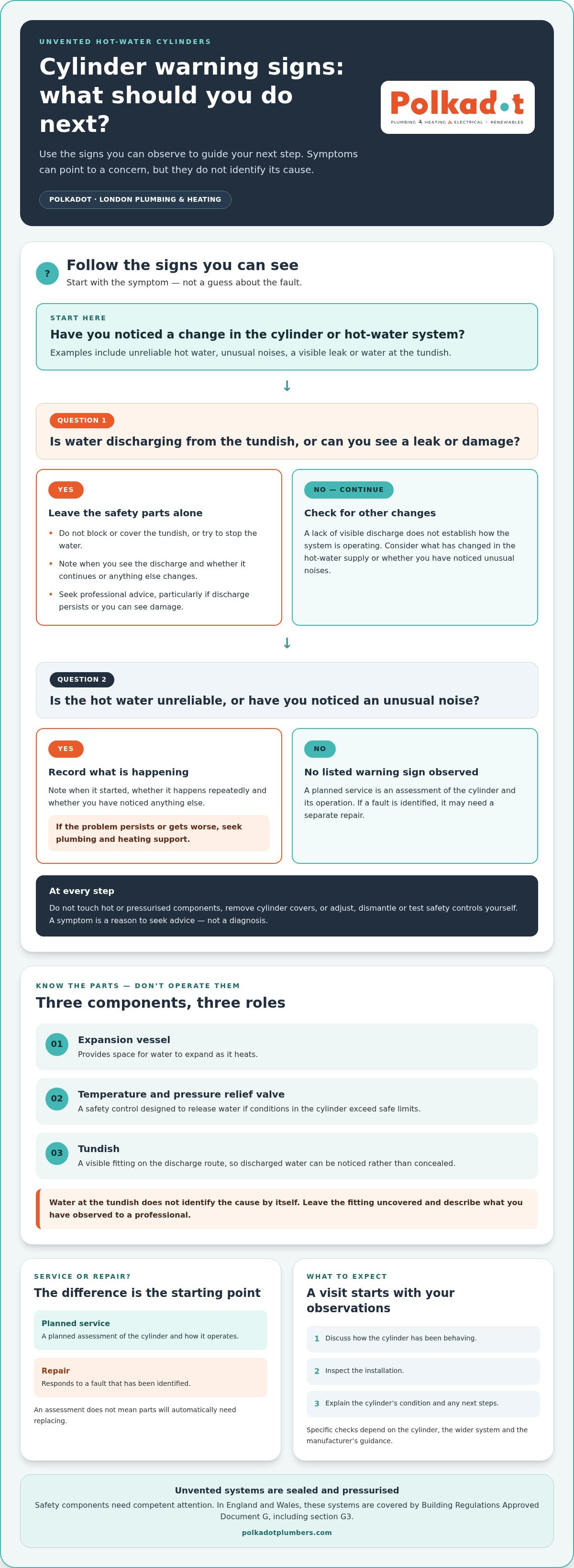
The cylinder and boiler have different roles. The cylinder stores hot water; a boiler may heat that water as part of the wider heating system. A service is a planned assessment of the cylinder and its operation. A repair responds to a fault that has been identified. An assessment can clarify how the system is working and whether it needs attention, but it doesn’t mean parts will automatically need replacing.
How is an unvented cylinder different from a vented system?
A vented cylinder is typically supplied from a separate cold-water storage tank, often in the loft. An unvented cylinder has no such feed tank: it is supplied directly from the mains within a sealed system. Because water is stored under pressure, the cylinder relies on components and safety controls designed for that system. These need competent attention. Don’t try to adjust, dismantle or test them yourself.
If you’re searching for an unvented cylinder service near me, this distinction helps explain why the work is more than a general look at a hot-water tank. The cylinder’s design, its connected system and the manufacturer’s instructions all matter when assessing it.
What can homeowners expect from a service visit?
A visit generally starts with a discussion about how the cylinder has been behaving, followed by an inspection of the installation. Your observations can help focus the assessment. For example, note whether the hot water has become inconsistent, whether you’ve seen water at the tundish or whether a noise occurs at a particular time. The specific checks depend on the cylinder, the wider system and the manufacturer’s guidance, so there isn’t one fixed checklist for every home.
After the assessment, you should have a clearer understanding of the cylinder’s condition and any next steps. If a fault is found, it may call for a separate repair. Polkadot provides plumbing and heating services across London, including plumbing surveys and repairs, to help homeowners address cylinder concerns. For wider heating context, the boiler installation guide covers the boiler’s role within a home’s heating system.
Which unvented-cylinder components and safety checks matter?
An unvented cylinder relies on safety components to manage water as it heats and control pressure. Knowing their basic roles can help you describe a concern clearly, but these parts shouldn’t be adjusted or tested by homeowners. Visible discharge, damage or unusual operation calls for professional assessment, not guesswork.
What do the expansion vessel, relief valve and tundish do?
As water heats, it expands. The expansion vessel provides space to accommodate this change within the system. A temperature and pressure relief valve is a safety control designed to release water if conditions in the cylinder exceed safe limits. The tundish is a visible fitting on the discharge route, allowing water discharged from the system to be noticed rather than concealed.
A drip or flow from the tundish doesn’t identify the cause by itself. It may indicate that a safety control is discharging, so don’t block or cover the tundish or attempt to stop the water. Note when you see it, whether it continues and whether anything else has changed. Arrange professional advice, particularly if discharge persists or you can see damage around the cylinder or pipework.
Why should safety controls be left to a professional?
These components work together in a sealed, pressurised system. Altering a valve or another component could affect how the system operates and make it harder to assess a fault safely. A professional can inspect the installation and determine whether remedial work is appropriate. The assessment depends on the system and manufacturer guidance.
In England and Wales, unvented hot-water systems are covered by Building Regulations Approved Document G, including section G3. GOV.UK provides the current Approved Document G3 guidance. The requirements include competence criteria for work on unvented systems. Check the current guidance for the work involved rather than assuming that one qualification applies to every job.
If you’re looking for an unvented cylinder service near me because you’ve noticed discharge or another concern, leave the safety controls alone and describe what you’ve seen. Polkadot provides plumbing and heating services across London, including plumbing surveys and repairs. Find out more about Polkadot plumbing and heating support.
What warning signs mean your London cylinder needs attention?
A change in how your hot water behaves is worth noticing, but it doesn’t reveal the cause on its own. Different faults, or changes elsewhere in the system, can produce similar symptoms. Look out for hot water that becomes unreliable, unusual noises, visible leaks or water discharging from the tundish. Treat these as reasons to seek advice, not as a diagnosis.
Make a note of what you observe: when it started, whether it happens repeatedly and whether you’ve noticed anything else. Don’t touch hot or pressurised components, remove cylinder covers or alter safety controls. Avoid interfering with the system and arrange plumbing and heating support if a problem persists or gets worse.
Is water discharging from the tundish a reason to call?
Yes. Visible discharge should be assessed by a competent professional, particularly if it continues. The tundish makes water from the discharge route visible, but seeing water there doesn’t prove which component is responsible. Don’t block the tundish, interfere with the discharge pipe or try to stop the flow yourself. Note what you’ve seen and arrange a professional assessment so the system can be checked safely.
What should you do if hot water becomes unreliable?
Record when the change happens. For example, note whether hot water runs out sooner than usual or the problem comes and goes. Write down any accompanying signs, including noises, leaks or discharge. Don’t remove covers or adjust system controls beyond their normal use. If the issue persists or worsens, arrange plumbing and heating support in London rather than trying to identify the fault yourself.
A familiar symptom can have several possible explanations. A noise doesn’t automatically mean a particular part has failed, just as intermittent hot water doesn’t identify a single cause. Clear observations help a professional understand what has changed and decide what assessment is appropriate.
Hot-water safety also includes managing water hygiene. The HSE’s Managing legionella guidance is written for health and social care settings, but offers wider context on managing Legionella risks in water systems. It isn’t a guide to diagnosing household cylinder faults, so leave concerns about your system’s operation to a professional.
If you’re searching for an unvented cylinder service near me, share the symptoms you’ve observed and when they occur. Polkadot provides plumbing and heating services across London to help homeowners address cylinder concerns.
How to prepare for an unvented-cylinder service in London
A little preparation can make it easier to explain what’s happening and help a professional assess the installation. You don’t need to inspect or operate cylinder components yourself. Focus on what you’ve noticed and make the area accessible without disturbing the system.
What details are useful before the visit?
Make a short note of when the symptoms began, how often they occur and whether your hot-water supply has changed. For example, record if the water has become unreliable at particular times or if you’ve noticed a leak or discharge. Share observations rather than guesses about the cause.
If readily available, gather the cylinder’s manufacturer information, installation paperwork or previous service records. These can help identify the system and provide useful background. Locate the cylinder and clear ordinary items from around it, but don’t move pipework, electrical equipment or anything connected to the system. If access is restricted, mention it when arranging support.
What happens if a fault is found?
If the assessment identifies a concern, the professional should explain what they’ve found and outline suitable next steps. Further work depends on the diagnosis and the condition of the system. A service doesn’t automatically mean a repair or replacement is needed. The appropriate response can only be determined after the installation has been assessed.
The cylinder is one part of your home’s wider heating setup. If you’re also considering changes to the boiler or broader system, the boiler installation guide can provide useful context about the boiler’s role. Keep the cylinder symptoms and any available documents to hand, so the discussion can focus on your home and the issue you’ve noticed.
Polkadot provides plumbing and heating services across London, including plumbing surveys and repairs. If you’re searching for an unvented cylinder service near me, share the symptoms and any available system details to help explain what support you need.
Arrange plumbing and heating support in London for your cylinder concern.
Arrange unvented-cylinder service with Polkadot in London
Not sure whether your cylinder needs a routine service or attention for a fault? Polkadot provides plumbing and heating services across London, including plumbing surveys and repairs, to help homeowners address cylinder concerns. You don’t need to identify the technical cause before getting in touch. A clear description of what you’ve noticed is a useful place to start.
What should you tell Polkadot when arranging support?
Share the property location in London and describe the cylinder symptom in everyday terms. Explain when it began, whether it happens repeatedly and whether your hot-water supply has changed. For example, mention if hot water has become inconsistent or if you’ve noticed water near the cylinder. Stick to what you’ve observed rather than guessing which part may be at fault.
If you have them to hand, include relevant system information, such as the cylinder’s manufacturer details or previous service records. These may provide useful context, but don’t delay describing the concern if you can’t find the paperwork. If there’s visible discharge or a leak, say so clearly and don’t try to adjust or interfere with the system.
How can professional support make the next step clearer?
A plumbing and heating assessment can help establish what’s happening at the property and what action may be suitable. The recommended work depends on the findings and the condition of the system. An initial concern doesn’t automatically mean a repair or replacement is needed. The aim is to move from uncertainty towards a clear understanding of the issue and possible next steps.
If your plans also include broader home-energy improvements, consider how the cylinder fits into the wider setup. Polkadot’s London solar panels guide may be useful context if you’re exploring solar alongside other upgrades, although solar equipment and a hot-water cylinder have distinct roles in the home.
Looking for an unvented cylinder service near me? Explain the concern, when it started and any change in hot-water supply, then arrange plumbing and heating support with Polkadot. You can arrange plumbing and heating support for your London property.
Take the next step towards dependable hot water
A planned service helps assess how your unvented cylinder is operating, while changes such as unreliable hot water, leaks or visible discharge are reasons to seek professional advice. Note what you’ve observed, keep clear of safety components and share any useful system information when arranging support.
If you’re searching for an unvented cylinder service near me, Polkadot provides domestic and commercial plumbing and heating services across London, including plumbing surveys and repairs. The right next step depends on the findings at your property, so describe the concern clearly when arranging support.
Arrange plumbing and heating support in London and take a calm, informed step towards addressing your cylinder concern.
Frequently Asked Questions
What does an unvented cylinder service include?
An unvented cylinder service is a planned assessment of the cylinder and its operation. The professional may discuss changes you’ve noticed and inspect the installation, with specific checks guided by the system and manufacturer instructions. It differs from a repair, which addresses a fault identified during assessment. If you’re searching for an unvented cylinder service near me in London, describe the symptoms when arranging plumbing and heating support. A service doesn’t automatically mean parts need replacing.
How often should an unvented hot-water cylinder be serviced?
Follow the service interval in your cylinder’s manufacturer guidance. Annual servicing is commonly recommended, and some manufacturers require it to maintain warranty cover, so check your manual or service documents. A plumbing and heating professional can help you understand the appropriate next step for your system. Don’t wait for the next planned service if you notice a leak, persistent discharge or a significant change in hot-water supply.
Is water from an unvented cylinder tundish a cause for concern?
Yes, visible water discharging through the tundish should be assessed by a competent professional, especially if it continues. The tundish makes discharge visible, but seeing water alone doesn’t identify the cause or prove that a particular valve has failed. Don’t block the tundish or interfere with the discharge pipe. Note when you see the water and arrange plumbing and heating support in London for an assessment.
Can I service an unvented cylinder myself?
No. Leave servicing and safety-component checks to a suitably competent professional. An unvented cylinder is a sealed system, and altering or dismantling its valves or other components could affect safe operation. You can help by noting symptoms, finding available manufacturer information and keeping the area around the cylinder accessible. Don’t remove covers, test safety devices or adjust system components. If you’re concerned about its behaviour, explain what you’ve observed when arranging professional support.
Who is qualified to work on an unvented hot-water cylinder in the UK?
Work on an unvented hot-water system should be carried out by someone with the appropriate G3 competence for the work involved. In England and Wales, Building Regulations Approved Document G covers hot-water safety, including unvented systems. Qualification requirements depend on the work and system, so don’t assume general plumbing experience alone is sufficient. Polkadot provides plumbing and heating services across London to help homeowners address cylinder concerns.
What should I do if my unvented cylinder is leaking?
Arrange professional plumbing support and describe where the water is coming from, when you first noticed it and whether it’s getting worse. Don’t touch hot or pressurised components, remove covers or interfere with pipework. Keep clear of wet electrical equipment and avoid using the affected area if it may be unsafe. A leak can have several possible causes, so record what you can see rather than trying to diagnose the fault yourself.
Does an unvented cylinder service include boiler maintenance?
Not automatically. An unvented cylinder stores hot water, while a boiler may heat that water as part of the home’s wider heating system. They’re separate pieces of equipment with different servicing needs. If you want both assessed, explain this when arranging plumbing and heating support so the work can be considered appropriately. Polkadot provides domestic and commercial plumbing and heating services across London, including plumbing surveys and repairs.


Comments