
Electrical safety certificate for landlords London: what it costs
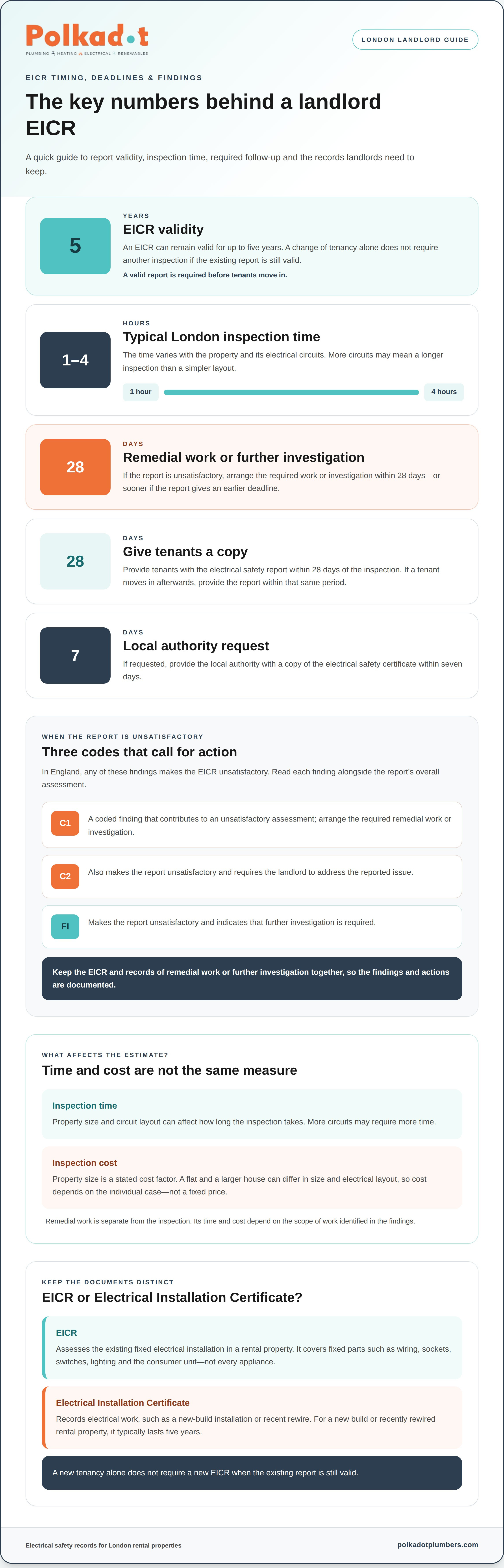
A new tenancy doesn’t automatically mean you need a new EICR. In London, an electrical safety certificate for landlords can remain valid for up to five years, according to the UK Government. Landlords must have a valid report before tenants move in, but a change of tenancy alone does not require another inspection if the existing report is still valid.
It’s reasonable to want clear answers about timing, cost and what to do if an inspection finds a problem. This guide explains how long an EICR lasts, what can affect its cost, which condition codes call for action and what electrical checks landlords need. It also covers the next steps if the report identifies remedial work, helping you keep your London rental property’s electrical safety requirements on track.
Table of Contents
EICR condition codes
An EICR records electrical inspection findings using condition codes. In England, findings coded C1, C2 or FI make the report unsatisfactory. The code indicates that the inspection has identified an issue requiring attention or further investigation. Read the report’s findings alongside its overall assessment, rather than treating the code as a standalone description.
An unsatisfactory result means the landlord must arrange the required remedial work or further investigation. According to the UK Government, this must be completed within 28 days, or sooner if the report advises an earlier deadline. The report should explain what needs attention, helping the landlord understand whether work or investigation is required.
C1: The report records a finding under this code; a C1 result contributes to an unsatisfactory assessment.
C2: A C2 finding also makes the EICR unsatisfactory and requires the landlord to address the reported issue.
FI: This code makes the report unsatisfactory too, and indicates that further investigation is required.
Once the inspection is complete, landlords in England must give tenants a copy of the electrical safety report within 28 days, according to the UK Government. If a tenant moves in after the inspection, provide the report within that same period. Keep the report available, as it records the findings and any work that follows.
The local authority may also request a copy. According to the UK Government, landlords in England must provide the electrical safety certificate within 7 days if requested. If remedial work or further investigation follows a C1, C2 or FI finding, retain the relevant records with the EICR. This creates a clear record of the original findings and the action taken to resolve them.
EICR duration and cost
A London EICR typically takes between 1 and 4 hours. The duration depends on the property and its electrical circuits. A property with more circuits may require a longer inspection than one with a simpler electrical layout. Use the range to plan access, but remember that the inspection time varies between homes.
This is a market average, not a fixed price for every rental property. A flat and a larger house can differ in size and electrical layout, which may affect the inspection required. Property size is the stated factor affecting cost.
Keep the time and cost estimates separate. Neither figure tells you how long remedial work might take or what it might cost. That work is separate from the inspection, and its scope depends on the findings.
For planning, consider the property’s size and circuit layout together. These details help explain why two London landlords may receive different estimates, even when both need an EICR. A longer inspection does not automatically mean the report will identify faults. Findings depend on the condition of the electrical installation.
When arranging an inspection, allow access to the areas needed for the full assessment and report. If the property has several areas or a more involved circuit layout, include those details when requesting a quote. The cost depends on the individual case, with property size a key factor. Use the report to understand the findings rather than judging the inspection by its duration or cost alone. A clear record helps distinguish the inspection from any follow-up work that may be needed.
What Electrical Safety Certificates Do Landlords Need?
Rental property records may include an EICR or, after new electrical work, an Electrical Installation Certificate. The appropriate document depends on the installation and the work completed.
Electrical Installation Certificates
An Electrical Installation Certificate records electrical work, such as a new build installation or a recent rewire. It matters because it documents the completed work, while an EICR assesses the existing installation. An Electrical Installation Certificate for a new build or recently rewired rental property typically lasts 5 years. Keep the certificate with the property’s electrical records, and distinguish it from the periodic EICR landlords need for rented homes.
Report Copies and Time Limits
An EICR is valid for up to 5 years, and landlords must have a valid report before tenants move in, according to the UK Government. In England, landlords must give tenants a copy of the electrical safety report within 28 days, according to the UK Government. They must also provide the local authority with a copy of the electrical safety certificate within 7 days if requested, according to the UK Government. These deadlines make the report part of the tenancy records, not simply an inspection document to file away.
For HMOs, furnished lets and short-term rentals, the core requirement concerns rented properties. Schedule 1 lists exceptions, including student halls of residence and social housing; furnishing alone is not listed as an exception. The property’s category therefore matters when considering whether an exception applies.
Finding a Qualified Registered Electrician
To arrange an EICR in London, choose an electrician who is qualified and registered to carry out electrical inspection and testing. A recognised electrical trade register can help you find registered professionals. Check that the electrician carries out EICRs for rental properties and can assess the installation and produce a report.
Failing to meet electrical safety requirements can leave tenants exposed to unsafe installations or appliances supplied by the landlord. Landlords may face consequences if electrical installations or appliances they supply are unsafe. Keep the inspection report and records of any resulting work together, so the safety assessment and follow-up actions are documented.
Electrical inspection scope
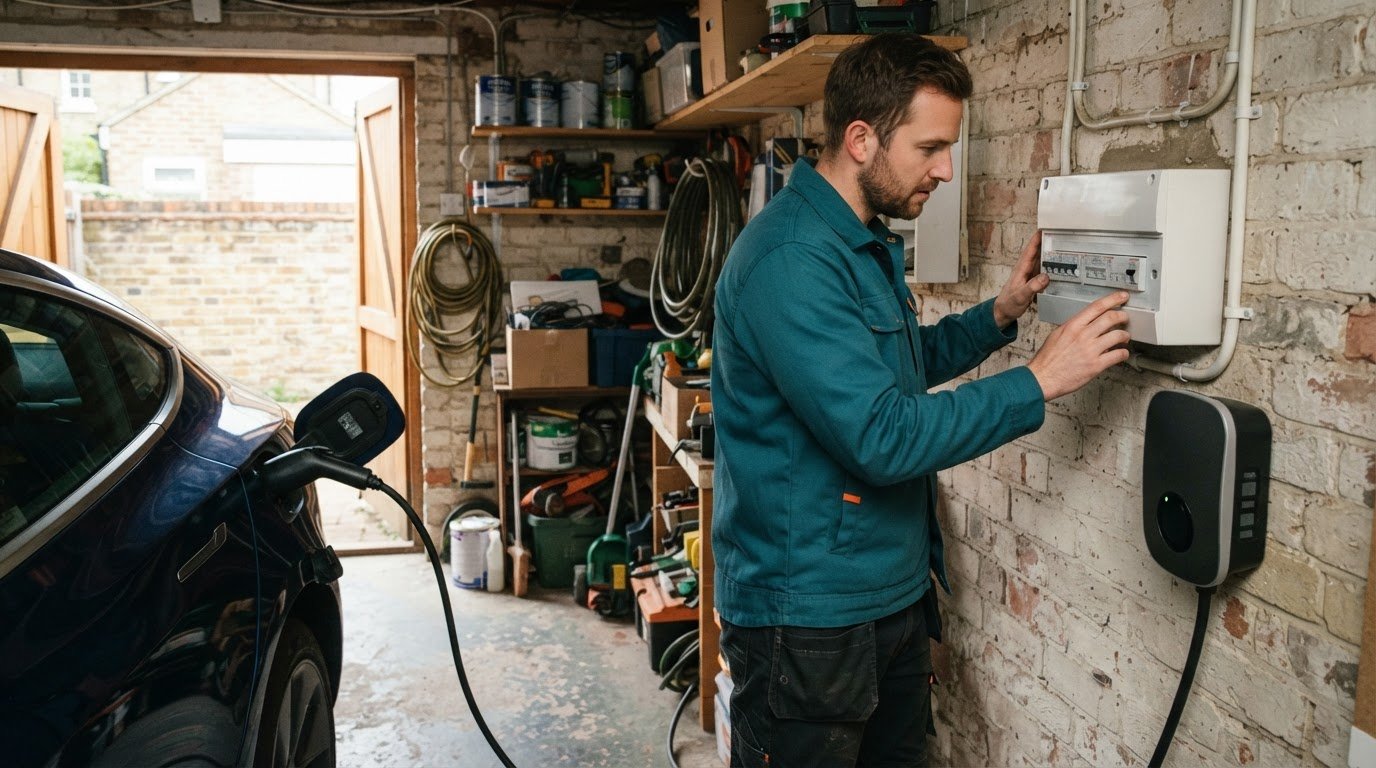
An EICR assesses the fixed electrical installation in a rental property, not every appliance inside it. The inspection records the installation’s condition and any findings that may require action or further investigation. This helps distinguish issues with the property’s wiring from faults involving a landlord-supplied appliance.
Fixed parts include wiring, sockets, switches, lighting and the consumer unit. The inspection assesses these components as part of the property’s electrical installation. For example, a damaged socket or an issue recorded at the consumer unit concerns fixed electrical equipment, not a portable appliance test.
Portable appliance testing, often called PAT testing, covers movable appliances, such as a supplied kettle or table lamp. PAT testing is not mandatory for landlords, but is recommended for appliances they provide. It is separate from an EICR, so a portable appliance check cannot replace an assessment of the fixed installation.
For a furnished let, consider both the fixed installation and any electrical appliances supplied with the property. An EICR assesses the fixed installation; PAT testing can help assess supplied appliances. Keeping the distinction clear helps you understand what each check covers.
The EICR records findings about the installation, while appliance checks assess individual items supplied to tenants. If the report identifies a concern with fixed electrical equipment, it provides a basis for deciding what installation work may be needed. PAT testing is a recommended additional measure for supplied appliances, not a substitute for the property’s EICR.
If the inspection indicates that electrical installation work is needed, explore electrical installation support for the property. Keep the EICR and any separate appliance-testing records organised together, so the assessment of fixed wiring and supplied equipment remains clear.
Polkadot: Electrical Installations
Polkadot carries out electrical installation work for landlords whose EICR identifies issues needing attention. The report records the findings; installation work is a separate step to address problems with the property’s fixed electrical systems.
Turn to Polkadot when you need electrical installation work to maintain or refurbish a rental property in London. Electrical work can also form part of wider home refurbishment plans. It’s a practical next step once you understand the report’s findings and which installation issues need attention.
For a C1 or C2 finding, or further investigation that identifies installation work, use the report to clarify the required work before arranging it. Polkadot can help with the electrical installation side, while your EICR remains the record of the inspection and its findings.
Contact Polkadot to discuss electrical installation work for your rental property.
Make your next property decision with confidence
An electrical safety certificate for landlords in London is more than a document to file away. Use its findings to plan electrical maintenance and keep a clear record of decisions, completed work and future inspections. This gives you a practical reference when preparing the home for new occupants or reviewing its condition.
If the report identifies installation work, treat it as a separate step from the inspection. Polkadot provides electrical installations for rental properties in London, helping you move from reported findings to work on the home. Keep the report with relevant property records so its findings remain useful after the inspection.
Contact Polkadot about your EICR to discuss electrical installation work arising from your property’s inspection. A clear plan can help you move forward calmly and keep your rental property’s electrical maintenance organised.
Frequently Asked Questions
How Long Does An EICR Last?
An EICR is valid for up to 5 years, according to the UK Government. The report’s validity matters when planning a tenancy, as landlords must hold a valid report before tenants move in. Keep the inspection date and report with the property records, so you can see whether it remains current when preparing for a new letting.
How Often Does An EICR Need To Be Done?
Landlords generally need a new EICR at least every 5 years, because a report is valid for up to 5 years, according to the UK Government. A fresh inspection isn’t required simply because a new tenancy begins, provided the existing report is still valid. Check the report’s date as part of preparing the property for a new tenant.
What To Do If You Fail An EICR?
Arrange the remedial work or further investigation identified in an unsatisfactory EICR. Findings coded C1, C2 or FI make the report unsatisfactory. According to the UK Government, landlords must complete required work or investigation within 28 days, or sooner if advised. Use the report’s specific findings to understand what needs addressing, then retain records of the follow-up work.
What is an electrical safety certificate for landlords in England, and what does an EICR cover?
An electrical safety certificate for landlords in London usually refers to an Electrical Installation Condition Report, or EICR, for a rented property. It records the condition of the fixed electrical installation, including wiring, sockets, switches, lighting and the consumer unit. It does not replace separate checks of portable appliances supplied with the property, such as a kettle.
What are landlords' legal electrical safety inspection requirements and deadlines in England?
Landlords must have a valid EICR before tenants move in. According to the UK Government, they must give tenants the electrical safety report within 28 days and provide the local authority with a copy within 7 days if requested. Any required remedial work or further investigation must also be completed within 28 days, or sooner if the report advises.
How often must a landlord arrange an EICR, and when is a new inspection required?
Arrange an EICR before a tenancy if the property doesn’t have a valid report, then renew it when its validity ends. The UK Government says an EICR is valid for up to 5 years. A new inspection isn’t required at every tenancy change if the existing report remains valid. Keep the inspection date visible in your property records to plan ahead.
Comments