
How to troubleshoot home EV charger faults and RCD trips
An RCD trip doesn’t automatically mean your home EV charger has failed. It means the electrical protection has detected a problem that could involve the charger, cable, car or circuit. Troubleshooting a home EV charger starts with noting when the trip happens and whether the warning suggests a charger fault or another issue.
Repeated trips are unsettling, especially when charging stops unexpectedly. Don’t keep resetting the breaker if it trips again, and switch the charger off if you notice a burning smell or scorch marks. These signs need prompt attention from a qualified electrician, an important part of troubleshooting a home EV charger safely.
This guide explains what RCD trips and charger warnings can mean, which observations help distinguish a charger fault from a car issue, and when professional electrical checks are needed. You’ll also learn what details to share when arranging help, so troubleshooting a home EV charger can focus on the likely cause rather than guesswork.
Table of Contents
Start here: is it actually broken?
Charging schedules, a reached battery limit or a supply interruption can mimic a fault. Use these steps to distinguish a temporary pause from an electrical warning that needs professional attention.
Have an electrician check for charging interruptions and supply problemsAsk an electrician to trace when charging stops and whether the car or charger shows a scheduled session. A charging-complete message may mean the battery limit was reached or the scheduled window ended. The charger may also have its own schedule. Share whether charging starts, stops part-way through or never begins. This pattern helps distinguish a normal pause from an electrical supply problem.
Ask an electrician to identify warning signs and advise when to stop using the chargerStop charging and switch the unit off if you smell burning, see scorch marks, find a damaged cable or the breaker trips every time. Electrical Safety First recommends regular cable checks and stopping use immediately if damage is found. You may reset a tripped charger breaker once, but if it trips again immediately, stop and call a qualified electrician. Don’t keep trying to charge through repeated trips.
Have an electrician carry out safe checks and reset the chargerAsk the electrician to inspect the visible cable, connector, charger and protective devices before testing the circuit. They can check the RCBO test button and investigate if it doesn’t trip after a few attempts. They should follow the manufacturer’s instructions when safely resetting or restarting the charger. A power cycle is appropriate only when the manufacturer recommends it. Don’t open the charger enclosure or handle internal wiring.
Contact an electrician, installer or manufacturerUse a qualified electrician experienced with EV charge points if the breaker trips again or charging remains unreliable. Report when the breaker trips, what the status light showed, and the installation’s approximate age. For warranty concerns, contact the manufacturer before any repair is attempted; the installer can also help with installation-related faults. A repair call-out price depends on the fault and work required, and is given after a quote request.
If I experience a power cut, will the charging session continue?
A power cut interrupts charging because the charge point loses its electrical supply. Once power returns, the car and charger need to re-establish their connection. An electrician can check whether the session restarted correctly.
Ask an electrician to inspect the isolator and supply connection. They can check for heat damage, loose connections and signs that the isolator isn’t operating properly. If charging stops during a power cut or soon after power returns, tell them when it happened and what the charger displayed. That detail helps distinguish a supply interruption from a fault within the charge point.
Have the electrician examine the charging cable along its length, including the plug and connector. They’ll look for cuts, crushed sections, exposed conductors, worn insulation or signs of overheating. Electrical Safety First recommends checking EV charging cables regularly and stopping use immediately if damage is found. Don’t continue charging with a damaged cable, even if the connection still appears to work.
Ask for a close inspection of the connector pins and control box. The electrician can look for bent, corroded or discoloured pins, moisture, damaged casing and strain where the cable enters the unit. They can also assess whether the plug seats securely and whether cable wear is affecting the connection. Don’t open the control box yourself; internal components need professional inspection.
Ask the electrician to test the circuit and measure its voltage, then explain whether the fault lies in the supply, isolator, cable or charger. Share any recent installation changes, visible damage and updates to the charger’s software. This helps determine whether a repair is appropriate or further electrical work is needed. For an inspection of EV charging electrical installations, provide the charger model and a clear description of the interruption.
Error codes, warning lights and temperature shutdowns
Common symptoms include a vehicle that won’t start charging, charging that stops unexpectedly, repeated fault lights or a temperature shutdown. There’s no shared colour code across popular UK brands. Meanings vary by manufacturer and model, so consult the guide for your specific device.
Have an electrician read the charger status lightsTell the electrician the light’s colour, whether it flashes and when the signal appears. Status-light patterns differ between charger models, so a green or red light doesn’t have one universal meaning. The electrician can compare the display with the manufacturer’s instructions and check whether the vehicle is connected, charging or showing a fault. Share a photograph if the light changes before the visit.
Have an electrician interpret error codes and fault lightsRecord the full error code and the point when it appears, such as connection, authentication or charging. An electrician can use that sequence to distinguish a charger, vehicle or electrical supply issue. A single PEN fault warning differs from repeated PEN faults, which may need installer investigation. If the warning appears alongside app or router connectivity problems, the manufacturer can help with software or network issues unrelated to an electrical fault.
Have an electrician check for temperature shutdownsStop charging if the device reports overheating, then let it cool for at least 30 minutes before attempting another session. Tell the electrician whether the charger was in direct sun, had been charging continuously or felt unusually hot. They can inspect ventilation, casing, cable connections and signs of heat damage. If the warning returns after cooling, don’t keep restarting the unit; arrange an electrical inspection to identify the cause.
Before the visit, note the charger model, exact warning, charging status and whether the vehicle was connected. These details help the electrician interpret the signal correctly and decide whether the next step involves electrical testing or manufacturer support.
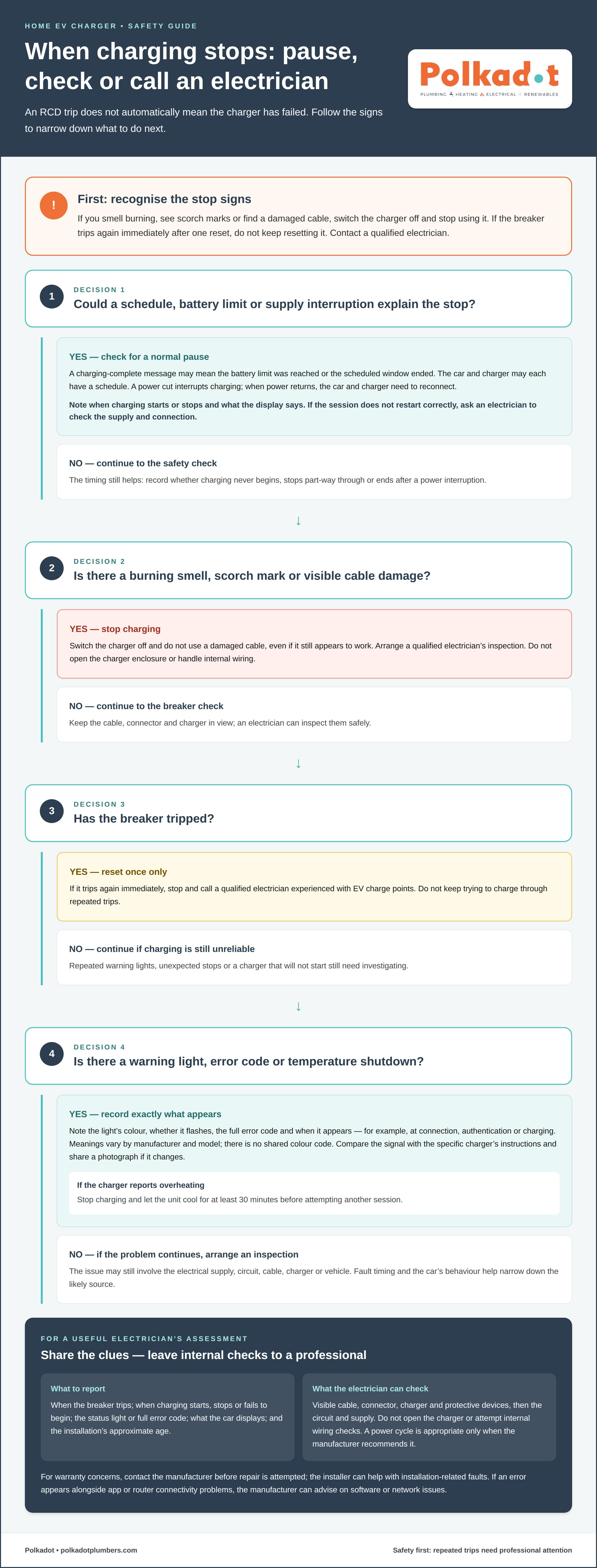
Is my EV charger faulty or is it the car?
Ask the electrician to compare the car, charger and dedicated circuit. Fault timing, connection behaviour and protection devices can help identify the source.
Have an electrician assess fuseboard capacity, wiring, circuit protection and earthingAsk the electrician to inspect the fuseboard, dedicated circuit, wiring, earthing and installation records. They can assess whether the circuit supports the charger’s settings and whether the fault points to wiring or the device. A trip within about a minute may indicate an earth fault, faulty RCBO or cable fault. Don’t alter the breaker or circuit yourself.
Have an electrician review RCD and DC leakage protectionAsk the electrician to identify the RCD or RCBO type and check its test button. BS 7671 does not permit a Type AC RCD on an EV charge point circuit. A Type A RCD is suitable when the charger has integral DC fault detection at 6 mA; a Type B RCD is another route. The standard domestic arrangement is a 30 mA Type A RCBO with integral 6 mA DC detection.
Have an electrician check for water ingress and outdoor exposureAsk for the outdoor unit, cable entry points and isolator to be inspected for moisture, corrosion or damaged seals. Water ingress can affect electrical connections and cause faults, so don’t use equipment showing signs of moisture or damage. The electrician can assess the enclosure and installation, then determine whether repair or replacement is appropriate. Keep the charger switched off if damage is visible.
Have an electrician distinguish charger, vehicle, cable, Wi-Fi and app connection faultsDescribe whether the vehicle charges elsewhere, whether another cable works, and if the app reports a connection error. An electrician can compare charging behaviour and test the circuit to separate electrical faults from car settings or cable problems. Some smart chargers require 2.4GHz Wi-Fi and don’t support 5GHz. Refer app or firmware issues unrelated to an electrical fault to the manufacturer.
For a persistent trip or suspected wiring fault, arrange an electrical inspection before charging again.
Polkadot
Polkadot can help when repeated RCD trips, wiring concerns or a suspected circuit fault need professional attention. Its Electrical Installations service gives you a route to investigate electrical issues affecting charging, rather than continuing to reset a breaker or use equipment showing signs of damage.
Share what happens when charging starts, any warning displayed, and whether the breaker trips immediately or later. These details help clarify the problem and the next step. If the fault appears to involve the vehicle’s settings or app connectivity rather than the home electrical installation, contact the vehicle or charger manufacturer.
For help with an electrical installation issue, contact Polkadot.
Make your next charging decision with confidence
A dependable charging setup is part of the home’s wider electrical system. Treating an unresolved fault as a reason to review how the installation and vehicle work together can prevent assumptions from driving a repair decision. Good troubleshooting of your home EV charger means identifying the cause, not simply getting one session started again. A clear diagnosis can help you understand which part of the setup needs attention.
If charging has become unpredictable, arrange a professional assessment to establish whether the issue lies with the fixed installation, charge point or vehicle. Explain what you’ve noticed and use the findings to decide what needs attention and what can remain as it is. This gives you a sounder basis for planning a repair and helps avoid replacing equipment without a clear reason. It also makes the next step in troubleshooting your home EV charger clearer.
For help with an electrical installation concern, contact Polkadot. A calm, evidence-led next step can help you move towards dependable home charging with confidence.
Frequently Asked Questions
Why does my EV charger keep tripping the RCD?
An RCD trips when it detects an electrical imbalance, which can point to leakage or a fault in the charger, cable, circuit or protective device. Moisture or damaged insulation can also contribute. Note whether the trip happens as soon as charging starts or only after a session has been running. Repeated trips need investigation, not repeated resets.
Can a qualified electrician fix an EV charger?
Yes. A qualified electrician can diagnose electrical faults and carry out suitable repairs to the charge point or its circuit. The right work depends on the test results and whether the fault lies in the wiring, protection, cable or charger. For a charger still under warranty, contact the manufacturer before arranging repairs. App or firmware issues unrelated to an electrical fault need manufacturer support.
Can my vehicle affect how my charger works?
Yes. The vehicle’s charging schedule, battery limit and onboard charger can affect when charging starts and how quickly it runs. For example, a 7 kW home charger paired with a car whose onboard charger is rated at 3.6 kW will deliver no more than 3.6 kW. If another compatible car charges normally, that comparison can help identify a vehicle-side issue.
Does my charger default to off-peak charging?
Not necessarily. Off-peak charging usually depends on a schedule set in the charger, vehicle or energy tariff settings, so one device may wait even if another is ready. Smart charge points sold for private use in Great Britain must apply a randomised delay of up to 600 seconds before drawing power, according to the UK legislation register. That delay isn’t the same as an off-peak schedule.
Does voltage fluctuation affect my charger?
Yes. A change in supply voltage can affect charging power or cause interruptions. E.ON Next gives 230 volts as the standard voltage for a UK single-phase supply and says the typical allowable tolerance ranges from 216.2 volts to 253 volts. An electrician can assess the supply if charging behaviour changes alongside other electrical problems; a single charging slowdown alone doesn’t identify the cause.
What will an electrician check if a home EV charger will not start or charge a car?
An electrician will assess whether the charger receives power and recognises the connected vehicle, then investigate relevant circuit protection and fault information. To make the diagnosis more useful, provide the charger model, any displayed code, when the fault began and whether the car charges elsewhere. They can also distinguish an electrical issue from a vehicle schedule or charger-app problem.
Comments