
Fix a Leaking Boiler: When to Call a London Engineer
If you’re searching for “fix leaking boiler London”, start by reducing immediate risk and arranging a professional assessment. A leak beneath your boiler doesn’t automatically mean the boiler itself is at fault. Water may be escaping from nearby pipework, and guessing at the source or attempting a repair yourself can make the problem harder to manage.
It’s understandable to worry about water damage, safety and whether to switch off the heating or water supply. The right response depends on what you can see and where the water is coming from. Avoid opening the boiler casing or attempting gas work.
This guide covers safe first steps, clues that may help distinguish a boiler leak from a pipework problem, and possible causes such as worn seals or excess pressure. These clues aren’t a diagnosis: a professional should assess the fault and recommend a repair. Polkadot provides plumbing and heating repairs in London, as well as damp and leak detection to help investigate water around a property.
Table of Contents
Fix a Leaking Boiler in London: What to Do First
Water around a boiler is unsettling, but you don’t need to identify the fault before taking sensible precautions. Keep people away from the water, protect the area from further exposure if it’s safe, and don’t touch electrical equipment that may be wet.
The safest first response is to keep clear of hazards, contain a drip only if you can do so safely, and leave diagnosis and repairs to a professional.
Is a leaking boiler an emergency?
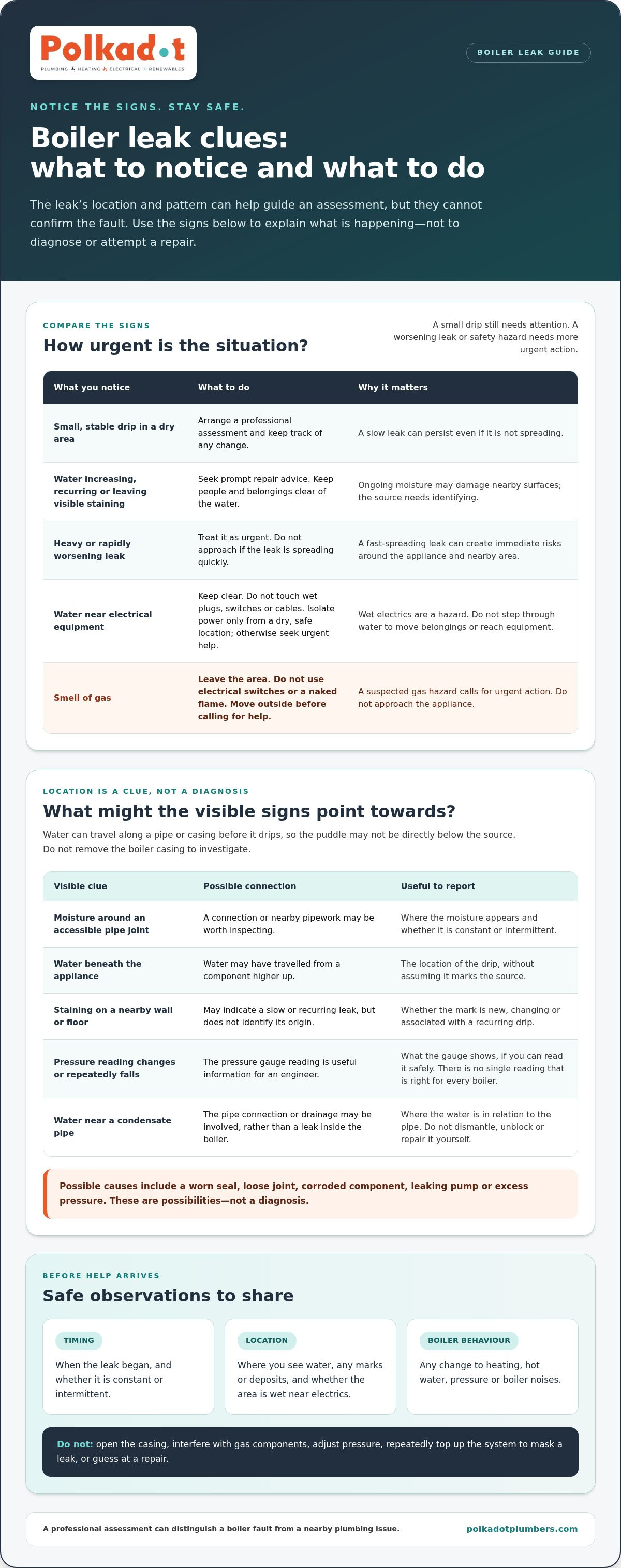
A small, steady drip still needs attention. A heavy or rapidly worsening leak, water reaching electrical equipment, or a smell of gas calls for urgent action. If you suspect immediate danger, leave the area and seek appropriate urgent help. If you smell gas, don’t operate electrical switches or use a naked flame. Move outside before calling for help.
Don’t approach the appliance if the floor is wet near electrics, the leak is spreading quickly, or you can smell gas. A photo taken from a safe distance may help explain what you’ve noticed, but it isn’t worth taking a risk to get one.
What can I safely do before help arrives?
If the area is dry and you can safely reach the boiler’s external controls, switch off the heating. Don’t touch the controls if the boiler or surrounding area is wet, or if you suspect a gas or electrical hazard. Use a clearly identified water isolation valve only if it’s safely accessible and you know what it controls. Don’t force a stiff valve or assume that shutting off the mains will stop a leak from the heating circuit.
Keep clear of wet electrics. Don’t touch plugs, switches or cables in or near water. If you can isolate power from a dry, safe location, do so. Otherwise, stay clear and seek urgent help.
Contain water only if safe. Put a container beneath an accessible drip. Move belongings out of the way only if you can do so without stepping through water near electrical equipment.
Note what’s happening. Record when the leak began, whether it’s constant or intermittent, and any changes to heating, hot water, pressure or boiler noises. Don’t remove the casing, interfere with gas components or guess at a repair.
Boilers vary in design and layout. For general background on types of boilers and their functions, see Wikipedia, but don’t use general information to diagnose your appliance. If you need help with a leaking boiler in London, share your observations with a professional so the fault can be assessed without guesswork.
Why is your boiler leaking? Common causes and clues
Water near a boiler can come from inside the appliance, a connection or nearby pipework. Possible sources include a worn seal, loose joint, corroded component or leaking pump. Excess pressure is another possibility: a pressure relief valve may release water if pressure rises too high. These are clues, not a diagnosis.
The point where you see a drip can guide an investigation, but it can’t confirm what has failed. Water may run along a pipe or casing before dripping, so the puddle might not be directly beneath the source. Note where it appears and whether it’s constant or intermittent. Water marks or deposits around joints can also help an engineer trace the leak.
What does the leak location tell you?
Moisture around an accessible pipe joint may point to a connection worth inspecting, while water beneath the appliance could have travelled from a component higher up. Staining on a nearby wall or floor may indicate a slow or recurring leak, but it doesn’t identify its origin. Don’t remove the casing to look for a source. A professional assessment can help distinguish a boiler fault from a plumbing issue nearby.
Could boiler pressure or a condensate pipe be involved?
A pressure gauge displays the water pressure in the heating system. A reading that changes or repeatedly falls is useful information for an engineer, but there isn’t one reading that can be treated as right for every boiler. Don’t adjust the pressure or repeatedly top up the system to mask a leak. Tell the engineer what the gauge shows, if you can read it safely.
A condensate pipe carries wastewater produced by a condensing boiler away to a drain. Water near this pipe may relate to its connection or drainage rather than a leak inside the boiler. Don’t dismantle, unblock or repair the pipe yourself. For general safety context, see the Health and Safety Executive’s boiler safety regulations and guidelines.
Keep a note of the leak’s location, timing and any pressure changes, then leave the diagnosis to a professional. Polkadot’s London plumbing and heating repairs, alongside damp and leak detection, can help investigate water around a boiler. Explore boiler and plumbing repair support as a practical next step.
Leaking Boiler Symptoms: When to Monitor or Repair
A small drip that stays the same still needs assessment. A leak that spreads, returns or affects how the boiler works deserves prompt attention. Use the signs below to describe what’s happening and identify any immediate safety concern. They can help you prioritise, but they can’t identify the fault.
Which boiler leak warning signs need prompt attention?
Don’t wait for a leak to become large before reporting it. Increasing water, repeated drips after they appear to stop, or fresh marks around the boiler are all reasons to arrange an assessment. Water near electrics or a suspected gas issue takes priority: move away rather than approaching the appliance to investigate. No symptom alone confirms what has failed.
What details should you record for the engineer?
Note where water appears, how often it drips, whether the amount is changing, and whether heating, hot water or the pressure reading has changed. If you can take a photograph from a dry, safe position, it may help show the pattern. Share these observations when arranging help, but don’t remove the casing or touch internal parts.
If you’re dealing with a leaking boiler in London, a clear account of the symptoms helps a professional understand what needs investigating. Monitor the signs, not the appliance itself. A stable drip still warrants repair advice, while worsening symptoms or a safety concern call for more urgent action.
How a professional boiler leak repair works in a London property
A professional repair starts with the symptoms, not a guess about the cause. Describe where you’ve seen water, whether the leak is steady or intermittent, and any changes to heating or hot water. This gives the engineer a useful starting point for assessing the boiler and relevant visible pipework.
What happens during boiler leak diagnosis?
The engineer considers your observations alongside what can be safely inspected around the appliance and its connections. A drip near a pipe joint may prompt a closer look at that area, but its location alone doesn’t confirm the fault. Diagnosis distinguishes an initial possibility from a cause supported by inspection.
Once the issue has been assessed, repair options depend on the findings and the condition of the boiler and associated pipework. The engineer should explain what the assessment indicates and what suitable work involves before proceeding. If the leak is connected to a gas component, that work must be carried out by an engineer registered with Gas Safe. Don’t open the casing or attempt to repair gas parts yourself.
How London property layouts can affect the repair
Boilers and pipework aren’t arranged identically across London homes. A boiler in a kitchen cupboard, a flat with restricted access, or pipework routed behind fitted units can affect how the area is examined and what access is needed. Houses may have different layouts, including pipework running through cupboards, floors or utility spaces.
Clear the area around the boiler if you can do so safely, and mention any access restrictions when describing the problem. Don’t move heavy appliances or dismantle cupboards to expose pipes. The assessment can account for the boiler type, its position and the visible pipe layout, helping separate a boiler fault from a nearby plumbing issue.
If the assessment suggests the boiler may need replacing rather than repairing, read our guide to boiler installation in London for further context. For a professional assessment and repair, arrange London plumbing and heating repairs with Polkadot. Share the leak pattern and any changes you’ve noticed so the issue can be investigated on the evidence.
Arrange leaking boiler repair in London with Polkadot
Once you’ve taken safe first steps, arrange an assessment. Polkadot provides plumbing and heating repairs across London, as well as damp and leak detection to help investigate water that may be coming from nearby pipework or a concealed area rather than the boiler itself. A clear description helps focus the assessment, though inspection is needed to establish the source.
What information helps arrange a boiler repair?
Share the property’s London location and, if you know it, the boiler type. Describe where the water appears and whether the leak is steady, intermittent or getting worse. Mention whether heating or hot water is affected, along with unusual noises or changes in the pressure reading. If the leak is active, say so. A photo taken from a safe position can help illustrate the issue, but don’t approach wet electrics or remove the boiler casing to get one.
These details give the repair team a useful starting point and help distinguish a reported symptom from a confirmed fault. They don’t determine the cause or set a particular appointment time. If you’ve spotted water around pipework, include that too, even if you’re unsure whether it’s connected to the boiler.
When might boiler replacement be discussed?
A leak doesn’t automatically mean you need a new boiler. Repair or replacement can only be considered sensibly after the appliance and relevant pipework have been assessed. The engineer can explain the findings and suitable options in light of the fault and the boiler’s condition. Don’t make a replacement decision based on the puddle alone.
If replacement is considered appropriate, Polkadot’s London boiler installation guide offers further information about that route.
If you need help with a leaking boiler in London, arrange a professional assessment with Polkadot’s plumbing and heating team. Share the location, leak pattern and any changes in boiler operation, and let the assessment establish the next step. Arrange leaking boiler repair in London to get started.
Take the next step towards a safe boiler repair
A leak’s location can offer useful clues, but it can’t confirm the cause. Keep clear of electrical or gas hazards, avoid opening the boiler, and note where and when water appears alongside any changes to heating, hot water or pressure. Those details help a professional assess the issue without relying on guesswork.
For a leaking boiler in London, Polkadot’s plumbing and heating repairs provide a practical next step. Damp and leak detection can also help investigate water that may be coming from surrounding pipework or concealed areas rather than the boiler itself.
Arrange help with a leaking boiler in London and share the symptoms you’ve observed. You don’t have to diagnose the fault yourself. Take safe first steps, then let a professional assessment clarify what needs to happen next.
Frequently Asked Questions
Can I still use my boiler if it is leaking?
Don’t keep using a boiler that’s actively leaking until it has been assessed. Even a small drip may indicate a fault, and continuing to run the appliance could worsen the leak or affect its operation. If water is near electrical equipment, keep clear and don’t touch switches or plugs in the wet area. Arrange professional advice and describe whether the leak is steady, intermittent or increasing.
Should I turn off my boiler if water is leaking from it?
Switch off the boiler using its external controls only if you can reach them safely and the surrounding area is dry. If water is close to electrics, don’t approach or touch the appliance. Avoid opening the casing or trying to isolate internal parts. If you suspect immediate danger, leave the area and seek appropriate urgent help. Otherwise, arrange an assessment and follow the advice given for your situation.
Is a leaking boiler dangerous?
A leak isn’t automatically an immediate emergency, but it shouldn’t be ignored. Water can damage nearby surfaces, and water near electrical equipment creates a safety concern. A smell of gas or suspected gas escape needs urgent attention: leave the area and contact the appropriate gas emergency service from a safe place. Don’t try to diagnose the boiler yourself; the leak’s source and any associated risks need professional assessment.
Why is my boiler leaking water from underneath?
Water beneath the boiler could have come from a component, connection or pipework above it, so the puddle’s position doesn’t prove where the fault is. Possible causes include a worn seal, loose joint, pump leak or pressure-related discharge. Water may also travel along a pipe before dripping. Note whether the leak is constant or intermittent and arrange an inspection rather than removing the casing to look inside.
Can a boiler leak cause the pressure to drop?
Yes, water escaping from the heating system can contribute to a pressure drop. A changing or repeatedly falling reading is useful information for an engineer, but it doesn’t confirm the cause on its own. Note what the pressure gauge shows, if you can read it safely, and mention any loss of heating or hot water. Don’t keep topping up the system to mask a leak; arrange a professional assessment.
How quickly should a leaking boiler be repaired?
Arrange an assessment promptly rather than waiting to see whether the leak disappears. A persistent, recurring or worsening leak needs attention, even if it appears small. If water is reaching electrics, the leak is spreading heavily, or you suspect a gas escape, treat the situation as urgent and seek appropriate help from a safe place. There’s no single repair timeframe that suits every fault; the assessment determines what’s needed.
Who can fix a leaking boiler in London?
A qualified professional can assess whether the water is coming from the boiler or surrounding pipework and recommend suitable repairs. Gas-appliance work must be carried out by an engineer registered with Gas Safe. Polkadot provides plumbing and heating repairs across London, with damp and leak detection to help investigate water-related property issues. If you’re searching for “fix leaking boiler London”, share your location, leak pattern and any changes to boiler operation when arranging help.


Comments