
Fuse Box Replacement Cost UK: A 2026 Homeowner’s Guide
Could two quotes for the same fuse box replacement cover very different work? They can. The fuse box replacement cost UK homeowners see depends not only on the new consumer unit, but also on the number of circuits, the condition of the existing wiring and any extra work needed to complete the installation safely. A lower headline figure may not tell you what’s included.
If you’re comparing quotes for a London property, it helps to understand the possible additional work, safety requirements and paperwork involved. This guide explains what affects a replacement quote, what happens during installation and what to look for in a clear written scope. You’ll also find practical questions to help you compare proposals and plan the next steps. Knowing what the work covers makes it easier to make an informed decision about your property.
Table of Contents
Fuse box replacement cost UK: what does the quote actually cover?
A fuse box replacement quote should describe the agreed unit and installation work for your property. It should also explain what’s excluded and whether any additional work is priced separately. That detail matters because the fuse box replacement cost UK homeowners are quoted isn’t determined by the unit alone. There’s no single figure that applies to every home.
Fuse box or consumer unit: what is being replaced?
“Fuse box” and “consumer unit” are commonly used to mean the same household electrical distribution point: the equipment that distributes electricity to circuits around the property and provides protection. You may see “consumer unit” in a written quote or technical document. For a broader overview of how a distribution board works, including different types, see Wikipedia.
Older units may use fuses that need replacing after they operate. Modern consumer units use circuit protection that can usually be reset once the cause of a trip has been addressed. That difference doesn’t, by itself, mean every older fuse box is unsafe or must be replaced. The condition of the equipment and the needs of the installation must be considered for the individual property.
What should a replacement quote make clear?
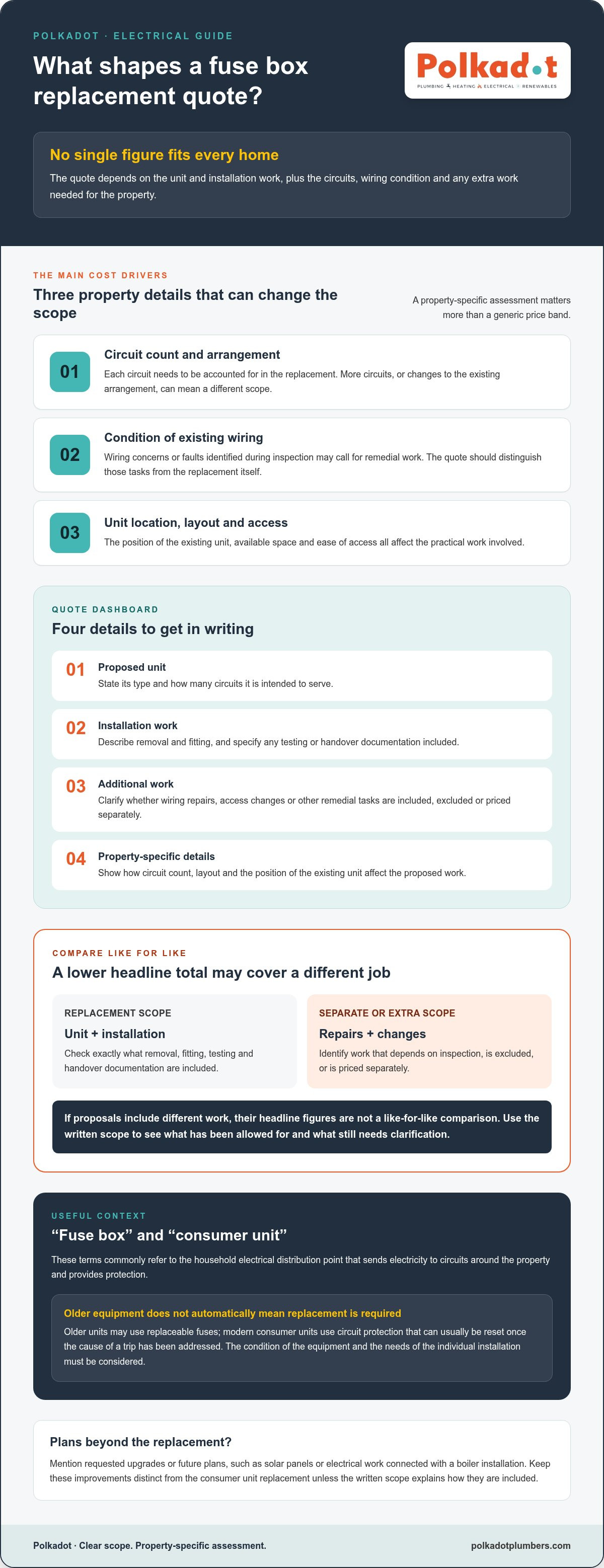
A useful quote separates the proposed unit and installation labour from work that may be needed beyond a basic replacement. Look for a clear description rather than a broad phrase such as “new fuse box fitted”. If further work is identified, the scope should say what it involves and whether it’s included or priced separately.
Ask for the written proposal to clarify:
The proposed unit: its type and how many circuits it is intended to serve.
Installation work: what removal and fitting involve, and what testing or handover documentation is included.
Possible additional work: whether wiring repairs, access changes or other remedial tasks are included, excluded or separately scoped.
Property-specific details: how the circuit count, layout and position of the existing unit affect the work.
Circuit count matters because each circuit needs to be accounted for in the replacement. A home with more circuits, or one where the existing arrangement needs changes, may require a different scope from a straightforward swap. The property layout matters too: the unit’s location, ease of access and available space can all affect the work involved. The condition of existing wiring may also change what’s practical. Scope, wiring condition and access can all affect the work required, so a quote should reflect the property rather than assume every replacement is alike.
Use the written scope to compare proposals on a like-for-like basis. If one includes additional work and another doesn’t, their headline figures describe different jobs. A clear breakdown shows what has been allowed for, what may need separate attention and which parts of the scope need clarification before you agree to the work. That’s a more dependable starting point than judging a replacement quote by its total alone.
What affects fuse box replacement cost in a UK home?
The fuse box replacement cost UK homeowners are quoted depends on the work their property needs. Rather than relying on a generic price band, compare the tasks included in each proposal. A straightforward unit change is different from a job that also involves tracing faults, changing access or addressing wiring concerns.
How the existing installation and property affect the scope
The existing unit and circuit layout help determine how a replacement can be planned. The electrician needs to account for the circuits connected to the current unit and how they’ll be accommodated in the proposed one. The unit’s location and access can affect the practical work involved, particularly if the space is restricted or difficult to reach.
Property size can offer some context, since a larger home may have more circuits, but it isn’t a reliable way to judge the work on its own. Two properties of similar size can have different electrical layouts or conditions. The Electrical Safety First website provides independent electrical safety guidance. A property-specific assessment is still needed to establish what a particular installation requires.
If inspection identifies wiring issues or other remedial tasks, they should be described separately from the replacement itself. That makes it easier to see whether the proposal covers the new unit and installation only, or includes repairs as well. A clear distinction helps prevent a change in scope from being mistaken for part of a basic replacement.
How upgrades and future plans can change the work
Some homeowners want to do more than replace the existing unit. A requested upgrade may affect the equipment, circuit arrangements or other work involved, so describe your plans before the scope is prepared. Keep the proposed replacement and optional or separately planned improvements distinct in the written proposal.
Thinking ahead can help frame the discussion, without assuming that every future project must be completed at the same time. For instance, if you’re considering solar panels, mention that plan so its possible electrical implications can be considered. Heating-related electrical work, such as work connected with a boiler installation, is another separate project consideration. It should be identified clearly rather than folded into the consumer unit replacement scope without explanation.
For each proposal, note what the quoted work covers, what depends on inspection and which requested upgrades or repairs sit outside the replacement. If descriptions differ, have the work set out in comparable terms before weighing them up. That lets you compare the work itself, not just the total.
A larger or more complex scope can require more work, but the property determines the details. For London homeowners planning the next step, Polkadot’s electrical installation service provides a practical way to discuss consumer unit replacement and the scope for your property.
Repair or replace a fuse box? Make the decision without guesswork
A fault or tripped circuit doesn’t automatically mean the whole fuse box needs replacing. The cause could lie in an appliance, a circuit or the unit itself, so diagnosis is more useful than guesswork. Age, appearance or one isolated symptom alone can’t establish whether an installation needs repair or full replacement.
Use this comparison as a guide to the kind of assessment that may be appropriate, not as a diagnosis of your own installation.
When is a repair assessment more appropriate?
If a problem appears limited to one circuit or appliance, identifying its source can help establish whether targeted work is suitable. Repeatedly resetting a breaker isn’t a substitute for investigating a fault. A trip signals that something needs attention, but doesn’t reveal the cause. Note what was in use and when the issue occurred, then share those details during the assessment.
If you notice a burning smell or visible damage, stop using the affected circuit and seek qualified help. Don’t open the unit or attempt electrical repairs yourself. Describe what you’ve noticed, including whether the problem recurs, which areas are affected and any visible changes. These observations can help guide an assessment, but shouldn’t be used to decide on replacement without checking the installation.
When might full consumer unit replacement be considered?
Replacement may be considered after assessing the unit’s condition, its protection arrangements, the circuits it needs to serve and any planned electrical changes. An older unit isn’t automatically unsuitable, just as a newer-looking one isn’t proof that everything is in order. The decision should be based on the findings for that particular property.
A clear recommendation should explain why replacement is being proposed and identify any additional repairs or upgrades separately. If the assessment finds an issue that can be addressed without replacing the entire unit, the proposed scope should make that clear too. This helps you understand the work before agreeing to it and gives you a sound basis for comparing options.
The fuse box replacement cost UK homeowners may face depends partly on whether the job is a targeted repair or a wider replacement, so establish what work is actually required first. A measured diagnosis keeps the decision proportionate: investigate the fault, understand the recommendation and avoid treating one symptom as an automatic reason for a new unit.
How to compare fuse box replacement quotes and prepare your home
Once you have a proposed scope, put each quote into the same format before comparing it. The fuse box replacement cost UK homeowners are offered is meaningful only alongside the work, exclusions and handover it covers. A simple checklist can help you spot where proposals differ, even if their headline figures look similar.
A practical checklist for reviewing the written quote
Record the details in order so you can compare proposals consistently and resolve gaps before agreeing to the work.
Note the proposed unit and circuits. Check that the quote identifies what is being replaced and which circuits the work covers. If the description is broad, request a clearer breakdown.
Separate labour and additional work. Record installation labour, any wiring or remedial work, and any upgrades as distinct items where they’re separately scoped. Note what’s excluded and any conditions that could change the agreed scope.
Check inspection and testing. Look for a description of the inspection and testing included in the proposal. Don’t assume every quote covers the same checks or work.
Confirm the handover documents. Make a note of the installation documentation that will be provided and when you’ll receive it. This gives you a clear record of what the completed work covers.
Compare like with like. Set the quotes beside one another and identify differences in the unit, circuits, labour, exclusions, additional work and documentation. Clarify any blank or unclear item before deciding.
This process shows whether one proposal includes work another treats separately. It also gives you a written reference if the scope needs to be discussed or updated after further inspection. Focus on the stated work and documentation, not the total alone.
What to expect before and during the work
Before the visit, clear the route to the consumer unit and let the installer know about access restrictions, such as stored items or a locked cupboard. Access may also be needed to relevant areas of the property to reach or assess circuits. The installer should explain what access is required and set out any planned interruption to the electricity supply, so you can plan around it.
During the work, follow the agreed arrangements for access and power interruption. If the scope changes because another issue is identified, ask for the change and any additional work to be explained before it proceeds. That keeps the original replacement separate from newly identified tasks and helps you understand what has changed.
At handover, expect an explanation of the completed work, the testing results and the relevant installation documents included in the proposal. Keep these records with your property documents. They can help you understand the work carried out and provide useful context for future electrical work.
A clear written scope makes the decision more manageable, from the first comparison through to handover. Polkadot’s London electrical installation service covers electrical work for domestic and commercial properties.
Fuse box replacement in London: a clear route to the next step
A consumer unit replacement can feel uncertain when you don’t yet know whether the issue calls for investigation, repair or a wider change. A property-specific discussion helps turn that uncertainty into a practical scope: what’s happening, what needs assessing and what work may be involved. That context is more useful than trying to judge the fuse box replacement cost UK from a generic figure alone.
What information helps define the replacement scope?
Before discussing the work, gather a few straightforward details. You don’t need technical knowledge, and you shouldn’t open the unit or attempt electrical work. Useful information includes:
Property type: for example, a flat, terraced house or commercial premises.
Reason for considering replacement: explain whether it’s planned work, a concern about the unit’s condition or a recommendation following an assessment.
Known electrical changes: note any recent or planned alterations that could affect the circuits or the requirements of the installation.
Symptoms: describe any recurring trips, loss of power or other changes, including when they happen and which areas are affected.
Access details: mention where the consumer unit is located and any practical access restrictions.
Specific observations help frame the conversation without turning symptoms into a diagnosis. For example, explain that a circuit trips repeatedly when a particular appliance is used, rather than assuming the consumer unit is at fault. If there’s visible damage or a burning smell, stop using the affected circuit and seek qualified help. Don’t investigate inside the unit yourself.
Arrange the next step with Polkadot
Polkadot provides electrical installation and property maintenance services for domestic and commercial properties across London. Discussing the property, why replacement is being considered and any symptoms you’ve noticed helps focus attention on the relevant details. It also gives you a practical basis for talking through the proposed scope, any additional work that may need separate consideration and the next steps.
Keep notes or photographs of the unit’s exterior and its location if they’re safe to take, but don’t remove covers or touch electrical components. Share what you know and be clear about anything you’re unsure of. The aim is to make the discussion specific to your property, not to reach a technical conclusion before the installation has been assessed.
A clear scope makes it easier to understand the work under consideration and decide how to proceed, without relying on assumptions about age or a single fault. Speak to Polkadot about electrical installation for your London property.
Take the next step with a clear plan
Use what you’ve learned to make a decision that fits your property, rather than feeling pressured by a headline figure or a single symptom. The fuse box replacement cost UK homeowners consider is only one part of the decision. A clear reason for the work and a scope you understand can help you move forward with confidence.
Keep the relevant information together: your notes on the property, any concerns you’ve observed and the documents relating to completed electrical work. This gives you a useful reference for future maintenance and makes it easier to explain the history if further work is considered later.
To discuss electrical installation for your London property, speak to Polkadot about electrical installation. Share what you know about the property and why replacement is being considered. You don’t need to diagnose the issue yourself; a clear starting point is enough to discuss the next step.
Frequently Asked Questions
How much does fuse box replacement cost in the UK?
There isn’t one figure that applies to every property. The fuse box replacement cost UK homeowners are quoted depends on the installation, circuit requirements, access and any additional work identified. For example, a unit in a difficult-to-reach location or wiring that needs attention may involve a different scope from a straightforward replacement. Compare written proposals describing the same work, and look for separate details of exclusions and extra tasks.
What is included in a fuse box replacement quote?
A quote should set out the proposed unit and installation work, the circuits covered, and whether inspection, testing and handover documents are included. Check whether any wiring repairs, access changes or remedial tasks are priced separately or excluded. If two proposals use different descriptions, have the work explained in comparable terms. This helps you identify whether a lower total reflects a narrower scope rather than a like-for-like offer.
Is a fuse box the same as a consumer unit?
Yes, people often use both terms for the household unit that distributes electricity and protects circuits. Older fuse boxes commonly contain fuses that need replacing after they operate; modern consumer units use circuit protection that can usually be reset. If you’re unsure what’s installed, check the wording on previous electrical documents or describe the unit’s appearance without removing its cover. The assessment should identify the existing equipment and proposed replacement.
Do I have to replace an old fuse box?
No, age alone doesn’t establish that replacement is necessary. The unit’s condition, protection arrangements, any faults and the needs of planned electrical work all affect the decision. An assessment may recommend investigation, a targeted repair or replacement, depending on what it finds. Don’t rely on appearance alone to judge safety. If you notice visible damage or a burning smell, stop using the affected circuit and seek qualified help.
How long does a fuse box replacement take?
The time varies with the property, access, existing installation and any additional work. The electricity supply will need to be interrupted for at least part of the job, so plan for equipment such as routers, computers and appliances to be unavailable. Before the work is arranged, ask about the expected sequence, likely interruption and any preparation needed. This can help you plan around work calls, food storage or other essential routines.
What certificates or documents should I receive after replacement?
Ask which inspection, testing and installation documents are included for the work being carried out. The relevant paperwork and notification route can depend on the installation and current requirements, so don’t assume the same documents apply to every job. Confirm what will be handed over and keep it with your property records. These documents can be useful if you later sell, let or arrange further electrical work at the property.
Is fuse box replacement notifiable under UK Building Regulations?
It depends on the work and the applicable rules. Part P of the Building Regulations covers electrical safety in dwellings in England, but the relevant notification and certification route should be checked against current guidance and the specific job. Don’t assume that a repair and a full replacement follow the same process. Ask for the documentation and notification arrangements applicable to your installation to be explained before work begins.



Comments