
Hybrid Heat Pump System UK: Is It Right for Your Home?
Could keeping your boiler be a better fit than switching fully to a heat pump? A hybrid heat pump system UK homeowners consider combines a heat pump with a boiler, but it isn’t a guaranteed shortcut to lower bills. Whether it makes sense depends on your home, existing heating and how the system is designed to work.
If you’re unsure whether an older or poorly insulated property can use a heat pump, you’re not alone. It’s also reasonable to ask when the boiler takes over, how using both electricity and fuel could affect running costs, and whether there’s space for an outdoor unit without unwanted noise or disruption.
This guide explains how hybrid heating works and compares it with a standalone heat pump and a conventional boiler. You’ll find the property-specific factors to weigh, what to consider before choosing, and which details to gather before planning a heating system. That makes it easier to compare options based on your home, rather than broad promises.
Table of Contents
What is a hybrid heat pump system in the UK, and who might consider one?
How a hybrid heat pump system works: heat sources, controls and hot water
Hybrid heat pump vs standalone heat pump vs boiler: how to compare
Is a hybrid heat pump right for a London home? Use this decision checklist
Planning your hybrid heat pump system with Polkadot in London
What is a hybrid heat pump system in the UK, and who might consider one?
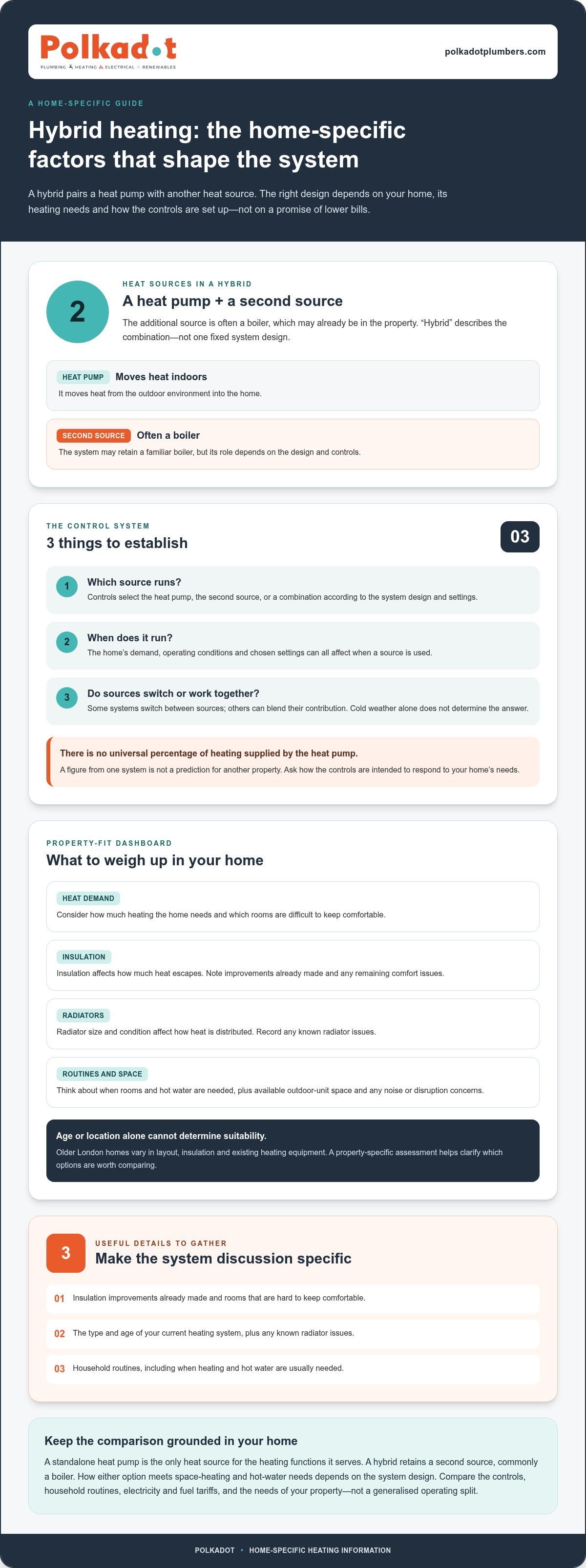
A hybrid heating system uses a heat pump and a second source to meet a home’s heating needs. The additional source is often a boiler, which may already be in the property, but the equipment and how it serves the home can vary. “Hybrid” describes the combination, not one fixed design.
A heat pump moves heat from the outdoor environment into a home rather than generating heat in the same way as a boiler. The Heat pump Wikipedia overview explains the basic principle. Pairing a heat pump with another source can offer a route to electrified heating while retaining a familiar system. It doesn’t mean both sources must run constantly, or that the arrangement will suit every property.
How does a hybrid heating system differ from a standalone heat pump?
A standalone heat pump is the home’s only heat source for the heating functions it serves. A hybrid system retains a second source, commonly a boiler, which the controls can use when the design calls for it. The heat pump and boiler may take turns or work together, depending on the setup. Hot-water provision can also differ, so “hybrid” alone doesn’t explain how a home’s hot water is produced.
Which homes might consider hybrid heating?
Homes with high heat demand might be considered for hybrid heating, but that isn’t an automatic recommendation. Older London properties can vary in layout, insulation and existing heating equipment, so age or location alone can’t determine the right approach. A property-specific assessment helps clarify what the home needs and which options are worth comparing.
Look beyond the boiler. Insulation affects how much heat escapes; radiator size and condition influence how heat is distributed; and household routines shape when and how much heating is needed. A household that heats different rooms at different times, for example, may have different priorities from one that keeps the whole home warm throughout the day.
When considering a hybrid heat pump system UK homeowners should weigh these factors alongside the controls, energy use and electricity and fuel tariffs. Keeping a boiler may feel like a reassuring bridge, but it doesn’t automatically mean lower bills. The outcome depends on how the equipment operates in that particular home and how the household uses it.
Before exploring options, gather practical details about your home:
Note insulation improvements already made and rooms that are difficult to keep comfortable.
Record the type and age of your current heating system, and any known radiator issues.
Think about household routines, including when heating and hot water are usually needed.
These details make a discussion about heating options more useful and grounded in your property, rather than assumptions based on the age of the building alone.
How a hybrid heat pump system works: heat sources, controls and hot water
A hybrid system responds to the home’s call for heat, with controls coordinating the heat pump and second source. It registers demand, uses the heat source selected by its design and settings, then adjusts or changes source if conditions call for it. The sequence varies: some systems switch between sources, while others can blend their contribution.
The control system decides which heat source runs, when it runs and whether the sources operate separately or together. The equipment alone can’t tell you how a hybrid system will behave. Settings, the home’s heating demand and the design all matter. The Energy Saving Trust guide to hybrid heat pumps also describes different ways these systems can be configured.
When does the heat pump or boiler provide heat?
Controls may select a source according to factors such as the home’s demand, operating conditions and chosen settings. A design might use the heat pump for some demand and call on the boiler for additional heat, or change between sources. Cold weather doesn’t automatically mean every hybrid system will rely on its boiler. The outcome depends on the system and its controls.
There isn’t a universal percentage of heating that a heat pump will provide. A figure from one system or example shouldn’t be treated as a prediction for another property. For a hybrid heat pump system UK homeowners are considering, the useful question is how the controls are intended to respond to the home’s needs, not whether the system matches a generalised operating split.
How can a hybrid system provide domestic hot water?
Space heating and domestic hot water are separate demands, and the arrangement for one doesn’t automatically explain the other. In one configuration, the boiler may heat the home’s hot water while the heat pump serves space heating. Another system may use the heat pump for hot water or allocate the sources differently. The existing heating and hot-water setup can affect the design.
Consider your household’s hot-water routine before planning a system. Think about when demand peaks, whether several people need hot water close together, and how your current system meets those needs. These details help make a discussion about the design practical, rather than assuming the boiler or heat pump will always have the same role.
To make the conversation specific, note down:
How your current system heats rooms and supplies hot water.
When your household typically needs heating and hot water.
Any comfort issues, such as rooms taking a long time to warm or hot water running short.
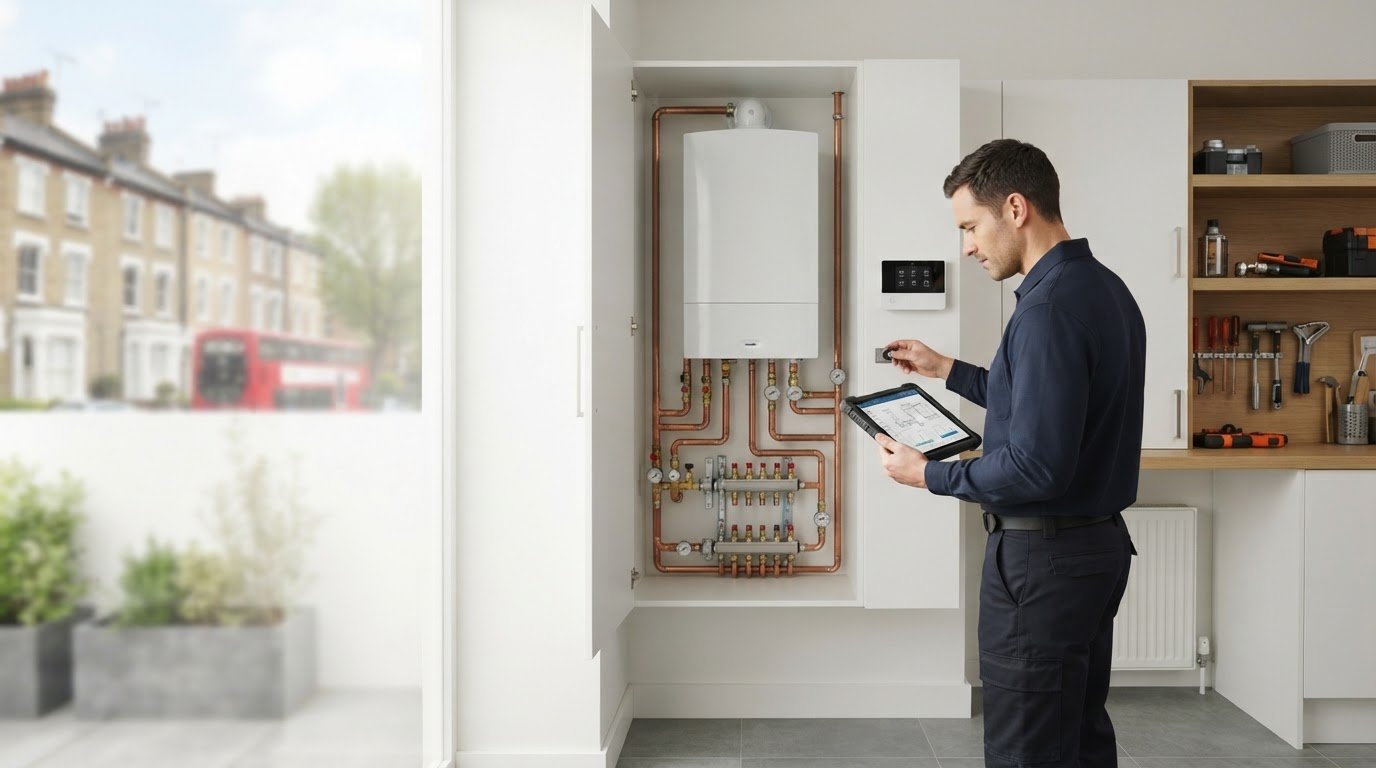
Polkadot’s London heating and air source heat pump services can help put those priorities in the context of your property. Discuss your heating priorities as part of a property-focused conversation.
Hybrid heat pump vs standalone heat pump vs boiler: how to compare
Each option changes how a home gets heat, and the differences go beyond the equipment. A hybrid keeps two heat sources available, often a heat pump alongside a boiler. A standalone heat pump makes the heat pump the primary source instead. A boiler-only system continues to rely on fuel for heating. Compare what each option means for your existing setup, home and day-to-day use.
The right choice depends on heat demand, the fabric of the home and the design of the heating system. Use the comparison below as a starting point, not a verdict.
When could a standalone heat pump be the stronger option?
A standalone heat pump is worth assessing if the home and its heat distribution suit the proposed design. Insulation and heat loss, radiator suitability, room comfort and household demand all help shape that assessment. This doesn’t mean every home needs a full renovation first. Some properties may need targeted improvements, while others may be suitable with fewer changes.
What trade-offs come with keeping a boiler?
Retaining a boiler preserves a second heat source, but also means ongoing reliance on fuel and a system with two sources to coordinate. Include control settings and the maintenance needs of both heat sources in your comparison. Energy bills and carbon outcomes depend on how the system operates, how much each source is used and the household’s energy use.
When weighing up a hybrid heat pump system UK homeowners should compare likely property changes as well as equipment. Consider:
Whether existing radiators can deliver the heat required by the proposed design.
Which improvements could reduce heat loss, and whether they are practical for the property.
How the home is used, including the rooms and times that need heating most.
What retaining a boiler means for controls, fuel use and maintenance over time.
This comparison keeps the decision grounded in the home rather than broad claims about savings. Layout and existing heating can make the assessment particularly specific in London properties. Polkadot’s heating and air source heat pump services help frame options around the property and household priorities, without assuming one system is right for every home.
Is a hybrid heat pump right for a London home? Use this decision checklist
A London address alone can’t tell you whether hybrid heating is suitable. A terrace with limited garden space, a flat in a shared building and a larger home with high heat demand each bring different practical questions. Assess heating requirements alongside outdoor space, installation access and the way your household uses heat. A hybrid system should be assessed against the property, not chosen on the basis of building age alone.
Use this checklist to organise your thinking:
Heat demand: Which rooms need heating most, and are there areas that remain cold?
Insulation and glazing: Note what’s already been improved and where heat may be lost.
Existing heating: Record your boiler or other heat source, radiators and any known issues.
Household use: Consider when rooms need heating and how the home’s hot water is used.
Outdoor space: Identify possible locations for an outdoor unit, including installation access and its position in relation to neighbours.
Property arrangements: Note whether the home is a flat, shared building or leasehold, and what constraints may affect the work.
What property information should you gather first?
Bring together recent energy bills and any available information about your energy use, alongside details of your current boiler or heating arrangement. Note insulation, glazing and radiator types, and list rooms that are difficult to heat. Sketch the layout and mark possible outdoor-unit locations to make space, access and neighbouring properties part of the discussion from the outset.
For a flat or leasehold home, record any shared areas or property arrangements that could affect access or the proposed location. This helps identify practical questions early.
Which UK rules and support schemes should you check?
Planning and building requirements can depend on the property and installation details, so check current official guidance for your circumstances before making plans. In England and Wales, the Boiler Upgrade Scheme provides grant support for eligible low-carbon heating installations. Current guidance excludes hybrid heat pump systems from the grant; eligible standalone heat pumps may qualify, subject to the scheme’s rules. Check official 2026 eligibility, grant amounts and application requirements before relying on support in your decision.
Space, access, building arrangements and household needs all deserve consideration. Polkadot provides heating and air source heat pump services across London and can discuss your property and priorities. Discuss heating options for your London home.
Planning your hybrid heat pump system with Polkadot in London
Once you’ve compared the options, connect them to the way your home works. A useful discussion starts with the information you have, identifies what matters most to your household, then considers heating options in the context of the property. A hybrid system isn’t a standard package: its design depends on heat demand, existing heating and household requirements.
Prepare a few key details before discussing your project:
Gather property information. Note your current heating and hot-water arrangements, energy-use information, comfort concerns, radiator types, insulation and any constraints on outdoor space or access.
Set out your priorities. Explain which rooms are hardest to heat, when the household needs heating and hot water, and what you hope to address by changing the system.
Assess the options. Consider how the home’s heat demand and existing equipment relate to possible heating approaches, including renewable options such as an air source heat pump.
This sequence keeps the conversation focused on your property rather than starting with a particular appliance. It also brings practical details to the fore. In a London terrace, the layout and possible outdoor-unit location may shape the discussion; in a flat or shared building, access and the wider property arrangement may need consideration. No single detail decides the answer on its own.
What should a property-specific heating discussion cover?
Bring together comfort issues and everyday needs, not just equipment details. If a bedroom takes longer to warm than the rest of the home, or hot water is needed at busy times, mention it. These examples help explain what the system needs to do. Property information can then be considered alongside heat demand and the existing system, so renewable heating options are discussed in a practical context.
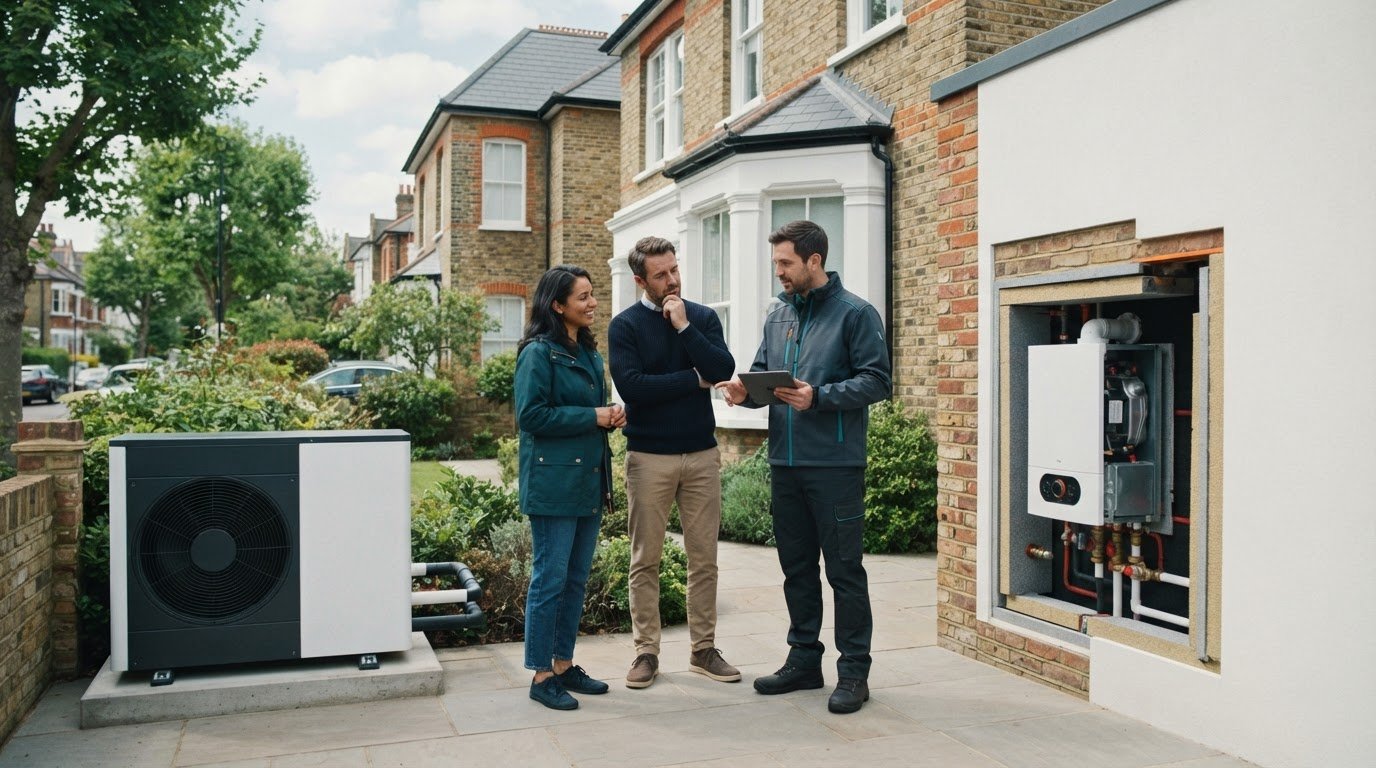
Outdoor-unit placement is another part of the conversation. Available space, access for installation and the position of neighbouring properties can all inform planning. Raising these points early helps keep the discussion realistic.
What are the next steps for London homeowners?
Polkadot provides heating and renewable-energy services across London, including air source heat pump installations. Before getting in touch, have your notes and questions ready, especially about current heating, hot-water use, comfort and outdoor space. You don’t need to settle on a system before discussing your project.
Share your property details and heating priorities with Polkadot to discuss options for your home. Discuss your London heating options with Polkadot.
Take the next step towards a heating plan that fits
Turn your observations into a short project brief: note what matters most for comfort, what you know about the property and what you’d like a new heating plan to achieve. This gives the discussion a clear starting point and keeps the focus on your home rather than general promises.
A hybrid heat pump system UK homeowners consider is one possible route, but the decision should reflect the property and household priorities. Polkadot works across London on heating, air source heat pumps and renewable-energy systems, bringing that experience to conversations about home heating options.
Share your priorities and property details with the team to explore a practical way forward. Plan your London home’s heating project with Polkadot. With the right information to hand, you can take the next step with greater clarity.
Frequently Asked Questions
Is a hybrid heat pump system worth it in the UK?
It can be worth assessing if you want to add heat-pump heating while retaining a boiler, but value depends on your home and how you use heat. Compare the proposed setup with a standalone heat pump and your current boiler, including likely changes to controls and equipment. UK households should also consider ongoing fuel use, electricity and gas tariffs, and whether the design suits their heating priorities.
Can a hybrid heat pump work with my existing boiler?
It may be possible, but an existing boiler isn’t automatically suitable for a hybrid arrangement. Its condition, compatibility with the proposed design and how it could connect with the heat pump all matter. For example, an older boiler that’s unreliable may change the practical comparison between replacing and retaining it. Have details of the boiler and heating controls ready for a property-specific assessment.
Does a hybrid heat pump use the boiler when it gets cold?
Not necessarily. The system’s design and control settings determine when the boiler operates, so colder weather alone doesn’t establish which source will run. Depending on the setup, the heat pump may continue to provide heat, the boiler may assist, or the controls may switch between them. The operating approach should be explained in terms of your home’s heating demand, rather than a general rule.
Will a hybrid heat pump lower my energy bills?
There’s no guaranteed bill reduction: the result depends on how much each heat source runs, household energy use, system operation and your tariffs. A useful comparison starts with your actual bills and energy consumption, then considers how heating patterns might change. A household that heats rooms for longer, for example, may have a different result from one with shorter heating periods, even with similar equipment.
Can a hybrid heat pump be installed in a London flat?
It may be possible, but the flat and building need careful assessment. An outdoor unit needs a suitable location, and access, noise and the relationship with neighbouring homes can affect what is practical. Shared spaces or leasehold arrangements may also shape how a project can proceed. Gather details about the building layout and available outdoor areas so these constraints can be considered early.
What is the difference between a hybrid heat pump and a full heat pump?
A hybrid system combines a heat pump with a second heat source, often a boiler, while a standalone, or “full”, heat pump uses the heat pump as the home’s main heating source. That difference affects which equipment is retained and how heat is controlled. Hot-water arrangements can also vary, so compare how each proposed system would meet your room-heating needs and household routine.
Comments