
Heat Pump Maintenance: A Practical Guide for 2026
Could a few simple checks help keep your heat pump running well, while leaving technical work to a professional? Heat pump maintenance can feel unclear when manufacturer instructions differ and it is not obvious what is safe to do yourself. Routine care matters, but you do not need to troubleshoot the system alone.
If you are unsure how often to arrange a service or whether a warning needs attention, you are not alone. This guide explains what routine maintenance involves, which basic checks you can carry out safely and when to call a qualified heating professional. Your manufacturer’s maintenance instructions and warranty terms should guide your service schedule.
You will find out what to expect when arranging professional heat pump maintenance in London, from the checks a service may cover to the information worth having ready. Polkadot Plumbers provides heating services and air-source heat pump installation in London, with real-time updates on service progress and automatic reminders for service and renewal dates. Use the guidance below to build a simple routine and recognise when your system needs professional attention.
Table of Contents
Why does heat pump maintenance matter for reliable home heating?
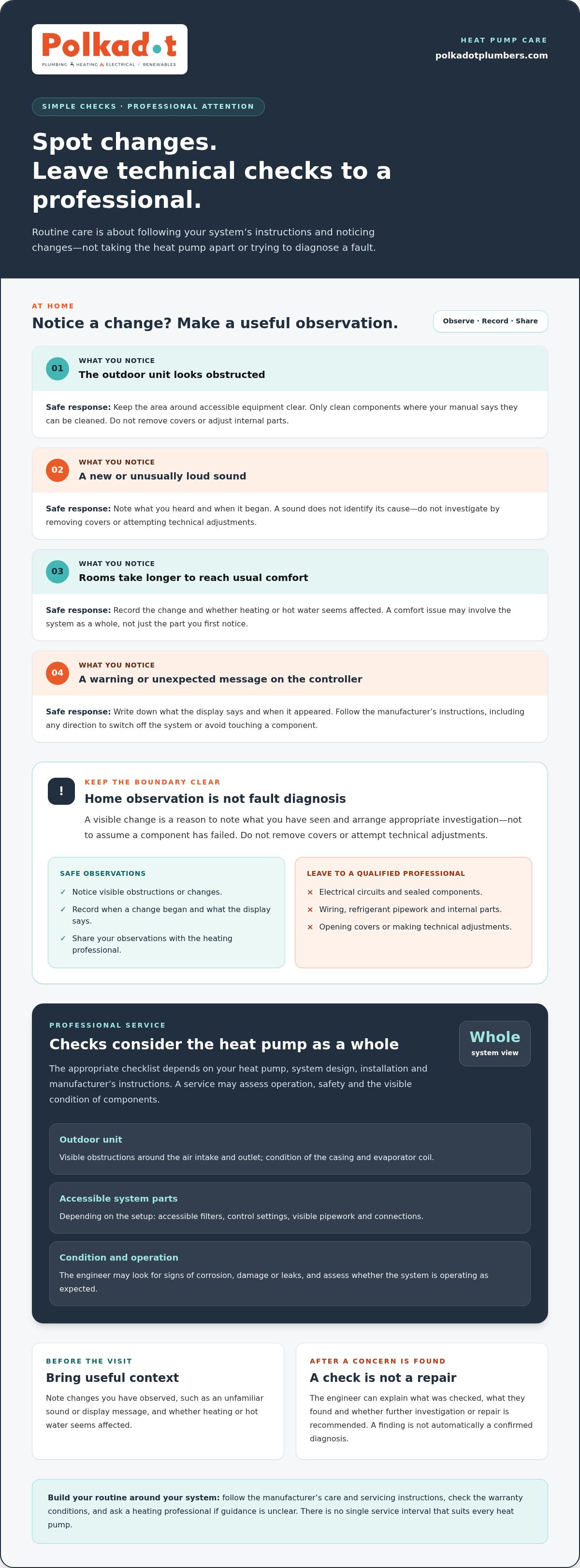
Maintenance is not the same as taking the system apart or trying to fix a fault. It means following the care instructions for your particular setup and keeping track of how the heat pump is operating. A clear area around accessible equipment, clean components where the manual says they can be cleaned, and controls working as intended can help avoid unnecessary airflow obstructions and make changes easier to spot.
Heat pumps move heat rather than generate it by burning fuel. For a general introduction to the technology, What is a Heat Pump? explains the basic principle and different types. For maintenance, remember that the system works as a whole: the outdoor unit, indoor equipment, controls and heating distribution all play a part. A comfort or operating problem may not be caused by the part that first catches your eye.
Does a heat pump need regular maintenance?
Yes, although routine attention is usually less hands-on than some heating systems need. “Low maintenance” does not mean “no maintenance”. At home, you can make basic observations, such as noticing whether the unit looks obstructed or the controls show an unexpected message. A professional inspection is different: it assesses operation and components that should not be adjusted or opened as part of a casual home check.
There is no single service interval that suits every heat pump. The model, system design, installation and manufacturer’s requirements all matter. Check the manual for recommended care and servicing, and read its warranty conditions too. If the instructions are unclear, a heating professional can help interpret them for your system rather than relying on a timetable intended for another model.
What can maintenance help you notice early?
Regular observation gives you a useful point of comparison. You might notice a new or unusually loud sound, rooms taking longer to reach their usual comfort level, or a warning on the controller. A visible change does not reveal its cause. It is a reason to note what you have seen and arrange appropriate investigation, not to assume that a particular component has failed.
Record when the change began, what the display says and whether heating or hot water seems affected. If the manufacturer’s instructions say to switch off the system or avoid touching a component, follow them. Do not remove covers or attempt technical adjustments to investigate a noise or warning. This keeps routine observations useful without turning them into a repair attempt.
Preventive maintenance is routine care that helps you spot changes; reactive repair is professional work to investigate and correct a fault. Neither guarantees that a fault will not occur. However, noticing a change and following the system’s instructions gives a heating professional clearer information to work with. That can help establish what needs attention and whether it can wait for a planned inspection.
What does professional heat pump maintenance usually check?
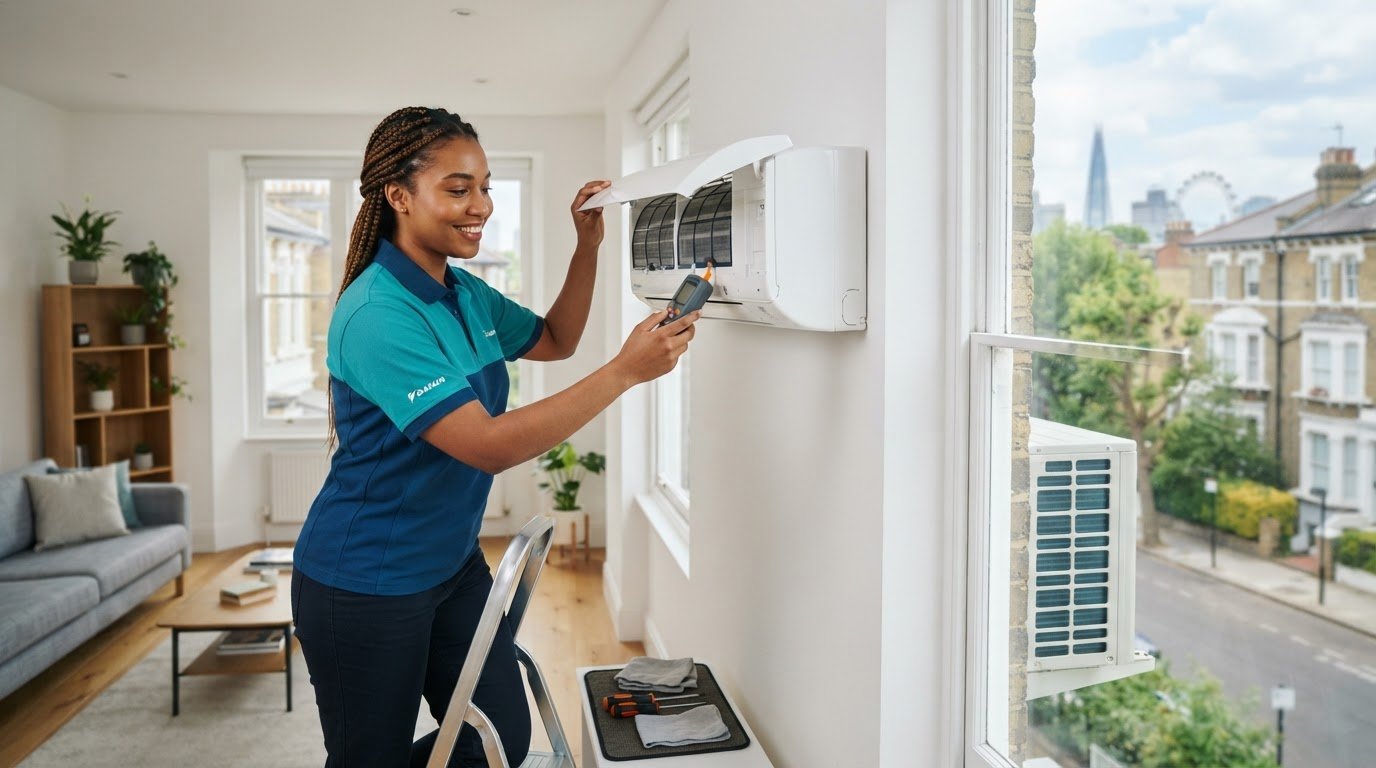
A professional service looks at how the heat pump operates as a complete system, not just whether the outdoor unit needs cleaning. Depending on the installation, an engineer may review the controls, accessible pipework and connections, and the visible condition of key components. They may also look for signs of corrosion, damage or leaks and assess whether the system is operating as expected.
The appropriate checklist depends on the heat pump type, system design, installation and manufacturer’s instructions. A service should follow the guidance for your equipment rather than apply the same sequence of checks to every home. Professional servicing checks how the system functions, its safety and the visible condition of its components.
Which heat pump components may be inspected?
At the outdoor unit, an engineer may look for leaves, debris or other visible obstructions around the air intake and outlet, as well as damage to the casing or evaporator coil. Depending on your setup, the inspection may also cover accessible filters, control settings, visible pipework and connections. These checks help build a picture of the system’s condition; they do not mean every component needs cleaning or adjustment.
Electrical circuits and sealed components are not homeowner maintenance tasks. Leave those checks to a qualified professional with the right knowledge and equipment. Do not remove covers or handle wiring, refrigerant pipework or internal parts yourself. Follow any safety instructions in the manual for your model.
What happens if a check reveals a concern?
If an engineer notices something that needs attention, they can explain what they observed and recommend a suitable next step. Visible damage or signs of a leak may call for further investigation, while a control setting may simply need explaining or adjusting in line with the manufacturer’s guidance. A finding is not automatically a confirmed diagnosis; the next step depends on the issue.
Routine servicing and repair are related, but they are not the same job. A maintenance visit can identify a concern without including the additional work needed to correct it. The engineer should explain what was checked, what they found and whether repair or further investigation is recommended. A service cannot promise to uncover every developing fault or prevent all breakdowns.
Before a visit, note any changes you have observed, such as a display message or unfamiliar sound, and share them with the engineer. This gives useful context without asking you to diagnose the cause. Polkadot Plumbers provides heating services and air-source heat pump installation in London, with clear pricing and real-time updates on service progress. For heat pump maintenance support in London, those updates help you follow what is happening during the visit.
Which heat pump maintenance checks can you do yourself?
Keep home checks simple: observe, note and follow the instructions for your model. Routine observation can help you spot a change, but it does not replace professional servicing. Use this comparison to separate what you can safely look at from work that belongs with a qualified heating professional. If your manual says to switch off the system or avoid touching a component, follow that instruction before doing anything.
Safe checks around the outdoor unit
From a safe position, look for leaves, loose debris or objects visibly obstructing airflow around the unit. Keep the surrounding area clear only if you can do so without reaching inside or removing panels. Note any unusual sound or visible damage, and record when you first noticed it. Do not try to identify the cause from appearance alone.
This is a guide to the boundary, not a replacement for your heat pump’s instructions. A task that seems straightforward on one model may be unsuitable for another. Read the manual before carrying out any care, and do not assume generic online advice applies to your installation.
Checks to leave to a qualified heating professional
Leave electrical testing, internal repairs and refrigerant-circuit work to a qualified professional. Do not dismantle the unit, alter electrical components, top up system fluid or adjust pressure based on guesswork. These tasks involve parts and procedures that cannot be assessed safely through a visual check. Follow the manufacturer’s instructions if they require the unit to be switched off or a component left untouched.
If you find an obstruction you cannot clear safely, see damage, or notice a warning or unusual change, do not reach into the unit to investigate. Write down what you observed and follow the manual’s advice on what to do next. That information can help an engineer understand the issue without risking an attempted fix that could make matters worse. A safe home routine is modest: look, listen and record; leave testing and adjustments to a professional.
How should you plan a heat pump maintenance routine?
A useful routine does not need to be complicated. Make it easy to follow the instructions for your heat pump, notice changes over time and keep professional checks on track. Do not assume every model needs servicing at the same interval: manufacturer recommendations and relevant warranty conditions should shape your plan.
The manual and your system’s condition should guide its maintenance schedule, not a universal timetable. Seasonal changes can be a handy prompt to look over the system, but they do not automatically mean a service is due. As heating demand rises, for example, you might check the outdoor unit’s visible condition and note any change in comfort. Keep any hands-on care within the limits set out in the manual.
Read the manual. Find the manufacturer’s care instructions, recommended professional maintenance intervals and any warranty conditions related to servicing.
Observe the system. Look for changes in heating comfort, the controller display or the visible appearance of the outdoor unit. Follow the manual’s safety guidance and do not touch components it says to avoid.
Record what you notice. Write down dates, messages and changes in operation so you can distinguish a one-off observation from a pattern.
Arrange professional checks. Use the manufacturer’s guidance and your system’s condition to plan servicing, and bring your notes to the visit.
Build a schedule around your heat pump’s manual
Keep a simple record of the model details, service history and manufacturer-recommended intervals. Add relevant warranty requirements so they are easy to review alongside the manual. Set reminders for documented service and renewal dates rather than choosing an arbitrary month. Polkadot Plumbers provides automatic reminders for service and renewals, helping keep those dates in view.
Use the record to note changes in comfort, controller messages or the unit’s visible appearance, including when each change began. This gives you a practical history to refer to if you arrange a professional check. It also helps keep observations separate from assumptions about their cause.
Prepare for a professional maintenance visit
Before the appointment, gather the manual and any previous service records. Note the wording of fault messages and describe when a change first appeared, whether it has continued and what you have noticed about heating comfort. Make practical access to the heat pump and visible system components clear where you can, without moving anything that may be unsafe to handle.
Share your notes with the engineer and let them assess the system in line with its design and manufacturer guidance. If a check identifies an issue, the findings can help inform the recommended next step, although routine maintenance cannot promise to uncover every developing fault.
For professional heating support in London, arrange heat pump maintenance with Polkadot Plumbers. Clear pricing, real-time service-progress updates and automatic service and renewal reminders help keep the process organised.
Arrange heat pump maintenance in London with Polkadot Plumbers
Need help understanding what your heat pump needs next? Polkadot Plumbers provides heating services and installs air-source heat pumps in London. Share what you know about your system and what has changed, and the next steps can be considered in relation to its design, service history and manufacturer’s guidance. This keeps the discussion focused on your property rather than a generic checklist.
What to expect when arranging heating support
Before arranging a visit, gather the model details if you have them, previous service records and notes about changes you have noticed. A new controller message, unusual sound or difference in heating comfort can help explain why you are seeking support. You do not need to diagnose the cause. A clear description is enough to start discussing the appropriate next step.
The maintenance needed depends on the system and what it requires. Polkadot Plumbers provides clear pricing. The first hour is charged on all jobs, then subsequent time is billed in half-hour increments. Hourly rates are exclusive of VAT, and payment is due upon completion. You will receive real-time updates on service progress, so you can follow what is happening as the work proceeds. Automatic reminders for service and renewal dates help you organise future maintenance.
If you would like to understand the wider heating support available, view Polkadot Plumbers’ heating services alongside your heat pump’s manual and service records. The manual remains the guide to your model’s maintenance requirements, while a professional can assess the system and explain what work may be appropriate.
Choose a clear next step for your property
For heat pump maintenance, start with the manufacturer’s instructions and the condition of your system. If a service is due, or you have noticed a change you would like investigated, arrange heating support and share your observations. Clear notes help make the discussion practical, whether you are planning routine attention or responding to a concern.
Polkadot Plumbers offers free, no-obligation estimates for all plumbing and electrical work. A 12-month labour guarantee applies to all plumbing and electrical services. These terms apply to plumbing and electrical work, so keep them distinct when considering heating support.
Keep the process straightforward: have your system details to hand, explain what you have noticed and follow the advice relevant to your model. Arrange heat pump maintenance with Polkadot Plumbers for heating support in London and a clear view of the next steps for your property.
Make your next maintenance step a simple one
A manageable heat pump maintenance plan starts with one useful action: keep the manufacturer’s guidance and service history somewhere easy to find. Then, when you notice a change or a scheduled check comes around, you will have the details ready instead of relying on memory. You do not need to become an expert in the system. Knowing what you have observed and where to find its instructions helps you make informed decisions about what happens next.
If your notes indicate that a service is due, or you would like professional advice about a change in how the system is operating, arrange heating support suited to your property. Polkadot Plumbers provides heating services and air-source heat pump installation in London. Polkadot Plumbers also offers free, no-obligation estimates for all plumbing and electrical work, and a 12-month labour guarantee applies to all plumbing and electrical services.
Arrange heating support with Polkadot Plumbers and take the next step towards a clear, well-organised maintenance routine.
Frequently Asked Questions
How often should a heat pump be serviced?
Follow the service interval in your heat pump’s manual and any maintenance conditions attached to its warranty. There is no single timetable that applies to every model or installation. Keep a note of completed visits and the next recommended date so you can plan ahead. If the system displays a warning or starts behaving differently between visits, seek appropriate advice rather than waiting for the next scheduled check.
Is heat pump maintenance something I can do myself?
You can make simple observations, such as checking the controller for a message or looking for visible debris around the outdoor unit. Use the manual to see what owner maintenance is permitted for your model. Do not remove covers or work on wiring, internal components or sealed parts. If you are unsure whether a task is safe, leave it undone and speak to a qualified heating professional rather than risk damaging the system.
Can leaves and debris affect an air-source heat pump?
Yes. Leaves or other objects close to an outdoor unit can obstruct airflow, so look around it and keep the accessible surrounding area clear in line with the manual. In London, fallen leaves in autumn can be a useful prompt for a visual check. Do not reach inside or remove panels. If the coil looks damaged or blocked, note what you can see and arrange professional advice.
What happens if I skip heat pump maintenance?
Missing a recommended check does not mean your heat pump will automatically fail, but a developing concern may go unnoticed for longer. Keep any service records you have, then check the manual for the model’s requirements and warranty conditions. If you have missed a visit, arrange an appropriate check rather than opening the unit or making technical adjustments yourself. Respond sooner if a warning appears or operation changes.
Does a heat pump need servicing in summer?
Its maintenance requirements still apply during summer, even if you are using heating less. Do not assume the warmer months are the right time for a service; use the interval specified in the manual and any applicable warranty guidance. A quieter period can be a convenient time to organise your records or check the area around the outdoor unit. Keep observations visual and follow the manufacturer’s instructions.
Should I switch off my heat pump before cleaning around it?
Check the manual before doing anything beyond looking at the area around the unit. Switch-off instructions depend on the system and the task, so do not rely on general online advice for a specific model. If clearing something would mean opening the casing, reaching inside or handling a component, stop. Avoid touching controls or parts unless the manufacturer’s instructions clearly say the task is suitable for you.
Can a heat pump make unusual noises during normal operation?
Some sounds may be part of normal operation, but a new, persistent or noticeably different noise is worth recording. Note when it happens, how long it lasts and whether the system’s display or your home’s comfort changes at the same time. Do not open the unit to investigate or assume the noise identifies a particular fault. Share your observations with a qualified heating professional for assessment.


Comments