
Heat Pump vs Gas Boiler Cost Comparison: What Will Suit Your Home in 2026?
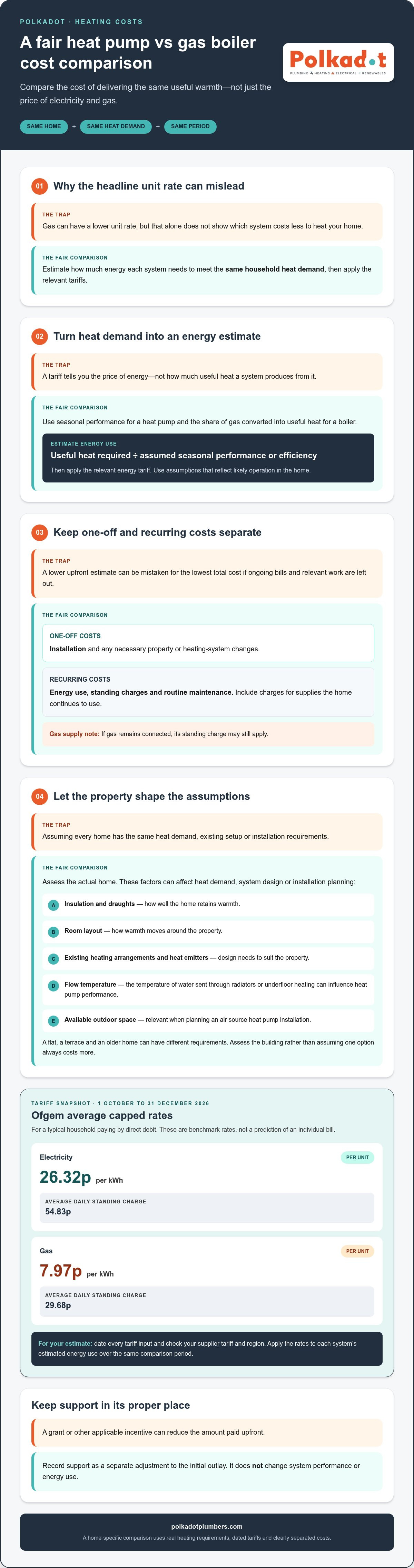
A gas boiler’s lower unit rate doesn’t automatically make it cheaper to heat your home. A useful heat pump vs gas boiler cost comparison accounts for how much heat your property needs, how efficiently each system delivers it and the tariffs you pay, not just the headline price of electricity and gas.
Electricity rates can make a heat pump look expensive to run at first glance. To compare bills fairly, use the same home and heating demand for both systems, then consider installation, ongoing energy use, maintenance and longer-term costs. Support such as the Boiler Upgrade Scheme may also affect the upfront calculation.
This article explains how to make a like-for-like comparison using your home’s needs and current UK tariffs. You’ll see which cost categories to include, why insulation and system performance matter, and what to consider before choosing either option. For London homeowners, the property’s heating requirements and installation plans are important parts of the calculation. Polkadot installs air source heat pumps across London and can discuss how a potential project relates to your home.
Table of Contents
Why a heat pump vs gas boiler cost comparison depends on your home
Which system costs less overall? There isn’t one answer for every London home. The result depends on how much heat the property needs, how well it retains warmth, the condition of its existing heating system and how long you compare costs over. A smaller, well-insulated flat and a draughty older terrace can have very different requirements, even if both households are considering the same two heating options.
For a useful heat pump vs gas boiler cost comparison, look at the whole picture: the initial installation and any necessary property changes, followed by energy bills and routine maintenance. Keep one-off spending separate from recurring costs, and use the same household heat demand and comparison period for both systems. This makes assumptions easier to review and stops a lower upfront estimate being mistaken for the lowest total cost.
The cheaper option depends on the home and the comparison period. A grant or other applicable incentive can reduce the amount paid upfront, but it doesn’t change how efficiently a system turns energy into heat. Record any support as a separate adjustment to the initial outlay, not as a change to system performance or energy use.
Which costs belong in a fair comparison?
Separate costs into clear categories. Installation and relevant property upgrades are usually one-off items; fuel, standing charges and routine maintenance are recurring. Include changes needed to make a system suitable for the property, rather than assuming both options can use the existing setup without alteration.
Installation: include the heating system and the work needed to fit it.
Energy: estimate use against the household’s heat demand and applicable tariffs.
Standing charges: include charges for supplies the home will continue to use. If gas remains connected, its standing charge may still apply.
Maintenance and upgrades: allow for routine servicing and relevant changes to the property or heating system.
Keep these categories distinct before combining them into a total for your chosen period. You’ll be able to see whether a difference comes from installation, ongoing bills or the assumptions behind the calculation.
Why London property characteristics matter
Assess the building, not just its postcode. Insulation, draughts and room layout affect how much heat is needed and how warmth moves around the home. Available outdoor space can also be relevant when planning an air source heat pump installation. The basics of heat pump technology help explain how the system works, but suitability and costs depend on the property and heating design.
London homes vary widely. A terrace may have different heat-loss patterns and installation considerations from a flat; an older home may need particular attention to insulation or existing heating arrangements. These are factors to assess, not reasons to assume one option will always cost more. Start with the home’s actual requirements, then compare both systems using the same assumptions.
What determines heat pump and gas boiler running costs?
Why can electricity cost more per unit yet a heat pump still be competitive to run? A tariff tells you the price of energy, not how much useful heat a system produces from it. A heat pump moves heat from outside into the home using electricity to operate. A gas boiler burns fuel to produce heat. To compare bills, estimate the energy each system needs to meet the same household heat demand.
Energy price per unit and system efficiency are different things: the tariff sets what you pay, whilst efficiency affects how much energy is needed to heat your home. For a heat pump, use seasonal performance across a range of conditions rather than a single best-case reading. For a boiler, consider how much of the gas consumed becomes useful heat. These measures help translate unit rates into a more meaningful estimate of the cost of warmth.
How system efficiency affects the bill
Seasonal performance reflects operation across the heating season, including changes in outdoor conditions and demand. A heat pump’s electricity use depends on the heat it needs to deliver and its performance over that period. A boiler’s gas use depends on the heat required and the share of fuel energy converted into useful warmth.
System design matters, too. Flow temperature, the temperature of water sent through radiators or underfloor heating, can influence heat pump performance. The design needs to suit the property and its heat emitters. To estimate energy use, divide the useful heat required by the system’s assumed seasonal performance or efficiency, then apply the relevant energy tariff. A comparison using an assumed performance that doesn’t reflect likely operation in the home can be misleading.
How tariffs and standing charges change the comparison
Tariffs change, so date every input. For 1 October to 31 December 2026, Ofgem’s average capped rates for a typical household paying by direct debit are 26.32p per kWh for electricity and 7.97p per kWh for gas. Average daily standing charges for the same period are 54.83p for electricity and 29.68p for gas. These are benchmark rates, not a prediction of an individual bill. Check your supplier tariff and region before estimating your own costs.
Apply your actual rates to each system’s estimated energy use over the same period. Include standing charges for every supply the home keeps. If switching heating means giving up gas entirely, don’t count a gas standing charge as an ongoing cost. If the property remains connected, include it even if gas use falls. Electricity standing charges may remain in either scenario, so avoid counting them as a heat-pump-only cost.
For a sound heat pump vs gas boiler cost comparison, pair recent household usage with a dated tariff and a realistic seasonal performance estimate. Polkadot provides heating services and installs air source heat pumps across London. A discussion about London heating and heat pump installation can help relate the assumptions to your home’s heating requirements.
Heat pump vs gas boiler: compare total ownership costs fairly
A fair comparison puts both systems on the same footing: the same home, useful heat demand, tariff dates and ownership period. Keep the initial investment separate from projected yearly expenses, then total each over your chosen period. The result is an estimate, not a promise of future bills. Actual costs vary with household use, system performance and tariff changes.
Compare upfront and ongoing costs without mixing them
Use separate rows for one-off installation and property work, and for recurring energy, standing charges and maintenance. Record any changes to radiators, pipework or other parts of the heating system as their own assumptions rather than hiding them in a single installation figure. This makes it easier to see what drives the difference and revise the calculation if an estimate changes.
The table below is a framework, not a price list. Fill it with estimates for your property and keep the assumptions consistent.
Use one comparison period for both options and label every figure as an estimate or projection. Apply the same heat demand and dated tariff assumptions throughout; don’t compare one system using a current tariff and the other using an older rate. If you use the October to December 2026 tariff period discussed earlier, make that date clear in your working.
Include incentives, maintenance and energy-system changes
Before including Boiler Upgrade Scheme support, check the current eligibility rules, grant terms and application requirements against your circumstances. Show the installation estimate before support, then list any eligible grant as a separate reduction to upfront spending. A grant affects the amount paid initially, not the system’s efficiency or projected energy consumption.
Include routine maintenance for both options over the same period, using project-specific estimates rather than assuming identical servicing needs. Make the gas connection assumption explicit, too: if it remains, include the applicable gas standing charge; if it ends, don’t count that charge as ongoing. Where solar panels are present or planned, model electricity used directly by the heat pump as a separate scenario. Don’t treat possible solar self-consumption as a guaranteed saving.
This structured heat pump vs gas boiler cost comparison helps identify which assumptions need property-specific figures. Polkadot provides heating services and installs air source heat pumps across London. A discussion about London heating and heat pump installation can connect the comparison with your home’s requirements and installation planning.
How to estimate which heating option may cost less in your London home
A useful estimate starts with your household’s actual energy use, not a national average. Recent bills are a starting point, but they won’t isolate heating from hot water, cooking or other gas use. Gather the details below and keep your assumptions visible so you can adjust them as better information becomes available.
Gather the information needed for an estimate
Collect recent gas and electricity bills, including unit rates, standing charges and the dates those rates apply. Note your current boiler type and controls, property layout, insulation, draughts, and whether rooms use radiators or underfloor heating. Add any comfort requirements, such as rooms that need to stay warm for longer. These details help shape a comparison around your home rather than a generic example.
Run a like-for-like household comparison
Follow this workflow to build a heat pump vs gas boiler cost comparison you can review and refine:
Record household use. Gather a full year of energy bills if available, and note any changes in occupancy or heating habits during that period. Separate gas used for heating from other uses where you can; don’t treat total gas consumption as heating demand if it also supplies hot water or cooking.
Describe the existing system. Write down the boiler and heating controls you have, how rooms are heated, and what you know about insulation and draughts. Include planned property or heating-system changes as separate assumptions rather than blending them into running costs.
Log the tariff inputs. Use your current supplier rates, not an old example. Record the electricity and gas unit rates, standing charges, tariff type and date checked. If you use Ofgem’s price cap as a reference, identify the relevant cap period and payment method from its published figures; the cap is a benchmark, not necessarily your personal tariff.
Set the same heat demand. Estimate the useful heat both options would need to supply under the same household conditions. Apply a realistic seasonal performance assumption for the heat pump and an appropriate efficiency assumption for the boiler, rather than comparing best-case performance with everyday boiler use.
Compare and test uncertainty. Calculate projected energy costs using the relevant rates, then add standing charges that would still apply and maintenance estimates over the same period. If uncertain performance, future tariffs or household use could change the result, show lower and higher scenarios instead of presenting one figure as certain.
Keep installation spending separate from projected recurring bills, and label the period covered by each calculation. The result is a planning estimate, not a guaranteed bill: actual costs depend on use, tariffs and how the system is designed and operated. Update tariff inputs when your supplier changes its rates or the relevant Ofgem cap period moves on.
For a discussion of heating requirements and air source heat pump installation in London, explore Polkadot heating and heat-pump services.
Plan a London heating upgrade with Polkadot
A cost estimate becomes more useful when it reflects how a heating system would work in your home. Connect the assumptions in your heat pump vs gas boiler cost comparison with practical design questions: how much heat each room needs, how the existing system distributes it and what installation space is available. This helps identify which figures need refining before you decide, without promising a fixed saving.
Installation planning can take account of the property’s heating requirements and practical considerations, so the comparison relates to a potential system design rather than a headline figure alone.
What a property-specific heating assessment should consider
Useful details include the home’s heat demand, insulation and draughts, room layout, and existing heat emitters, such as radiators or underfloor heating. Available space for system components is another practical consideration. These factors can affect design choices and help show whether the assumptions used in your estimate fit the property.
Bring recent bills and notes about comfort issues, such as rooms that take longer to warm or areas that feel colder. This context can help refine the expected heating demand and identify relevant installation work. Recommendations should respond to the home’s conditions; a general comparison cannot establish the same outcome for every property.
If you’re also weighing up a new gas boiler, installation planning is a separate part of the decision. Polkadot’s boiler installation guide covers considerations relevant to that option, which you can set alongside the heat-pump design and cost assumptions for your home.
Consider the wider home energy picture
Solar generation may be relevant if your home has solar panels or you’re considering them. The timing of generation and household electricity use can influence how much solar electricity is used in the home, but it shouldn’t be treated as a guaranteed reduction in heat-pump running costs. For context on solar considerations, see the London solar panels guide.
To move from estimates to a practical plan, compare both options using consistent assumptions, identify details that need a closer look, then consider how the home and its heating system shape the design. This gives you a clearer basis for weighing installation against ongoing costs. Polkadot’s London heating services include air source heat pump installation, with planning shaped around the property and its heating needs.
Ready to discuss your options? Discuss your London heating project with Polkadot and take the next step towards a heating plan suited to your home.
Take the next step towards a heating plan that fits
Your next step doesn’t have to be a final decision. Use your heat pump vs gas boiler cost comparison to identify which assumptions need a closer look, then consider how your home’s layout, comfort needs and existing heating affect the options. A focused discussion can help turn a broad estimate into a practical plan, without treating projected bills as a promise.
Bring recent energy bills and notes about your home to the conversation. You can explore the figures, consider what installation involves and discuss an approach for your property. Polkadot can help you think through your London heating project and the options for your home.
Discuss your London heating project with Polkadot and take a considered next step towards heating that suits your needs.
Frequently Asked Questions
Is a heat pump cheaper to run than a gas boiler in the UK?
It can be, but it depends on your home’s heat demand, each system’s real-world performance and your energy tariffs. A household using a heat pump effectively may have different running costs from one in a poorly insulated property with a system that needs adjustment. Compare annual energy use for the same comfort level using your current supplier rates, rather than relying on a general claim about which option is cheaper.
How much does it cost to run a heat pump compared with a gas boiler?
There isn’t a reliable single figure without knowing your home’s heat demand and tariffs. To estimate it, work out how much energy each system would need to provide the same warmth, then apply your current electricity rate to the heat pump’s use and your gas rate to the boiler’s use. Separate heating from other household energy use where possible, and treat the result as an estimate rather than a promised bill.
Can a heat pump cost less overall even if electricity is more expensive than gas?
Yes. The unit price is only one part of the calculation: a heat pump transfers heat rather than producing it solely by burning fuel, so it may need less purchased energy to deliver the required warmth. Whether that offsets electricity’s higher unit rate depends on the home and system design. For a fair heat pump vs gas boiler cost comparison, use realistic performance assumptions and include installation and ongoing costs.
Does removing a gas boiler remove the gas standing charge?
No, removing the boiler alone doesn’t end a gas standing charge. If the property remains connected to the gas network and the gas account stays active, the supplier may continue charging for the supply even if the home uses little or no gas. The charge generally stops only when the gas supply and account are formally ended. Check the process and any implications with your gas supplier before making that decision.
Does the Boiler Upgrade Scheme reduce the cost of a heat pump in 2026?
It may reduce the initial outlay if your installation and circumstances meet the scheme’s eligibility rules. The Boiler Upgrade Scheme grant for an eligible air source heat pump is £7,500 in 2026. Check the current terms and eligibility before including support in your figures. Treat any grant as a reduction to upfront cost, not as a change to the heat pump’s running efficiency.
Can I use solar panels to lower the running cost of a heat pump?
Potentially. Electricity generated by panels and used at home can reduce the amount drawn from the grid, including for a heat pump, when generation and heating demand coincide. The effect depends on your system, household use and when the heat pump operates, so don’t assume all its electricity will be solar-powered. Compare a standard electricity-cost scenario with a separate solar-use scenario, and avoid counting exported electricity as heat-pump savings.
Are heat pumps suitable for older London homes?
Some older homes can accommodate a heat pump, but age alone doesn’t determine suitability. Consider heat loss, insulation, existing radiators or underfloor heating, room layout and available installation space. For example, a draughty period home with small radiators may need a different design approach from a renovated property of a similar age. A property-specific discussion can identify practical considerations and help shape a suitable plan.


Comments