
Kitchen Sink Plumbing Repair for Blockages and Fitting
Kitchen sink plumbing repair can involve clearing a blockage, fixing a leak or correcting faulty pipework; UK kitchen sinks typically use 40mm waste pipe. The right repair depends on where the problem is and whether the sink, trap or waste connection is damaged. A careful diagnosis helps address the cause rather than just the symptom.
A slow-draining or leaking sink can disrupt everyday routines, but kitchen sink plumbing repair often starts with identifying the source. This guide explains how blockages are handled, what pipe sizing means and when an urgent plumbing repair may be needed.
You’ll also learn what to expect from sink installation and repair, including how traps, seals and connections contribute to a lasting solution. These practical details can help you understand the work and choose a clear next step.
Table of Contents
Kitchen sink blockages
A blocked kitchen sink may drain slowly, gurgle or hold standing water. The blockage’s location, from the plughole to the trap or waste pipe, determines the repair.
Identifying a Blocked Kitchen Sink
Notice how water behaves in each bowl. If one side of a double sink drains normally, the obstruction may be near the other plughole. If both sides fill, the shared trap or waste pipe may be affected. Gurgling after draining can also indicate restricted flow. Note whether the problem began after food scraps, cooking fat or other debris went down the sink.
Safe Kitchen Sink Unblocking
To unblock a kitchen sink safely, stop using the tap and remove standing water where practical. Use a sink plunger with enough water to cover its cup. Seal the overflow with a damp cloth, centre the plunger over the plughole and use controlled movements. Never mix drain chemicals or add another product over an existing cleaner.
If the water still will not drain, the blockage may be beyond the plughole. Kitchen sink plumbing repair may involve clearing the trap, removing debris from a waste connection or addressing restricted pipework. An inspection can establish whether the trap needs cleaning or a damaged section needs replacing. If blockages keep returning after clearing, the obstruction may remain further along the waste route.
Keep coffee grounds, food scraps and cooking fat out of the plughole.
Use a sink strainer to catch debris before it enters the waste.
If plunging does not restore drainage, stop forcing water through the blocked sink.
Treat that figure as a reference point rather than assuming it covers every repair. Before arranging work, describe whether one or both bowls are affected, whether water is standing, and what you have already tried. Ask what the quoted work includes, such as checking the trap or waste connection, and whether any further work would be discussed before it begins. Clear information about the symptoms and the proposed scope can help you decide whether the service matches the problem.
Pipe sizes for basins and kitchen sinks
Waste-pipe diameter affects how water leaves a sink. UK kitchen sinks typically use 40mm waste pipe, whilst bathroom basins typically use 32mm. Using the wrong size can make connections difficult and disrupt drainage.
A minor sink waste-pipe repair typically does not require Building Regulations approval. Water-supply and waste pipework are different systems, so identify which one needs attention before work begins.
Pipe routing matters as much as diameter. Waste pipes need a suitable fall towards the drain, with the listed typical fall ranging from 18mm to 90mm per metre. The route, fittings and connection points affect how the pipe can be arranged. A waste pipe inserted too far or too shallowly may also compromise its connection; around 20 to 25 millimetres is typical, depending on fitting depth.
A dripping kitchen tap may need a new cartridge if its internal seal or mechanism has worn. First isolate the tap’s water supply, then carefully remove the handle and retaining parts. Take out the cartridge and fit a compatible replacement before reassembling and testing the tap. Keep small parts together to make refitting easier.
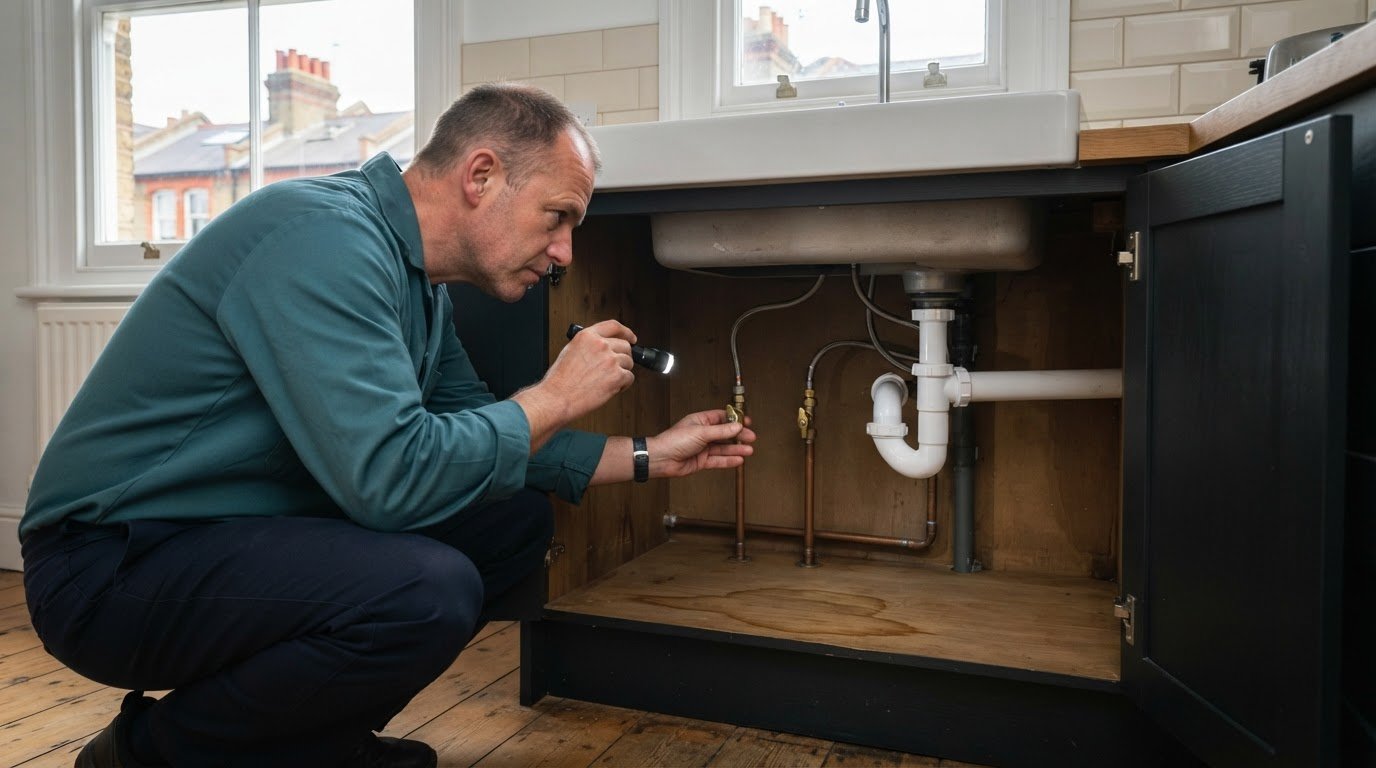
Leaks beneath the sink can come from loose slip nuts, worn rubber gaskets or damaged pipe sections. Misaligned waste fittings can also leak. A lasting repair may involve tightening the nuts, replacing a gasket or changing the damaged section. If the silicone sealant around the sink is damaged, remove and renew it to help prevent water getting underneath.
Before opening a connection, turn off the isolation valves beneath the sink. If water is leaking, stop the supply first, place a container beneath the joint and dry the area. This helps limit flooding while you trace the source. DIY repairs can worsen a leak if a fitting is cross-threaded or tightened unevenly, leaving water to damage the cabinet or floor. Check repaired connections for fresh drips before using the sink normally.
Emergency plumbing availability
Emergency plumbing is for faults that need prompt attention to limit damage or restore essential water use. A burst supply pipe, rapidly spreading leak or failed isolation valve may need urgent help. A slow-draining sink without a leak is disruptive, but is usually less urgent.
Start by addressing the immediate risk. If water is leaking beneath the sink, turn off the isolation valve before tracing the source. If the valve does not stop the flow, use the main stopcock if you can reach it safely. Move stored items away and place a container beneath the leak.
When arranging an emergency visit, describe the fault clearly. Include the affected room, whether water is still flowing and which isolation valve you have turned off. For example, say whether water is coming from a flexible supply hose, a waste connection or the tap itself. These details help the plumber prepare for the likely repair.
Stop using the affected tap or sink.
Isolate the water supply at the nearest accessible valve.
Contain drips with a bowl and absorbent cloths.
Keep the area around the pipework clear for inspection.
The plumber should identify the source before opening a connection. A supply leak needs a different repair from a dripping waste trap. Depending on the fault, the repair may involve replacing a damaged section, renewing a seal or securing a loose fitting. The connections should then be checked for continued leakage.
For a blocked sink without a leak, avoid repeatedly running the tap, as standing water can spill over the bowl. Tell the plumber whether one or both bowls are affected and whether the blockage returns after clearing. This helps distinguish a local plughole obstruction from a problem in shared pipework. If water is escaping or cannot be controlled, treat the fault as urgent and prioritise isolating the supply.
Kitchen sink installation and repair
A reliable sink installation depends on a secure sink, a sealed waste and a correctly fitted trap. The right repair depends on the fault and access beneath the worktop.
Choosing DIY or Professional Repair
A straightforward task, such as tightening an accessible loose fitting, may suit someone comfortable with basic tools. Contact a plumber for a persistent leak, damaged pipework, a replacement sink or hard-to-reach connections. Replace a leaking U-bend promptly because its water seal helps stop sewer gases entering the home.
Kitchen Sink Repair Costs
How much does a plumber charge to repair a kitchen sink in the UK? The price depends on the fault, access, parts and work required, and is provided after a quote request. A simple seal replacement differs from replacing a trap or reconfiguring pipework. Those factors determine the scope of work, rather than the sink alone.
Replacing Sink Waste, Strainers and Seals
To replace a waste or strainer, isolate the water supply, place a container beneath the sink and disconnect the trap. Remove the old fitting and clean the sink opening before fitting the replacement with its supplied washer or seal. Reconnect the trap, then run water and inspect each joint. A trap’s water seal helps block sewer gases from entering the home.
Repair Tools and Materials
For an accessible waste fitting, prepare an adjustable spanner, cloths, a bucket and a correctly sized replacement waste or washer. Silicone sealant may be needed if the sink’s existing seal is damaged. Avoid overtightening plastic fittings, which can distort or crack. If a connection resists or the pipework shifts, stop and arrange a professional repair.
For a fitting that needs replacement or a leak that persists, arrange a professional sink repair.
Self-securing silicone tape around a sink connection can temporarily tighten the seal of a minor leak, but it is not a permanent repair. Silicone tape or epoxy putty may temporarily hold a minor leak in a pipe beneath the sink.
Polkadot
Polkadot can help when a sink problem is part of wider work at home. If a replacement sink forms part of a kitchen refurbishment, planning the surrounding work together can help keep the project organised. The next step depends on whether the issue is an isolated plumbing fault or part of a larger room update.
Polkadot provides refurbishment alongside heating, air conditioning and electrical installations across London. Contact Polkadot to discuss your home project and the help you need.
Plan the next step with confidence
Once you understand the fault, decide whether the sink needs a targeted repair or is part of a wider kitchen update. A well-planned kitchen sink plumbing repair addresses the cause, not just the visible symptom. If the problem returns, describe what changed after the previous work and when it reappeared. This can help focus the next assessment.
Before arranging work, consider how you use the sink and whether its position and fittings still suit the space. A repair may be practical for an isolated fault; a larger project may need broader planning. Polkadot can help you plan the next step for your home.
Contact Polkadot about your kitchen sink plumbing and explain what needs attention. A clear conversation is a useful starting point for getting the right work organised. You can take the next step calmly and with a clearer idea of what your home needs.
Frequently Asked Questions
What are common kitchen sink plumbing problems and their causes?
Common kitchen sink problems include slow drainage, leaks beneath the bowl and a persistently dripping tap. A blockage may be in the waste route, while a leak that appears only when water drains can point to a waste connection. A drip while the sink is empty may instead indicate a fault in the tap mechanism. Note when the symptom occurs to help narrow down the source.
How do you fix a leaking kitchen sink trap or waste pipe?
First establish whether the leak comes from the trap or another waste-pipe joint. Dry the area, run water and watch where moisture appears. A leaking connection may need a new seal or trap; a cracked pipe section needs replacing. Do not rely on tape or putty as a lasting fix. After reassembly, run water again and check the joints for fresh drips.
Comments